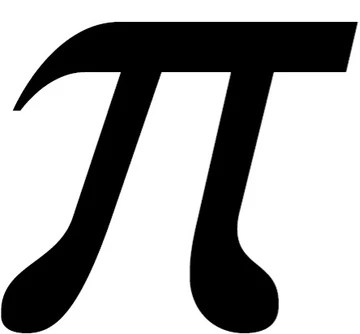
Today is March 14, which can be written as 3/14, and these digits correspond to the first 3 digits of the mathematical constant which is defined as the ratio of the circumference of a circle to its diameter, at least in the decimal system that we human beings have arbitrarily chosen to adopt.
π is one of the first mathematical constants to whom an elementary learner of mathematics would be introduced. Most people should be able to at least recall that it has something to do with a circle, and most probably would at least know the first three digits of this constant.
π is an irrational number, and what that implies is that cannot be expressed as a ratio of two integers. That’s why it is called “ir-rational” (i.e. no ratio). What this means is that you can’t find a nice recurring pattern in its decimal expansion. This is contrasted with a popular approximation of π: 22/7, whose decimal expansion is 3. 142857 142857…
Notice how the group of digits ‘142857’ repeat.
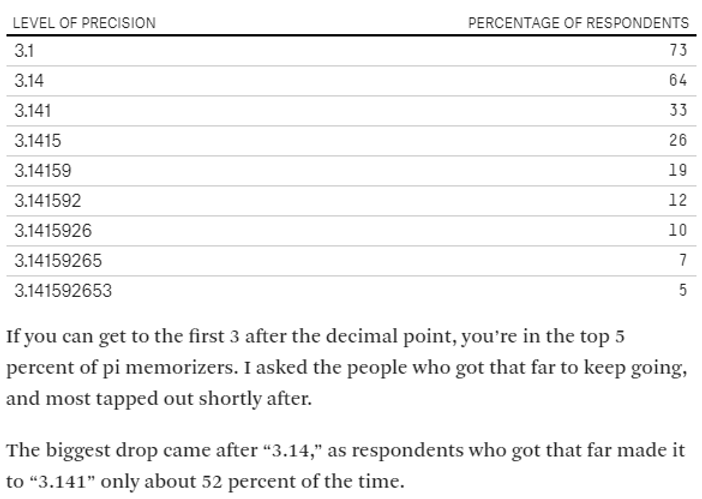
In an article published exactly five years ago (Hickey 2015), a ‘SurveyMonkey Audience’ was asked to put a poll to see how far people could get reciting the infinite digits of pi. Of 941 respondents, 836 attempted to name the digits after the decimal point. Here is an extract from that article:
That’s what I can recall from memory. 40 decimal places. I chose this number of digits to memorise a long time ago because with this number of digits, one can calculate the circumference of the observable universe to an accuracy of a hydrogen atom. Of course, when I decided to learn it, I didn’t expect to have to use it at all. It was mostly just for fun.
The unbelievable thing was that two years ago, when I participated in a freshman orientation activity, I remember that one of the station activities required that our somebody within our group recite the first 20 elements of the Periodic Table and write the first 12 decimal places of π with our short-term memory after trying to memorise it. It goes without saying that I certainly helped my group out in the latter exercise!
What a long time that has elapsed since my last post in September 2019. Five months have passed and now here I finally am, again, with yet another (long-awaited?) blog post.
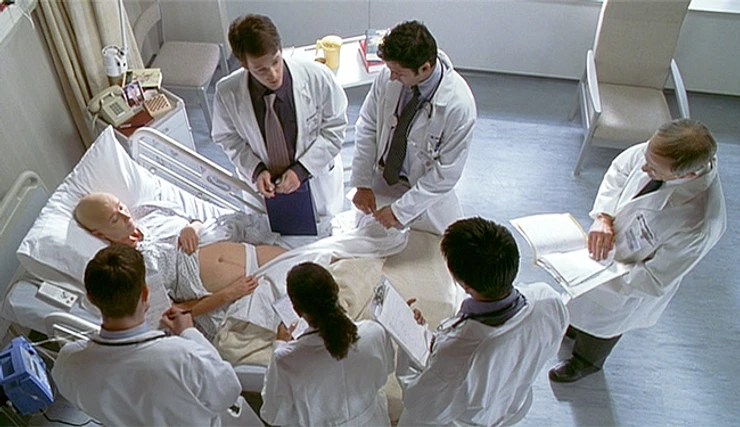
Earlier this morning, I attended a session from 9-11 am where the movie “Wit” (2001) was streamed in the lecture theatre. It was the introductory session for the ‘Law’ module which falls under the theme of “Health, Professions, and Society”, better known here as HPS.
Just before the movie was screened, the course co-ordinators did warn that it would be rather graphic, particularly for people who have had to vicariously experience the gruelling nature of cancer as their loved ones receive treatment.
The school actually managed to stream the entire duration of the movie within the two-hour time slot. While it should be said that there were certainly many elements and depicted behaviour by certain health professionals within the film that could be considered rather outrageous and could perhaps be dismissed as mere hyperbole for the sake of dramatic effect, the movie contains many valuable lessons for everyone, particularly health professionals.
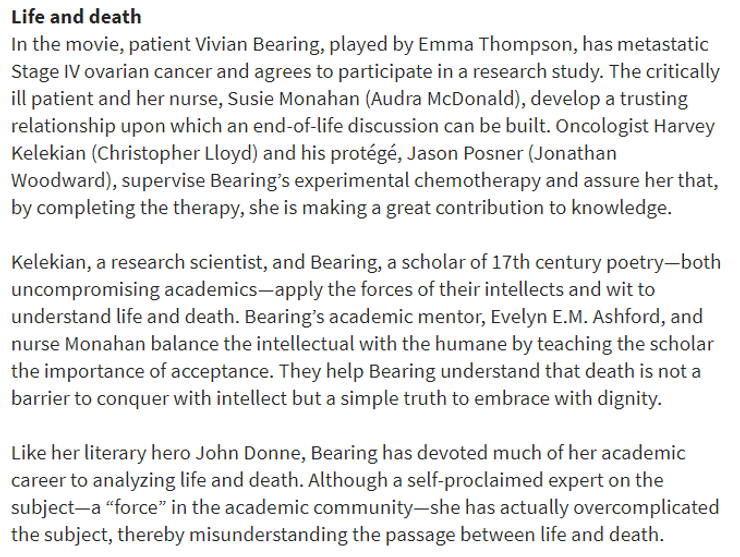
These few paragraphs are from a review of the movie by a nurse (Mclean 2014):
There was a scene near the beginning of the movie which I perceived to be rather thought-provoking. The scene encapsulated the sheer difference that the presence of both punctuation and capitalisation or lack thereof could have on the meaning of how certain content. English Language teachers may like to cite the classic example of the difference that the presence or absence of a comma can make on the strict meaning of a sentence as in: “Let’s eat, Grandma!” and “Let’s eat Grandma”. However, this scene takes this idea to another level entirely. This idea is worthy of serious contemplation, and can have a significant impact on one’s life, particularly as one is going through aggressive chemotherapy for stage IV ovarian carcinoma. Given that a picture can tell a thousand words, what more a video? The scene which I am referring to can be viewed here:
What a powerful scene this is.
The icing on the cake kicks in when the main theme of the movie starts to play, and we realise that even after all those years, Bearing and Ashford are able to continue their discussions on Donne’s works. The main theme has a simple melody, but this haunting melody pierces into the soul. It is none other than ‘Spiegel im Spiegel’ composed by Arvo Pärt. The piece is a duet for piano and viola. In this piece, the viola breathes, and the piano’s heart beats peacefully.
Notice how that between the flashbacks, the relationship between Bearing and Ashford may be presumed to have strengthened over the years, to the extent that Crawford now refers to Vivian by her first name instead of “Ms. Bearing” when Vivian was a student.
What a stark contrast we are presented. According to the Wikipedia article on Donne, “John Donne is considered the pre-eminent representative of the metaphysical poets. is poetical works are noted for their metaphorical and sensual style and include sonnets, love poems, religious poems, Latin translations, epigrams, elegies, songs, satires.“
Here we have Dr. Vivian Bearing, who earned a PhD in English Literature, specialising in the Holy Sonnets of Donne. She is a renowned academic on the issues of life and death, at least as put forth by Donne in his sonnets. Now, she is no longer contemplating these issues as if they were abstract. No. She is now living it second by second, minute by minute, day by day in the hospital.
Once again, I’m quoting Mclean (2014) because I think she wrote in an absolutely sublime manner regarding the above scene and how it relates to the entire plot of the movie and beyond:
‘In a flashback to Bearing’s graduate school days, Ashford points out the deficiency in her student’s thinking by calling attention to punctuation in one of John Donne’s metaphysical poems. An advocate for the poet, Ashford wisely observes that Bearing has relied on an inferior translation that uses incorrect punctuation in the stanza “Death be not proud, though some have called thee mighty and dreadful, for thou art not so. … Death shall be no more, death thou shalt die.” Instead of using a comma in the last sentence, which would have preserved the poet’s intent to communicate that death is just a pause between this life and the next, the editor of the specious translation has inserted a semicolon, which changes the meaning completely.
A semicolon is too dramatic, Ashford explains. A semicolon communicates that death is a struggle that one can defeat with intelligence. The semicolon is too hysterical in its portrayal of death. It makes the act of dying a spectacle, a Code Blue. A comma, on the other hand, reduces death to a simple, inevitable truth, just a pause between this life and eternal life. Death, suggests the comma, is not an insurmountable barrier to overcome, but a transition separated by a breath. The comma is natural death, facilitated by the DNR.‘
Indeed, I would concur with the notion that death should not be viewed as an insurmountable barrier. In fact, just as one would never experience the satisfaction of having one’s thirst quenched were it not for the physiological necessity for water, I think that it is precisely because death exists that life, as defined by the limited time we have on this physical earth which shall one day pass away, is rendered meaningful.
‘If you want drama, a metaphor for resuscitation with the ACLS (advanced cardiovascular life support) team, study Shakespeare. If you want art, a metaphor for physiologic death, choose the holy sonnets of John Donne. And to learn about life and death, the mentor advises her protégé, visit friends rather than the library. The audience learns that this important life lesson is lost on Bearing when she, as a young student, forgoes developing relationships by returning to the library stacks.
Bearing’s lesson is not learned until, near the end of her battle with cancer, she learns to appreciate humanity and kindness through nurse Monahan. Although Monahan doesn’t know the definition of soporific and doesn’t hold an academic title, she emerges as the movie’s most powerful force.
Modeling values taught in nursing school—respect, dignity, rights, and advocacy—she provides tissues when Bearing cries and advocates for a patient-controlled analgesia pump. When the patient is in a morphine-induced coma, Monahan puts lotion on her hand. In juxtaposition stands young doctor Posner, who regards the patient as a vessel for his cancer cells. Bearing remarks that she is nothing but a petri dish in his important experiment. To Posner, talking to the patient is an inconvenient annoyance that interferes with his research. He is the least likely person to initiate a DNR.
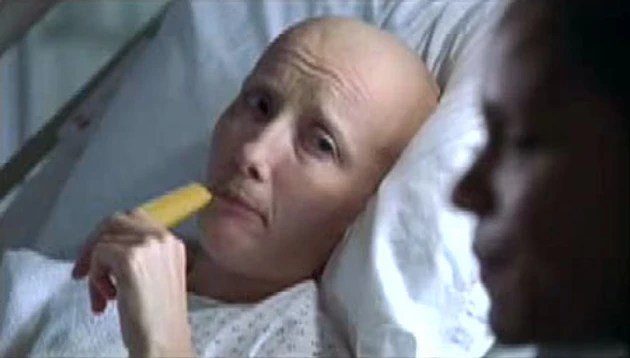
In the dehumanizing environment of a teaching hospital, nurse Monahan provides perspective, finishing the life lessons that Professor Ashford started so many years before. In telling her patient how simple life and death can be, Monahan reminds the audience that death is simply the stopping of your heart, or your last breath. For the first time, Bearing understands that her death does not have to play itself out as a chaotic Shakespearian drama, but rather as a pause in a holy sonnet. Between licks on a Popsicle, she agrees to a DNR order. This is a beautiful scene. The compassion and kindness that Monahan shows while caring for her patient build the relationship that allows the nurse to broach the delicate subject of initiating a DNR.‘
As I have said earlier, I will repeat it. This movie contains many scenes where certain health professionals, particularly the doctors, have in many instances displayed outrageous conduct and behaviour which I deem absolutely unprofessional. As Summers (2003) puts it, this movie does not make any attempt at trying to glorify doctors. We already have enough of that from the mainstream medical TV shows. In this movie, we have these highly intelligent doctors who are MD-PhD clinician-scientists. However, they have demonstrated blatant disregard for patient well-being.
While many doctors in reality fortunately do not act with such disregard to the extent as that seen in the movie, the movie highlights the importance of being professional as a doctor, displaying empathy, and always keeping patient well-being as a priority.
Meanwhile, in stark contrast, we have the nurse who emerges as perhaps the only person in the movie who actually cares for Vivian. According to Summers (2003), “Susie, who is not an intellectual, simply wants to provide Vivian with health care that is consistent with her professional obligations and with basic human decency, a goal which brings her into increasing conflict with the physicians pushing Vivian’s chemotherapy.“
For some reason, the full movie can be found on YouTube (albeit segmented). You can watch it here:
I thoroughly enjoyed this movie, and would recommend it to everyone, particularly nursing students, medical students and health professionals.