As an alumnus of Maris Stella High School and a current student at the National University of Singapore (NUS), I echo the sentiments of the opinion piece by Mr Sim Lim Onn (‘Grateful for big donation to NUS’, 13 April 2023). I vividly recall the TK Low Hall within the campus of Maris Stella High School, which would always be used for a myriad of activities, enhancing the school experience for Marists across all year levels.
Utilitarianism encourages maximising overall happiness and well-being. In this case, the advantages of using the donation by the Low Tuck Kwong Foundation to support leadership programmes for policymakers and scholars from Asia, as well as promoting research in green energy, could be deemed to outweigh the ethical concerns. It is vital to focus on the opportunity to train leaders who can advocate for sustainability practices and contribute to the global fight against climate change. Whilst it is important to scrutinise university funding sources, we also have a duty to acknowledge the positive outcomes that can arise from accepting donations linked to fossil fuels. By educating and empowering leaders dedicated to sustainability, we can be good stewards of our resources whilst on our quest to create a more environmentally responsible future.
The Necessity, Ethics, and Consequences of Restraints
Physical restraints can be necessary in medical settings to prevent disoriented or confused patients from inadvertently causing harm to themselves or others. However, it is crucial to differentiate between appropriate restraint use and excessive application. Hospital protocols should adhere to ethical guidelines, minimise restraint utilisation, and respect the dignity and autonomy of patients.
Ms Lim’s apprehension about her mother’s care is understandable, given the potential consequences of restraint use, such as prolonged immobilisation, muscle atrophy, pressure ulcers, and adverse psychological effects. These concerns underscore the importance of finding alternative approaches to ensure the well-being of our ageing population.
Exploring Alternatives and Encouraging Open Dialogue
Healthcare professionals continuously seek alternatives to physical restraints, such as multidisciplinary care plans, addressing reversible underlying causes of agitation, and using personalised environmental modifications and assistive devices. Family members play a crucial role in patient care by offering emotional support and advocating for their loved ones. Ms Lim’s decision to voice her concerns highlights the importance of open dialogue between hospitals, medical professionals, patients, and their families in addressing concerns and ensuring that everyone’s voice is heard.
Conclusion
Admittedly, the issue of physical restraints in elderly care is complex. As Singapore’s population ages, prioritising the well-being of our elderly patients becomes increasingly important. By embracing a holistic approach to patient care, we can minimise the use of physical restraints and ensure a more compassionate healthcare experience for our elderly patients.
The provocative title warrants meticulous examination.
Recently, I encountered a video containing that title, and it made me wonder: what could possibly justify such a bold statement? In an attempt to satiate my curiosity, I opted to watch the video to hear what the video creator had to say.
While I certainly didn’t attempt any slow and careful reading of Peter Singer’s controversial 15-page paper “Famine, Affluence, and Morality” that constituted the basis for the video’s title, I have indirectly learnt that the paper unveils a moral challenge. More than half a century after the publication of Singer’s paper, the paper remains a classic text in the study of ethics.
The paper invites reflection on one’s own privilege, echoing the myth of Narcissus (from which we get the word ‘narcissistic’ that has wended its way into psychiatric terminology, and unfortunately – common parlance too where it’s commonly inappropriately usedat the expense of actual patients suffering from narcissistic personality disorder), whose inability to recognise his reflection led to his downfall – a fall resulting in more than a mere benign splash in a body of water. In this blog post, I hope to briefly share what I learnt about Peter Singer’s work.
Singer’s argument
Singer presents a cogent argument that probes the moral obligations of those of us in relatively affluent societies towards those beleaguered by poverty and preventable diseases. The crux of his argument appears to be that providing help to those in need is incumbent upon us, particularly when doing so necessitates relatively minor sacrifices on our part.
To illustrate his point, Singer employs an allegory reminiscent of the Good Samaritan: if one were to encounter a child drowning in a pond, with the capacity to save the child at virtually no personal cost, a moral obligation to intervene would arise. Singer maintains that this principle should extend to assisting those in need, irrespective of geographical location.
Another example closer to home
To make this argument more relatable for those of us in this tiny city-state, consider yet another example.
While routinely strolling along Orchard Road on a swelteringly hot afternoon, you see a person suddenly fall to the ground and astutely recognise the clinical features of a potential heart attack (especially so if you’re a medical professional): excruciating crushing chest tightness, dyspnoea, a grimace, Levine’s sign, etc. All that jazz happens while his wife with whom he was previously walking comfortably just moments ago tells you rapidly that he has a personal history of longstanding hypertension, dyslipidaemia, and diabetes.
If you’re a bystander trained in basic first aid, you’d have the skills to help this person and potentially save their life. In this situation, most of us would concur that a moral obligation exists to intervene and help out. Singer’s argument extrapolates such a moral duty to encompass everyone in need, regardless of spatial or national boundaries.
The Moral Obligation to Help
Singer’s argument challenges us to rethink our moral obligations in an increasingly globalised world where, I would dare say, we have less of an excuse to disregard the predicament experienced by those who live far far away.
He asserts that geographical distance and nationality should not be factors in determining our responsibility to help others. Rather, our moral obligation stems from our ability to prevent suffering and death without compromising our own basic needs.
Component of Singer’s argument
Description
Moral Obligation
Individuals have a duty to help those suffering from extreme poverty and preventable diseases.
Geographical Distance
Distance should not factor into our moral responsibility to help others.
Nationality
Nationality should not determine our responsibility to help those in need.
Personal Sacrifice
We should be willing to make reasonable sacrifices to aid those suffering from preventable harm.
Table – Key Points in Singer’s Argument
Actionable Steps for All
One must begin by expanding one’s knowledge and remaining informed about global health inequalities and the challenges faced by developing countries and marginalised populations. This awareness serves as a solid foundation for taking meaningful action.
Next, it is crucial to engage in volunteer work and collaboration, seeking opportunities to contribute time and skills towards improving healthcare access and outcomes for underserved populations, both locally and internationally. Working together with others who share a similar passion can yield significant benefits for those in need. For medical students, there are often abundant opportunities in going on OCIPs (overseas community involvement projects).
Advocacy is another essential component in addressing global health disparities. By using one’s voice to promote policy changes that tackle the root causes of inequality, such as poverty and lack of access to education, one can contribute to creating a more equitable world. Using one’s voice could manifest in many ways: it could be starting your own CIP or OCIP, publishing a relevant journal article to raise awareness, having your views aired on national platforms such as The Straits Times forum.
Supporting effective charities is also an important step in making a tangible difference. When donating to charitable organisations, it is crucial to make informed choices by researching their effectiveness and impact. Singer himself relies on organisations like GiveWell, which evaluates and identifies the most effective charities to support. Think of it as a ‘meta-charity’.
Finally, reflecting on Singer’s argument, we should consider the personal sacrifices we may be willing to make to help those in need. This could include donating a percentage of one’s income, cutting back on nonessential spending, or dedicating a portion of one’s time to volunteering or advocacy work. By making a personal commitment to alleviate the suffering of others, one can actively participate in the collective effort to create a more just and compassionate world.
Tuberculosis (TB) remains a global health challenge, and its current treatment regimen, known as “directly observed therapy, short course” (DOTS), is ironically anything but short, and significant infrastructure is required to deliver and observe therapy. As such, researchers are constantly exploring shorter treatment regimens that can reduce the burden on healthcare systems and patients.
Recently, while on the NUS website, I chanced upon an article and learnt that a ground-breaking international study had been conducted by a research team from NUS YLLSoM, NUH, and Singapore Clinical Research Institute (SCRI), led by Professor Nicholas Paton.
The results of the study were published in the New England Journal of Medicine (NEJM) last month and revealed that a tubcerculosis (TB) treatment strategy with an initial 8-week treatment period followed by retreatment of a small minority who were not cured, showed the same efficacy level as the standard 6-month treatment, but halved the average total time on treatment.
The recent publication of the TRUNCATE-TB trial (the aforementioned trial led by Prof Paton’s team) results in NEJM offers us promising news on this front.
TRUNCATE-TB trial
The trial aimed to test a new two-month (8-week) treatment strategy for TB that responds well to drugs (specifically rifampin-sensitive TB). The study included 674 participants and compared the standard 24-week treatment with two experimental treatment plans. These experimental plans were evaluated after eight weeks to see if the disease persisted. Additionally, participants were closely monitored to check for disease relapse until week 96. The main goal was to measure the combination of death, ongoing treatment, or active disease at week 96.
Key findings of TRUNCATE-TB
Group
Primary Outcome Events
Adjusted Difference
97.5% CI
Control (Standard Treatment) – (i.e. 8 weeks of RHEZ, followed by 16 weeks of rifampin and isoniazid)
With these results, only the bedaquiline–linezolid intensified regimen was found to be noninferior to the standard treatment (c.f the rifampin-linezolid intensified regimen wasn’t deemed noninferior because the upper bound of the 97.5% CI for the incidence of primary outcome events was 13.2%, which was higher than 12%; for a strategy to be deemed noninferior according to the study protocol, the difference between the strategy group and the standard-treatment group in the risk of the primary outcome had to be less than 12%).
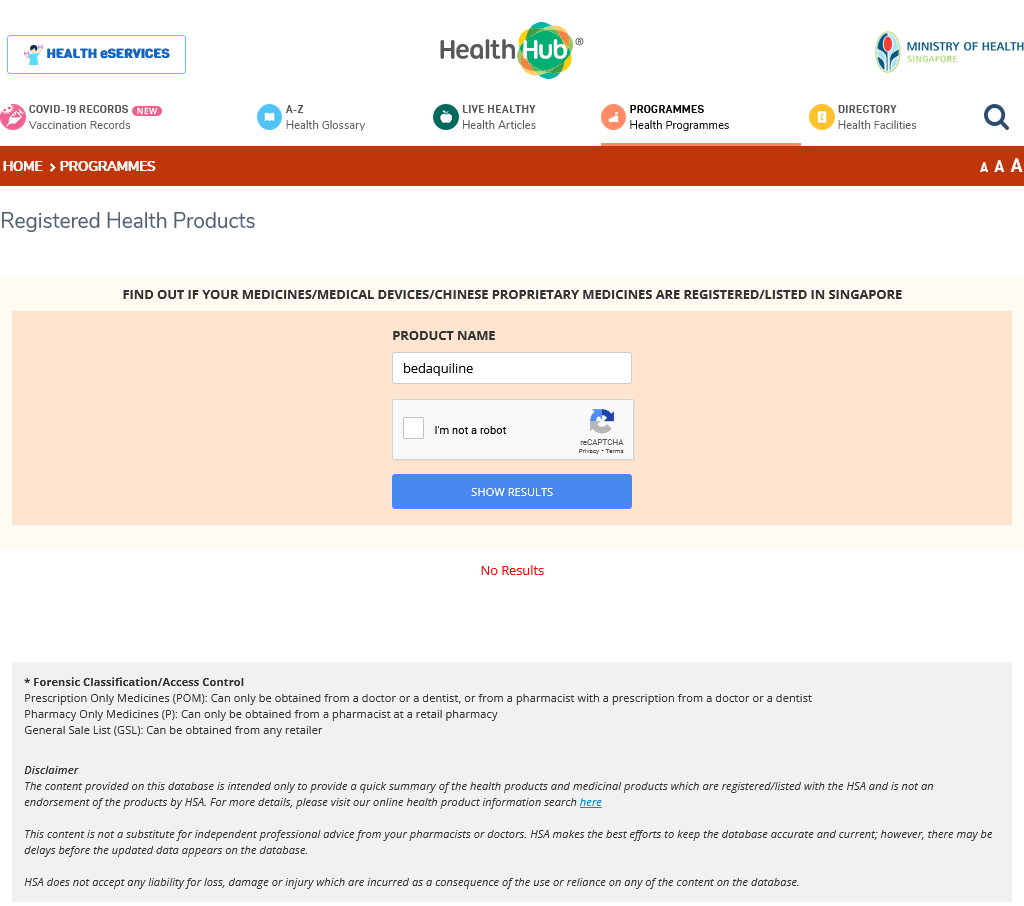
In the group which received the bedaquiline-linezolid intensified regimen, 85.7% of participants didn’t need treatment beyond eight weeks. On average, the total treatment time in this group was 84.8 days, which is less than half of the standard treatment group’s 180.2 days. However, an important thing to note is that as of the time of writing, bedaquiline is currently not registered as an approved drug in Singapore. It has been FDA-registered for more than a decade though, and is indicated in the management of MDR-TB (multidrug-resistant TB).
Although there were concerns about toxic effects and antibiotic resistance associated with the bedaquiline and linezolid regimen, the trial reported limited toxic effects, suggesting that earlier concerns might be overstated. There were two cases of acquired drug resistance in the bedaquiline–linezolid group, which does not raise substantial concerns in the context of the trial.
Potential Impact and Challenges
The two-month treatment strategy could greatly benefit patients, healthcare systems, and TB control efforts. However, challenges remain, such as the high level of treatment adherence andthorough patient assessments needed for the strategy, which may not be possible in many TB control programs.
Despite these challenges, the TRUNCATE-TB trial is a significant advancement in adaptive clinical trial design and offers an encouraging treatment strategy for drug-sensitive TB.
Adaptive clinical trial design allows for modifications during the trial based on the data being collected, such as dropping treatment arms or adjusting sample sizes. In the TRUNCATE-TB trial, the researchers used early stopping rules and modified entry criteria for higher-risk patients, among other adaptive strategies.
One of the adaptive strategies employed by the researchers was the use of early stopping rules for certain treatment groups. The trial initially had five treatment groups, and the plan was to drop two of these groups based on early stopping rules. However, none of the groups met those standards. As a result, the researchers decided to stop enrollment in two groups on the basis of logistical criteria, such as pill burden and regulatory concerns, in order topreserve statistical power for the remaining groups.
This approach allowed the researchers to focus on the remaining treatment groups, which were more promising and had fewer logistical challenges. By employing early stopping rules and adapting the trial design based on the data, the researchers could optimize the use of resources and increase the efficiency of the study. This flexibility is an important aspect of adaptive clinical trial design, allowing for improvements and modifications during the course of the trial.
Conclusion
For the longest time, as a medical student, pretty much all I’ve ever known about the medical management of TB is the standard RHEZ cocktail that can be used: (‘H’ and ‘Z’ here refer to isoniazid and pyrazinamide respectively) or RIPE (the letters of this acronym correspond to the first letter of common anti-TB drugs: rifampin, isoniazid, pyrazinamide, and ethambutol). The results of this TRUNCATE-TB seem to be yet another one of the many reminders that medical practice and the latest standard of care are constantly evolving, and that we need to keep up with the most important updates. As such, in some sense, I pity future generations of medical students, who will only have an increasing amount of content that they need to learn – the historical streptomycin, the standard RHEZ cocktail, and now: regimen-intensifying agents such as bedaquiline and linezolid.
In sum, the TRUNCATE-TB trial shows that a two-month treatment strategy with the bedaquiline–linezolid intensified regimen is noninferior to the standard six-month regimen for drug-sensitive TB. While there are challenges to implementing this strategy in real-world settings, the results offer a beacon of hope for reducing the impact of TB treatment on patients and healthcare systems not just on our little red dot, but in other TB-endemic countries.