pianist and medical doctor

Tag: vol05

  • 05(10): A post-Lee Kuan Yew Singapore

    INTRODUCTION

    In December 1980, a man stood atop a platform at Fullerton Square and delivered an important message at a rally amidst light rain. His determination resonated as he declared amidst the pitter-patter, “Whoever governs Singapore must have that iron in him. Or give it up. This is not a game of cards. This is your life and mine! I’ve spent a whole lifetime building this and as long as I’m in charge, nobody’s going to knock it down“. Singapore’s growth has been systematic and intentional, owing to the iron will of Mr. Lee.

    As we contemplate the future without Mr. Lee’s direct influence, we must grapple with the implications of his legacy, and our vision for a Singapore that continues to prosper. In this post, I hope to delve into my understanding of Mr. Lee’s enduring influence and my aspiration for a Singapore that builds upon his foundational ideals, while evolving to meet the complexities of our changing world. With my family’s journey as a testament to Mr. Lee’s dream of a meritocratic society, I offer a perspective that intertwines personal experiences with national evolution, underscoring our shared destiny in a post-Lee Kuan Yew era.

    UNDERSTANDING LEE KUAN YEW’S LEGACY

    Born in 1997 into a family that epitomises the fruit of meritocracy, an ideal that Mr. Lee Kuan Yew held dear, I am a part of the generation that has grown up marvelling at the success of the nation he built. My paternal grandparents, who were emigrants from Hainan, lived humble lives. My grandfather was a ship’s chef, often away on lengthy overseas postings, resulting in an absence of a father figure for my father and his siblings. My grandmother, in contrast, worked as a servant for a British family during Singapore’s colonial days.

    Yet, despite the odds, they raised my father to value education, and he became the first university graduate in his family, a source of immense pride for my grandparents. Today, I am a medical student at Singapore’s oldest medical school, whilst my middle brother is on an overseas military scholarship training to be a pilot with the Singapore Air Force, and my youngest brother is studying Electronic Engineering at NUS. To understand the legacy of Mr. Lee Kuan Yew, we must navigate the maze of his influence that has shaped Singapore’s economic and socio-political landscapes.

    Economically, Mr. Lee was our Odysseus, guiding Singapore from a resource-starved agrarian economy to become a bustling cosmopolis and a pivotal node in the global financial network. His visionary investment in education and skills development, coupled with fostering a hospitable climate for enterprise, provided the bedrock for our vibrant knowledge economy. His pragmatism bore witness to the inception of the Housing and Development Board (HDB) and the Central Provident Fund (CPF). These social programs revolutionised living standards for the average Singaporean, providing affordable housing and financial security respectively, while promoting a sense of national ownership and unity.

    Politically, Mr. Lee’s conviction in a corruption-free, meritocratic system was instrumental in cultivating effective governance and public trust. His steadfast commitment to racial and religious harmony helped foster an environment where diverse ethnic and religious groups peacefully coexist.

    However, it is crucial to acknowledge that these achievements involved certain trade-offs. Mr. Lee’s vision of swift development occasionally found itself at odds with individual liberties, resulting in an authoritarian governance model. Critics suggest that his firm hand on law and order suppressed political dissent and curbed freedom of expression, casting a shadow over his legacy. Nevertheless, my family’s journey remains a testament to Mr. Lee’s tireless efforts at nation-building. The opportunity for my father to become a university graduate and for my siblings and me to pursue our ambitions reflects the successful implementation of at least one aspect of Mr. Lee’s vision.

    A GENERATIONAL PERSPECTIVE: LEE’S INFLUENCE ON THE POST-1990 GENERATION

    Mr. Lee’s legacy etches its influence into the collective consciousness of Singaporeans born after 1990. Notably, the year marks the end of Mr. Lee’s 32-year-long term as Singapore’s founding prime minister. We are the silent inheritors of the principles that propelled Singapore from a fledgling nation to a cosmopolitan city-state. This inheritance is evident in our relentless pursuit of excellence, a testament to Mr. Lee’s commitment to meritocracy. The tale of my family’s social mobility mirrors this conviction, as we strive to achieve our fullest potential within the meritocratic framework that Mr. Lee championed.

    Mr. Lee’s enduring influence also extends into our societal fabric. His dedication to racial harmony has imbued us with an appreciation for multiculturalism, and such harmony was on full display during the 2010 Youth Olympic Games, an event that showcased our unity in diversity to the world. It was a moment of shared pride for my generation, seeing the synergy of diverse cultures that makes Singapore unique.

    Moreover, Mr. Lee’s uncompromising stance against corruption is not just a principle but a lived reality that continues to inspire us to uphold integrity in our personal and professional pursuits. One striking incident that underscores this involves a botched bribery attempt by the United States Central Intelligence Agency (CIA). As documented in declassified documents, a CIA agent, in 1960, was caught trying to bribe a Singapore intelligence officer.

    In response, the CIA audaciously offered then Prime Minister Lee Kuan Yew a sum of USD $3.3 million to cover up the matter. Displaying the steadfastness that defined his tenure, Mr. Lee categorically rejected the offer. Instead, he proposed that the U.S. provide formal economic aid to Singapore, redirecting the incident towards a constructive outcome that benefitted the nation.

    Further demonstrating the integrity of his character, when the U.S. State Department and the ambassador to Malaysia attempted to deny the incident, Mr. Lee presented a formal letter of apology from then U.S. Secretary of State, as undeniable proof of the event. In a poignant television interview, Mr. Lee warned the Americans of the character of the people they were dealing with in Singapore. In his words, “You do not buy and sell this Government.”

    This incident sent a powerful message to the world about Singapore’s incorruptibility and the nation’s refusal to compromise on integrity. Such occurrences have influenced our collective psyche, reinforcing our commitment to uphold these principles of integrity in our endeavours.

    However, we are not merely the custodians of Mr. Lee’s legacy. We are also its innovators, faced with the responsibility of interpreting his principles in our rapidly evolving world. As we approach this crossroads, we envision a future that blends the resolute spirit of the past with an innovative ethos for the future, extending Mr. Lee’s legacy into the Singapore of tomorrow. Mr. Lee’s legacy, while revered, should not be seen as an immovable monolith, but rather as a foundation to be built upon.

    SHAPING THE POST-LEE KUAN YEW SINGAPORE: EVALUATING THE LEGACY AND ENVISIONING THE FUTURE

    Navigating the path forward necessitates upholding the legacy of integrity and meritocracy, fundamental pillars established by Mr. Lee. The 1960 CIA bribery incident serves as a stark reminder of the moral rectitude that Mr. Lee upheld. As an aspiring professional soon to join a field where the highest standards of integrity are expected, the significance of this is not lost on me.

    Yet, preserving these principles does not entail rigidity; our approach must adapt to contemporary challenges. For instance, Mr. Lee’s advocacy for language stream schools was instrumental in fostering bilingualism and promoting social cohesion in its time. However, in today’s era of globalisation and digital interconnectivity, we need to foster an even more inclusive cross-cultural perspective.

    The digital revolution, coupled with the emergence of ground-breaking technologies, calls for a re-evaluation of our economic model. Singapore, under the visionary leadership of Mr. Lee, has already positioned itself as a global hub for manufacturing and finance. However, the post-1990 generation now confronts a rapidly changing landscape shaped by technological disruptions. As we navigate this new era, it is imperative to foster innovation, nurture entrepreneurship, and leverage the potential of data and artificial intelligence.

    Notably, the advent of cryptocurrencies, led by Bitcoin, revolutionized finance and blockchain technology, bringing attention, legitimacy, and paving the way for a vibrant cryptocurrency ecosystem. Similarly, the transformative advancements in artificial intelligence, including natural language processing and machine learning, are reshaping industries, and pushing the boundaries of what is possible. Language models such as ChatGPT have demonstrated the relative robustness of AI in human-computer interaction, transforming the way we communicate and access information.

    In the face of these rapidly advancing technologies, one of Singapore’s fundamental principles of governance, ‘Anticipate change and stay relevant‘, becomes more important than ever. Singapore, as a resource-scarce nation, understands that its greatest resource is its people. By equipping its citizens with the skills and knowledge to thrive in the digital age, Singapore can continue to anticipate and embrace change, ensuring its relevance on the global stage. Embracing the principles of innovation, technological adaptation, and human capital development, Singapore can navigate the evolving landscape and maintain its position as a dynamic and resilient nation.

    In a post-Lee Kuan Yew Singapore, I envisage a society that harmoniously synthesises our cherished heritage with the demands of a rapidly advancing world. We should harness economic prosperity with sustainability, let our cultural diversity reinforce social cohesion, and use our historical strengths as a springboard for future innovation.

    As a future contributor to a profession steeped in trust, I am deeply committed to embodying Mr. Lee’s legacy within the healthcare sector. His principles of meritocracy and integrity are cornerstones on which I intend to build my practice. However, like Singapore itself, the healthcare industry must adapt and evolve. We face the demographic challenge of an ageing population, and the simultaneous excitement and uncertainty brought by medical technology breakthroughs, including predictive analytics and precision medicine.

    Mr. Lee’s lifelong philosophy was one of learning from the past, being firmly grounded in the present, and constantly planning for the future. This philosophy encapsulates the balance we aim to achieve between preservation and evolution as we navigate the path of a post-Lee Kuan Yew Singapore.

    CONCLUSION

    As this voyage of a post reaches its final harbour, the towering figure of Mr. Lee Kuan Yew, a political Colossus, looms large in the panorama of my reflections. He has woven a tapestry of integrity, meritocracy, and pragmatism, whose threads have been central to Singapore’s nation-building narrative. His audacious defiance in the face of the CIA bribery incident remains a beacon of ethical conduct for us.

    Yet, our role is not merely that of custodians of this legacy, but of shapers too, moulding it to our contemporary context. The advent of globalisation and technological innovation necessitates recalibrating our educational and economic models, from language stream schools to embracing the AI revolution.

    I envisage a post-Lee Kuan Yew Singapore that cherishes its historical ethos but also strides fearlessly into a future built on sustainable prosperity, cultural unity, and technological innovation. As I stand on the cusp of my medical career, I will adhere to the time-honoured principles of my profession while also preparing for the inevitable challenges of an ageing society and the transformative potential of technologies like precision medicine.

    Like Odysseus, we chart our course using the stars of our past as a guide, while the winds of our present challenges propel us towards the shores of our future destination.

    Such is the essence of my vision for a post-Lee Kuan Yew Singapore.

    Nic
    8 October 2023, Sunday

  • 05(09): Physique and strength transformation from 23 weeks of a beginner strength-training programme

    INTRODUCTION

    Prior to my initial foray into the realm of serious resistance training, the closest encounter I had with physical exertion was during my two years as a full-time NSF in the Singapore Armed Forces. It has been more 5 years since I finished my two years as a full-time national serviceman though.

    Fast forward to today – my life has taken a turn I never anticipated – a journey into the world of strength training. This was a journey sparked by a simple and innocent question which my youngest brother had posed to me on a fateful Saturday morning in early December 2022: “Do you want to go to the gym with me?“

    I still remember how it was drizzling slightly and I was rather reluctant to accompany my brother to the gym. In retrospect, I’m so glad I felt somewhat adventurous and open-minded that day to the extent that I would agree to step outside my comfort zone. Perhaps the greatest factor in tipping the scale and convincing me to accompany my brother to the gym on that fateful Saturday morning was the realisation that I could achieve something similar to what he had done in terms of putting on muscle size/bulk. The reality was that his physique change was rather apparent over the few months that he had been going to the gym. Specifically, I noticed how his anterior deltoids had become more prominent. And I thought it looked great on him. I thought to myself: surely if I do what he does, I’m sure I could get something similar!

    EVOLVING GOALS

    When I took my first step into the gym, my goal was straightforward – to gain both muscle size and strength. Let’s talk about the goal of strength first. For the uninitiated, the standard 2.2-metre-long Olympic barbell weighs 20 kg, and a standard ‘plate’ is 20 kg. As such, a x-plate barbell would constitute the 20 kg barbell and x plates on each side of the barbell. As such, the 1/2/3/4 plate goal in the OHP, bench press, squat, and deadlift corresponds to 60 kg, 100 kg, 140 kg, and 180 kg respectively. This goal seemed (and of course, still seems) like a formidable challenge. Yet, multiple sources online claim it to be an achievable one for an average-weight male with no prior resistance training who has maintained a year of consistent training, proper nutrition, and ample recovery. Such milestones were concrete and defined. That’s the good thing about strength. The numbers are tangible and don’t lie. You can either lift it, or you can’t.

    But with strength, I also had another captivating prospect – size. The idea of gaining size as a by-product of my strength training was enticing, because who wouldn’t want to look more jacked, right? I mentioned earlier how my youngest brother’s physique transformations were noticeable, and it was something I actively worked towards.

    As much as some members of the fairer sex may not want to admit publicly, a muscular physique on the human body is something admirable by all. After all, is it not a testament to the person’s dedication, perseverance, and consistency? This is particularly so in an increasingly sedentary society where the prevalence of largely preventable metabolic diseases is rising, and even many individuals who are neither in the overweight or obese range for the BMI could be considered ‘skinny-fat’. It’s a shame that the limitations of BMI aren’t more widely known. Having even an acceptable ethnicity-adjusted BMI isn’t a carte blanche to just slack off and eat whatever one wants as long as one remains within the ‘acceptable range’. In fact, the vast majority of people who are in the ‘acceptable’ range stand to gain innumerable health benefits by starting a structured resistance-training programme with the purpose of gaining strength and functional muscle mass.

    And just to clarify, I qualified the nouns “muscle mass” with “functional” for a reason. Gaining muscle mass isn’t just about the aesthetics (though this is admittedly the chief reason many guys go to the gym). There is a distinction (albeit a controversial and disputed one) between myofibrillar hypertrophy and sarcoplasmic hypertrophy, and the former is associated with substantial health benefits. Myofibrillar hypertrophy refers to the enlargement of the muscle fiber’s contractile components, i.e., the myofibrils. Unlike sarcoplasmic hypertrophy, which increases the muscle’s size mainly for aesthetic purposes, myofibrillar hypertrophy contributes significantly to the muscle’s functional capacity. Thus, while there is a place for aesthetics in the world of fitness, the focus on myofibrillar hypertrophy brings about a more holistic approach towards health and fitness. It emphasizes the role of functional muscle mass in enhancing our overall well-being, extending far beyond the confines of the gym.

    On the topic of gain and loss of mass/size of muscle, I have increasingly not liked using the generic term ‘weight loss’. Weight loss can happen in a myriad of scenarios, and can be due to losing predominantly fat mass, losing predominantly muscle and fat mass, losing predominantly ‘water weight’, and even losing predominantly muscle mass. When most people say they want to ‘lose weight’, what they usually mean is that they want to lose fat, while minimising any muscle tissue loss (or perhaps even maintain or even facilitate muscle hypertrophy during the weight loss period).

    The biggest mistake I made in hindsight when undergoing that aggressive fat loss journey was that I did so without paying serious attention to my daily protein intake and without doing any sort of structured resistance training whatsoever. This is because research has established that both adequate protein intake and an appropriate amount of resistance training helps preserve muscle mass.

    So, that was exactly what I started off with when I began this structured 23-week-long strength-training journey on 26 December 2022. Compared to my June 2022 self, the December 2022 self was still skinny-fat – just with a lower body fat percentage. Sure, my BMI was finally very comfortably in the ‘acceptable’ range after that drastic cutting phase that I engaged in over the course of a few months, but in retrospect I was a sack of bones with barely any muscle. So what if one’s body fat is relatively low if one doesn’t have the accompanying amount of muscle mass? Such a physique just makes one look skinny and weak.

    SURPRISING MILESTONES DURING THE 23 WEEKS

    I was taken aback when I achieved the first of the 1/2/3/4 plate milestones within just 3.5 months of training – the 1-plate OHP. Traditionally, this is considered the toughest of the four goals to achieve due to the unforgiving nature of the overhead press. Imagine lifting 60 kg overhead – it’s no easy feat! However, this has become my favourite compound movement, and the joy I experienced upon achieving this goal on 13 April 2023 is indescribable. I remember shouting a resounding “Yes!” in the gym that day – April 13, 2023, a day that will forever remain etched in my memory.

      Before After Change Remarks
    Age 25 years (26 Dec 2022) 25 years (4 Jun 2023) +23 weeks –
    Height 173 cm 173 cm – –
    Weight 63 kg 74 kg +11 kg  
    Bench Press 45.0 kg x 10 [e1RM 60 kg] 78.5 kg x 7 [e1RM 94.2 kg] e1RM +34.2 kg The ‘e1RM 94.2 kg’ PR set was done close-grip.
    Overhead Press 22.5 kg x 5 [e1RM 25.3 kg] 54 kg x 6 [e1RM 62.7 kg] e1RM +37.4 kg 13/4/23: Actual 1RM 60 kg (i.e. 1-plate OHP)
    18/4/23: Actual 1RM 62 kg
    Squat 35 kg x 26 [e1RM 56 kg] 105.25 kg x 6 [e1RM 122 kg] e1RM + 66 kg e1RM increased from 56kg to 122kg
    Deadlift 45 kg x 14 [e1RM 66 kg] 150 kg x 1 [1RM 150 kg] e1RM + 84 kg 6/4/23: Actual 1RM 140 kg (i.e. 3-plate deadlift)
    27/5/23: Actual 1RM 150 kg


    CONSISTENCY, NUTRITION, AND RECOVERY

    Adherence to the training program, a diligent focus on nutrition, and prioritizing recovery have been the cornerstone of my success. My journey was marked by consistent training, bulking up my nutrition, and ensuring optimal recovery – even if I could not always achieve the recommended seven hours of sleep.

    CONCLUSION

    Looking back at my 23-week journey with Phrak’s variant of the GreySkull Linear Progression program, I see a transformation that has been as much about physical changes as it has been about personal growth. My goals have evolved from just gaining strength and size to a broader perspective – healthy aging and longevity. With this evolved perspective, I recently embarked on a new journey with Jim Wendler’s 5/3/1 program for beginners, which includes my self-initiated structured running training to complement my strength training. This holistic approach considers not only raw strength but also cardiopulmonary fitness, encompassing aerobic capacity and endurance.

    Stay tuned as I continue my journey towards becoming the best version of myself, maintaining a balanced focus on strength, endurance, and overall health. Remember, life is about constant growth and improvement, and my journey is just one example of how that can manifest.

  • 05(08): Balancing the Singaporean Property Market – Alternatives to an HDB Monopoly

    Subscribe to continue reading

    Subscribe to get access to the rest of this post and other subscriber-only content.

  • 05(07): A House of Cards – Constructing a Stable Future for Singapore’s Youth

    As a youth in Singapore and an aspiring future homeowner, I am pleased to read of the additional property cooling measures announced recently. However, despite these efforts, young Singaporeans continue to grapple with the challenging prospects of homeownership. It is not uncommon to hear people in-person and on online forums lamenting that HDB should take responsibility for buying back all resale flats at reasonable prices, ensuring only minimal profits for sellers to maintain maximal affordability. While profit-making may not align with the spirit of public housing, this quixotic proposal regrettably overlooks both human monetary incentives and fundamental economic and logistical constraints.

    Selling HDB flats back to the board after the minimum occupancy period presents financial and logistical challenges. With billions of dollars in annual resale flat transactions, HDB would require substantial liquid assets. Furthermore, HDB would need to expand resources, handle increased transactions, and manage flat maintenance between buyers, leading to higher taxpayer-funded costs.

    Possibly a more sustainable approach is implementing a hard cap on Cash Over Valuation (COV) for HDB resale flats. Setting a maximum limit on selling prices, accounting for depreciation, lease duration, and inflation, could create a controlled market. A fixed COV cap, like SGD 75,000 (though the fixed cap is probably best determined by policymakers with access to all relevant data) would prevent unreasonable pricing for potential buyers of HDB resale flats while allowing sellers a modest profit.

    Understandably, this proposal may face opposition from existing property owners. As the number of current homeowners exceeds those seeking their first flat, it is natural for voting dynamics to be considered. While the principle of “Do what is right, not what is popular” (anyone else remembers this from the blue SS textbook we had to learn from in secondary school?) has guided Singapore’s governance, navigating the complexities of the property market remains a Sisyphean task. Ultimately, striking a balance between the needs of current and prospective homeowners will be crucial in determining the future of housing policy in Singapore.

    In sum, implementing a hard cap on COV may offer a balanced approach, addressing the concerns of young Singaporeans without placing undue strain on resources. I implore policymakers to consider this alternative and not neglect the dreams and aspirations of our nation’s youth.

  • 05(06): Fuel for Thought – Powering Progress and Sparking Sustainability with Fossil Fuel Philanthropy

    As an alumnus of Maris Stella High School and a current student at the National University of Singapore (NUS), I echo the sentiments of the opinion piece by Mr Sim Lim Onn (‘Grateful for big donation to NUS’, 13 April 2023). I vividly recall the TK Low Hall within the campus of Maris Stella High School, which would always be used for a myriad of activities, enhancing the school experience for Marists across all year levels.

    Like Mr Sim, I am pleased to learn about the generous donation of $101 million to the Lee Kuan Yew School of Public Policy by the Low Tuck Kwong Foundation. A similar instance occurred with the Yong Loo Lin School of Medicine in NUS, where a donation by the Yong Loo Lin Trust in 2005 enabled the school to bolster clinical research and its integration with medical education.

    Nevertheless, it is essential to acknowledge the concerns raised by some individuals regarding institutions accepting donations linked to fossil fuels, as it could risk undermining their environmental stances. At this juncture, it would behove us to be acquainted with the story of HeLa cells – immortal cells derived from cancerous tissue samples taken from Ms Henrietta Lacks in 1951. Despite the samples having been obtained without her consent (albeit a legally acceptable practice in the United States in the 1950s), the HeLa cell line has contributed significantly towards numerous medical breakthroughs including genome mapping, and HPV vaccine development, despite their morally complex origins. Thus, the potential benefits associated with accepting such donations should not be entirely disregarded.

    Utilitarianism encourages maximising overall happiness and well-being. In this case, the advantages of using the donation by the Low Tuck Kwong Foundation to support leadership programmes for policymakers and scholars from Asia, as well as promoting research in green energy, could be deemed to outweigh the ethical concerns. It is vital to focus on the opportunity to train leaders who can advocate for sustainability practices and contribute to the global fight against climate change. Whilst it is important to scrutinise university funding sources, we also have a duty to acknowledge the positive outcomes that can arise from accepting donations linked to fossil fuels. By educating and empowering leaders dedicated to sustainability, we can be good stewards of our resources whilst on our quest to create a more environmentally responsible future.

  • 05(05): Navigating the Complexities of Restraint Use in Elderly Care

    Introduction

    In a recent public forum, Ms Lim expressed her concerns about the use of restraints in elderly care, particularly for her mother. As a medical student who has witnessed the challenges of managing agitated elderly patients, I empathise with her concerns and appreciate her speaking out.

    The Necessity, Ethics, and Consequences of Restraints

    Physical restraints can be necessary in medical settings to prevent disoriented or confused patients from inadvertently causing harm to themselves or others. However, it is crucial to differentiate between appropriate restraint use and excessive application. Hospital protocols should adhere to ethical guidelines, minimise restraint utilisation, and respect the dignity and autonomy of patients.

    Ms Lim’s apprehension about her mother’s care is understandable, given the potential consequences of restraint use, such as prolonged immobilisation, muscle atrophy, pressure ulcers, and adverse psychological effects. These concerns underscore the importance of finding alternative approaches to ensure the well-being of our ageing population.

    Exploring Alternatives and Encouraging Open Dialogue

    Healthcare professionals continuously seek alternatives to physical restraints, such as multidisciplinary care plans, addressing reversible underlying causes of agitation, and using personalised environmental modifications and assistive devices. Family members play a crucial role in patient care by offering emotional support and advocating for their loved ones. Ms Lim’s decision to voice her concerns highlights the importance of open dialogue between hospitals, medical professionals, patients, and their families in addressing concerns and ensuring that everyone’s voice is heard.

    Conclusion

    Admittedly, the issue of physical restraints in elderly care is complex. As Singapore’s population ages, prioritising the well-being of our elderly patients becomes increasingly important. By embracing a holistic approach to patient care, we can minimise the use of physical restraints and ensure a more compassionate healthcare experience for our elderly patients.

  • 05(04): Ordinary People Are Evil

    Introduction

    The provocative title warrants meticulous examination.

    Recently, I encountered a video containing that title, and it made me wonder: what could possibly justify such a bold statement? In an attempt to satiate my curiosity, I opted to watch the video to hear what the video creator had to say.

    While I certainly didn’t attempt any slow and careful reading of Peter Singer’s controversial 15-page paper “Famine, Affluence, and Morality” that constituted the basis for the video’s title, I have indirectly learnt that the paper unveils a moral challenge. More than half a century after the publication of Singer’s paper, the paper remains a classic text in the study of ethics.

    The paper invites reflection on one’s own privilege, echoing the myth of Narcissus (from which we get the word ‘narcissistic’ that has wended its way into psychiatric terminology, and unfortunately – common parlance too where it’s commonly inappropriately used at the expense of actual patients suffering from narcissistic personality disorder), whose inability to recognise his reflection led to his downfall – a fall resulting in more than a mere benign splash in a body of water. In this blog post, I hope to briefly share what I learnt about Peter Singer’s work.

    Singer’s argument

    Singer presents a cogent argument that probes the moral obligations of those of us in relatively affluent societies towards those beleaguered by poverty and preventable diseases. The crux of his argument appears to be that providing help to those in need is incumbent upon us, particularly when doing so necessitates relatively minor sacrifices on our part.

    To illustrate his point, Singer employs an allegory reminiscent of the Good Samaritan: if one were to encounter a child drowning in a pond, with the capacity to save the child at virtually no personal cost, a moral obligation to intervene would arise. Singer maintains that this principle should extend to assisting those in need, irrespective of geographical location.

    Another example closer to home

    To make this argument more relatable for those of us in this tiny city-state, consider yet another example.

    While routinely strolling along Orchard Road on a swelteringly hot afternoon, you see a person suddenly fall to the ground and astutely recognise the clinical features of a potential heart attack (especially so if you’re a medical professional): excruciating crushing chest tightness, dyspnoea, a grimace, Levine’s sign, etc. All that jazz happens while his wife with whom he was previously walking comfortably just moments ago tells you rapidly that he has a personal history of longstanding hypertension, dyslipidaemia, and diabetes.

    If you’re a bystander trained in basic first aid, you’d have the skills to help this person and potentially save their life. In this situation, most of us would concur that a moral obligation exists to intervene and help out. Singer’s argument extrapolates such a moral duty to encompass everyone in need, regardless of spatial or national boundaries.

    The Moral Obligation to Help

    Singer’s argument challenges us to rethink our moral obligations in an increasingly globalised world where, I would dare say, we have less of an excuse to disregard the predicament experienced by those who live far far away.

    He asserts that geographical distance and nationality should not be factors in determining our responsibility to help others. Rather, our moral obligation stems from our ability to prevent suffering and death without compromising our own basic needs.

    Component of Singer’s argumentDescription
    Moral ObligationIndividuals have a duty to help those suffering from extreme poverty and preventable diseases.
    Geographical DistanceDistance should not factor into our moral responsibility to help others.
    NationalityNationality should not determine our responsibility to help those in need.
    Personal SacrificeWe should be willing to make reasonable sacrifices to aid those suffering from preventable harm.
    Table – Key Points in Singer’s Argument

    Actionable Steps for All

    One must begin by expanding one’s knowledge and remaining informed about global health inequalities and the challenges faced by developing countries and marginalised populations. This awareness serves as a solid foundation for taking meaningful action.

    Next, it is crucial to engage in volunteer work and collaboration, seeking opportunities to contribute time and skills towards improving healthcare access and outcomes for underserved populations, both locally and internationally. Working together with others who share a similar passion can yield significant benefits for those in need. For medical students, there are often abundant opportunities in going on OCIPs (overseas community involvement projects).

    Advocacy is another essential component in addressing global health disparities. By using one’s voice to promote policy changes that tackle the root causes of inequality, such as poverty and lack of access to education, one can contribute to creating a more equitable world. Using one’s voice could manifest in many ways: it could be starting your own CIP or OCIP, publishing a relevant journal article to raise awareness, having your views aired on national platforms such as The Straits Times forum.

    Supporting effective charities is also an important step in making a tangible difference. When donating to charitable organisations, it is crucial to make informed choices by researching their effectiveness and impact. Singer himself relies on organisations like GiveWell, which evaluates and identifies the most effective charities to support. Think of it as a ‘meta-charity’.

    Finally, reflecting on Singer’s argument, we should consider the personal sacrifices we may be willing to make to help those in need. This could include donating a percentage of one’s income, cutting back on nonessential spending, or dedicating a portion of one’s time to volunteering or advocacy work. By making a personal commitment to alleviate the suffering of others, one can actively participate in the collective effort to create a more just and compassionate world.

  • 05(03): A new hope for a shorter treatment course for rifampin-susceptible TB?

    Introduction

    Tuberculosis (TB) remains a global health challenge, and its current treatment regimen, known as “directly observed therapy, short course” (DOTS), is ironically anything but short, and significant infrastructure is required to deliver and observe therapy. As such, researchers are constantly exploring shorter treatment regimens that can reduce the burden on healthcare systems and patients.

    Recently, while on the NUS website, I chanced upon an article and learnt that a ground-breaking international study had been conducted by a research team from NUS YLLSoM, NUH, and Singapore Clinical Research Institute (SCRI), led by Professor Nicholas Paton.

    The results of the study were published in the New England Journal of Medicine (NEJM) last month and revealed that a tubcerculosis (TB) treatment strategy with an initial 8-week treatment period followed by retreatment of a small minority who were not cured, showed the same efficacy level as the standard 6-month treatment, but halved the average total time on treatment.

    The recent publication of the TRUNCATE-TB trial (the aforementioned trial led by Prof Paton’s team) results in NEJM offers us promising news on this front.

    TRUNCATE-TB trial

    The trial aimed to test a new two-month (8-week) treatment strategy for TB that responds well to drugs (specifically rifampin-sensitive TB). The study included 674 participants and compared the standard 24-week treatment with two experimental treatment plans. These experimental plans were evaluated after eight weeks to see if the disease persisted. Additionally, participants were closely monitored to check for disease relapse until week 96. The main goal was to measure the combination of death, ongoing treatment, or active disease at week 96.

    Key findings of TRUNCATE-TB

    GroupPrimary Outcome EventsAdjusted Difference97.5% CI
    Control (Standard Treatment) – (i.e. 8 weeks of RHEZ, followed by 16 weeks of rifampin and isoniazid)3.9%N/AN/A
    Rifampin–Linezolid Intensified Regimen (i.e. high-dose rifampin, linezolid, isoniazid, pyrazinamide, ethambutol)11.4%7.4%-1.7 to 13.2
    Bedaquiline–Linezolid Intensified Regimen (i.e. bedaquiline. linezolid, isoniazid, pyrazinamide, ethambutol)5.8%0.8%-3.4 to 5.1

    With these results, only the bedaquiline–linezolid intensified regimen was found to be noninferior to the standard treatment (c.f the rifampin-linezolid intensified regimen wasn’t deemed noninferior because the upper bound of the 97.5% CI for the incidence of primary outcome events was 13.2%, which was higher than 12%; for a strategy to be deemed noninferior according to the study protocol, the difference between the strategy group and the standard-treatment group in the risk of the primary outcome had to be less than 12%).

    In the group which received the bedaquiline-linezolid intensified regimen, 85.7% of participants didn’t need treatment beyond eight weeks. On average, the total treatment time in this group was 84.8 days, which is less than half of the standard treatment group’s 180.2 days. However, an important thing to note is that as of the time of writing, bedaquiline is currently not registered as an approved drug in Singapore. It has been FDA-registered for more than a decade though, and is indicated in the management of MDR-TB (multidrug-resistant TB).

    Although there were concerns about toxic effects and antibiotic resistance associated with the bedaquiline and linezolid regimen, the trial reported limited toxic effects, suggesting that earlier concerns might be overstated. There were two cases of acquired drug resistance in the bedaquiline–linezolid group, which does not raise substantial concerns in the context of the trial.

    Potential Impact and Challenges

    The two-month treatment strategy could greatly benefit patients, healthcare systems, and TB control efforts. However, challenges remain, such as the high level of treatment adherence and thorough patient assessments needed for the strategy, which may not be possible in many TB control programs.

    Despite these challenges, the TRUNCATE-TB trial is a significant advancement in adaptive clinical trial design and offers an encouraging treatment strategy for drug-sensitive TB.

    Adaptive clinical trial design allows for modifications during the trial based on the data being collected, such as dropping treatment arms or adjusting sample sizes. In the TRUNCATE-TB trial, the researchers used early stopping rules and modified entry criteria for higher-risk patients, among other adaptive strategies.

    One of the adaptive strategies employed by the researchers was the use of early stopping rules for certain treatment groups. The trial initially had five treatment groups, and the plan was to drop two of these groups based on early stopping rules. However, none of the groups met those standards. As a result, the researchers decided to stop enrollment in two groups on the basis of logistical criteria, such as pill burden and regulatory concerns, in order to preserve statistical power for the remaining groups.

    This approach allowed the researchers to focus on the remaining treatment groups, which were more promising and had fewer logistical challenges. By employing early stopping rules and adapting the trial design based on the data, the researchers could optimize the use of resources and increase the efficiency of the study. This flexibility is an important aspect of adaptive clinical trial design, allowing for improvements and modifications during the course of the trial.

    Conclusion

    For the longest time, as a medical student, pretty much all I’ve ever known about the medical management of TB is the standard RHEZ cocktail that can be used: (‘H’ and ‘Z’ here refer to isoniazid and pyrazinamide respectively) or RIPE (the letters of this acronym correspond to the first letter of common anti-TB drugs: rifampin, isoniazid, pyrazinamide, and ethambutol). The results of this TRUNCATE-TB seem to be yet another one of the many reminders that medical practice and the latest standard of care are constantly evolving, and that we need to keep up with the most important updates. As such, in some sense, I pity future generations of medical students, who will only have an increasing amount of content that they need to learn – the historical streptomycin, the standard RHEZ cocktail, and now: regimen-intensifying agents such as bedaquiline and linezolid.

    In sum, the TRUNCATE-TB trial shows that a two-month treatment strategy with the bedaquiline–linezolid intensified regimen is noninferior to the standard six-month regimen for drug-sensitive TB. While there are challenges to implementing this strategy in real-world settings, the results offer a beacon of hope for reducing the impact of TB treatment on patients and healthcare systems not just on our little red dot, but in other TB-endemic countries.

  • 05(02): A brief reflection on palliative medicine

    Originally submitted on 2 March 2023 for consideration for (and won) the Palliative Medicine Book Prize:

    Prior to the palliative medicine posting, I was thrilled to learn that I would have in-person clinical exposure to palliative medicine, a privilege denied to many of my seniors due to COVID-19 restrictions. This experience was particularly poignant for me as my interest in medicine had been sparked by an experience I had more than a decade ago.

    In 2010, my mother presented to our GP with a large firm RHC mass and was otherwise asymptomatic. As a never-smoker, never-drinker, and someone who ate healthily and exercised all her life, she had even finished a marathon as an adult! Appropriately, she was referred for an urgent CT Abdomen, and the scan results were concerning. Grappling with the first stage of the Kübler-Ross cycle, we opted for the biopsy, and even had the sample flown to three renowned labs worldwide, including Mayo Clinic. “There would be a higher chance of ruling out a false positive this way, right?”, we desperately thought.

    The labs all independently reached the same conclusion – gallbladder carcinoma. Despite increasingly aggressive doses of bevacizumab, her condition eventually deteriorated with multilevel vertebral metastases. On her last visit to her oncologist, the doctor conveyed that there was nothing more he could do for her and that she should “get admitted to a hospice”.

    I saw it all – the progressive alopecia which prompted her purchase of a black neck-length wig, and the recurrent emotional conversations between my parents. Her functional decline was so rapid and heart-wrenching. Her cachexia worsened steadily, and soon, her inability to converse became more pronounced. Eventually, she was granted a terminal discharge by Assisi and passed away in our home in April 2011. Through it all, my late mom had the privilege of receiving excellent palliative care from the doctors, nurses, and allied health professionals at Assisi. This effort by the multidisciplinary palliative care team provided the much-needed solace to make the journey as bearable as possible, and it is my wish that more people would be aware of what this nascent branch of medicine can offer to patients and their loved ones.

    During my two-day hands-on experience, I had the opportunity to prepare fentanyl syringe packages for a patient at TTSH planned for terminal discharge. This experience gave me a glimpse of what goes on behind the scenes of the care associated with managing patients’ symptoms and helping them to achieve a peaceful and dignified death. I also witnessed a doctor formally document a patient’s death at DPH. After documenting the death, the doctor repositioned the patient into a more dignified posture. In Being Mortal, Gawande remarks that our “ultimate goal, after all, is not a good death but a good life to the very end.” Palliative medicine plays an essential role in this pursuit by providing patients with the support and care they need to live the remainder of their lives with dignity and respect.

    As I reflect on my experiences, I am struck by how misconceptions from the part of both fellow healthcare professionals (e.g. getting the palliative care team on board too late to allow for a smoother transition) and patients and their caregivers all contribute to the suboptimal use of all that palliative care can actually offer. Many people erroneously believe that palliative care is only appropriate for patients who are actively dying from advanced cancer. However, the reality is that palliative care can benefit patients at any stage of a serious illness and can help manage symptoms, improve quality of life, and support patients and their families throughout their illness journey.

    In conclusion, from this short yet meaningful four-day stint in palliative medicine, I now have an even greater understanding of the critical role that palliative care plays in improving the quality of life for seriously ill patients and their families. I hope to honour my mother’s memory by providing compassionate care to my patients in my future clinical practice. Regardless of whether I find myself specialising in palliative medicine, I hope to abide by the eloquent words of the late Paul Kalanithi in his best-selling autobiography:

    “The physician’s duty is not to stave off death or return patients to their old lives, but to take into our arms a patient and family whose lives have disintegrated and work until they can stand back up and face, and make sense of, their own existence.“


    Nicholas Loh
    20 March 2023

  • 05(01): Quadriceps or quinticeps?

    Introduction

    As part of my thrice-weekly full-body strength training routine, I incorporate full back squats into two of my gym sessions, which currently fall on Tuesdays and Saturdays. On Thursdays, I focus on deadlifts to ensure even training of my lower limb muscles. Both exercises are important for balanced lower limb muscle development, with deadlifts targeting the posterior thigh muscles like the hamstrings, while squats emphasize the anterior thigh muscles such as the quadriceps femoris.

    Despite people tending to find upper limb muscles (eg biceps, triceps, deltoids) more impressive in general, it’s important to not skip lower limb development! Only with appropriate lower limb development can proportionate overall muscular development be achieved. And that means doing exercises which works main lower limb muscle groups such as the quads, which is the focus of our blog post today.

    Basic anatomy regarding the quadriceps

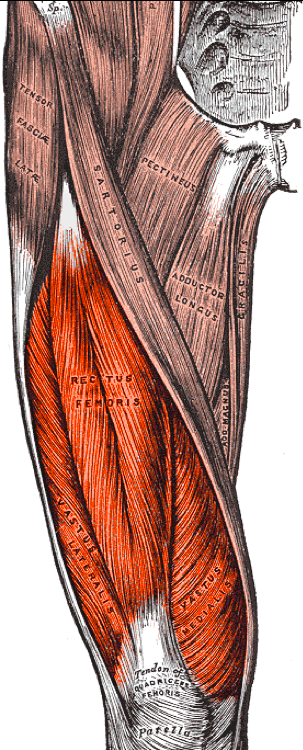
    The quadriceps femoris muscle (also called the quadriceps, or simply ‘quads’) is a large muscle group on the front of the thigh that includes four prevailing muscles. The name ‘quadriceps femoris’ is literally Latin for “four-headed muscle of the femur.”

    As the traditional etymology suggests, the quadriceps femoris muscle is subdivided into four separate muscles, known as “heads.” The rectus femoris muscle occupies the middle of the thigh and covers most of the other three quadriceps muscles. It originates on the ilium and is named for its straight course. The vastus lateralis muscle is on the lateral side of the femur, and the vastus medialis muscle is on the medial side of the femur. The vastus intermedius muscle lies between vastus lateralis and vastus medialis on the front of the femur, but deep to the rectus femoris muscle. Typically, it cannot be seen without dissection of the rectus femoris. Attached here is a illustration of the anterior thigh muscles from an edition Gray’s Anatomy.

    However, research has suggested that the quadriceps femoris may actually be composed of five muscles, rather than four. This newly discovered muscle has been dubbed the “tensor vastus intermedius” (TVI), and its presence may have important implications for our understanding of the musculature of the lower limb.

    The Discovery of the Tensor Vastus Intermedius

    The existence of the TVI was first proposed in a 2016 study published in the journal Clinical Anatomy. The study entitled “A newly discovered muscle: The tensor of the vastus intermedius“, was conducted by a team of researchers (Grob et al.) from the University of Central Florida, who used dissection and histological analysis to examine the structure of the quadriceps femoris muscle.

    The premise of their study was that they noted a tensor-like muscle between thevastus lateralis (VL) and the vastus intermedius (VI), and hence they wanted to clarify whether this intervening muscle was a variation of the VL or the VI, or a separate head of the extensor mechanism. This study demonstrated that the quadriceps femoris is architecturally different from previous descriptions: there is an additional muscle belly between the VI and VL, which cannot be clearly assigned to either the former or the latter. Distal exposure revealed that this muscle belly becomes its own aponeurosis, which continues distally as part of the quadriceps tendon, before of course finally inserting on to the medial aspect of the patella.

    It is important to note that while Grob et al. proposed the name ‘tensor vastus intermedius’, the reality is that this specific muscle has been reported previously in the literature.

    Implications for Anatomy and Physiology

    The naming of the fifth muscle as the TVI, and hence giving rise to a ‘quinticeps femoris’ has important implications for our understanding of the musculature of the lower limb. For example, knowing that there are five muscles in the quadriceps femoris rather than four could potentially change the way that we approach surgical procedures that involve this muscle group. It could also shed light on the evolution of lower limb musculature in humans and other animals.

    In addition, as I was trying to hint at from the title of this blog post, the discovery of the quinticeps femoris raises questions about the nomenclature of the qunticeps femoris muscle group. If there are in fact five muscles in this group, should we continue to refer to it as the “quadriceps”? Or would it be more accurate to call it the “quinticeps femoris”? This is a question that particularly pedantic anatomists and physiologists will need to grapple with in the coming years.

    Half a decade after the study by Grob et al., a systematic review on the anatomy, morphology, and function of tensor of vastus intermedius (TVI) was published in 2021. Alas, the review sheds light on the lack of high-quality evidence on the muscle’s morphology and clinical significance. While the TVI is located between the vastus lateralis and vastus intermedius, there is insufficient high quality evidence for us to confidently state its functional and clinical importance. As more research on TVI morphology emerges, we will gain a better understanding of the role of the muscle and the overall function of the quinticeps femoris.

    Conclusion

    The discovery of the quinticeps femoris is a fascinating development in the field of anatomy and physiology. Whether or not we end up calling it the “quinticeps femoris,” or simply deciding to stick to the good old “quads”, it is clear that the newly discovered TVI (tensor vastus intermedius), one of the five muscle heads of the quinticeps femoris, is an important part of the human body, and one that we are only just beginning to understand.


    Nicholas Loh
    3 March 2023