Which is the “correct” term: Alzheimer’s disease, Alzheimer disease? Should the eponym be replaced entirely?
According to the Wikipedia article on medical eponyms, “medical eponyms are terms used in medicine which are named after people (and occasionally places or things). In 1975, the Canadian National Institutes of Health held a conference that discussed the naming of diseases and conditions. This was reported in The Lancet where the conclusion was summarized as: “The possessive use of an eponym should be discontinued, since the author neither had nor owned the disorder”. New discoveries are often attached to the people who made the discovery because of the nature of the history of medicine.”
The existence of multiple terms to refer to the same concept/disease in medicine, or conversely, the same word being used to mean absolutely unrelated concepts, creates an inconvenience in medicine. This is most evident in database probes. If a person were to do a database probe on a particular disease or concept, he would need to incorporate all the different terms used to refer to that particular concept (e.g. searching for McArdle’s disease, you would probably have to include the term “glycogen storage disease type V” too for a truly rigorous and comprehensive search).
As the search results roll out, he would then need to be cautious not to waste time on the search results which have mainly incorporated the alternative meanings of the desired term (e.g. Purkinje fibres associated with the cardiac conduction system are absolutely different from the Purkinje neurons in the cerebellum).
Let’s not even get started on the differences in American English and British English (oestrogen vs. oestrogen) and the arbitrary use/lack of use (e.g. Type V vs. Type 5) of Roman numerals which create even more hassle in rigorous database searches. Furthermore, generic names for drugs/hormones may be different from the US and that of the rest of the world (e.g. paracetamol vs. acetaminophen; salbutamol vs. albuterol; adrenaline vs. epinephrine). Here is the skeletal formula of paracetamol:
Fun fact: Paracetamol and acetaminophen both derive from the systematic chemical name for the drug: N-acetyl-para-aminophenol. To get either term, different parts of the chemical name were taken and compounded to yield a new generic drug term!
In my first semester last year, I had a physiology assignment which consisted of several questions, the first of which pertained to the pathophysiology of Tay-Sachs disease, a lysosomal storage disease. As with the names of many diseases/syndromes/disorders, this was yet another eponym. Usually, when we come across diseases with eponyms, we often think that eponyms are perhaps the surname(s) of the men who have been the first to document the said disease. In most cases, this would be true.
However, in some cases, the eponym is associated with the patient who suffered from the disease (e.g. Christmas disease, Hartnup disease), or even a location (e.g. Lyme disease, Marburg virus). Lyme disease was named after its namesake, a small coastal town in Connecticut, a state in the US, where in 1975, a woman brought an unusual cluster of paediatric arthritis cases to the attention of Yale researchers. In 1977, the Yale researchers identified and named the clusters Lyme arthritis.
As I studied the glycogen storage diseases and lysosomal storage diseases a few months ago, I couldn’t help but notice that virtually all the diseases had medical eponyms.
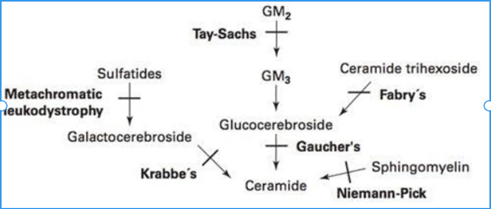
Off the cuff, at least for the more prominent lysosomal storage disorders, all but one I can think of are all eponyms. Consider this diagram:
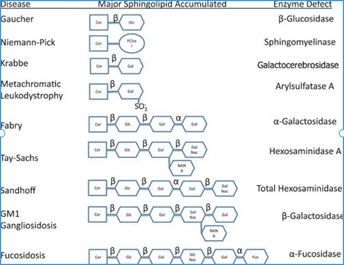
And the above is only for the diseases implicating sphingolipids (i.e. sphingolipidoses). Another category of lysosomal storage diseases would be the mucopolysaccharidoses, the most prominent of which are Hurler’s syndrome and Hunter’s syndrome. Only metachromatic leukodystrophy isn’t an eponym! Here is another useful image I found that shows you how deficiencies of various enzymes in sphingolipid metabolism result in the accumulation of various sphingolipid derivatives:
In fact, a few months ago, I had a chat with my friend who is a doctor. I told her something along the lines of “many diseases are due to deficiencies in particular enzymes. Instead of having these eponyms, wouldn’t it be easier if the common name for all these diseases took the form: “[enzyme name] + deficiency”? The name would then provide functionally useful information. What use is knowing that two men with surnames Tay and Sachs helped document Tay-Sachs disease? Its alternative names: Hexosaminidase A deficiency, and GM2 gangliosidosis tell us so much more!”
We just laughed, and chuckled at such a quixotic notion. After all, one does not simply just go about and casually dictate the conventions and traditions to which the medical fraternity chooses to adhere.
For the glycogen storage diseases, which have many types, types I, II, III, IV, V, VI, VII are von Gierke’s, Pompe’s, Cori’s, Andersen’s, McArdle’s, Hers’, and Tarui’s, respectively. There are also sub-types and other types which are rarer. Today, at least 15 types of GSDs have been documented.
One possible explanation for the survival of some eponyms despite the existence of functionally useful alternative terms is that the eponyms are coined before the pathophysiology of the disease could be worked out. This is not surprising because usually, one would expect that the clinical signs and symptoms are documented first. It is only thereafter that research is conducted to find out more. In the case of Tay-Sachs, the root cause of Hexosaminidase A deficiency was only discovered in 1969, long after British ophthalmologist Dr Warren Tay initially described the characteristic cherry-red spots seen on one of his patients’ retina in 1881.
NB: Cherry-red spots on the macula are also seen in Niemann-Pick’s disease; the way to differentiate between the two diseases is via the presence/absence of hepatosplenomegaly in Niemann-Pick and Tay-Sachs, respectively.
That’s the way medicine is. The medical fraternity appears to relish its long-standing traditions. Anecdotally, I think many senior physicians would be more comfortable with the use of eponyms. This is in contrast with the recent trend of not favouring eponyms. People who discourage the use of eponyms have the following arguments:
1. “They don’t reflect the pathophysiology”. I have already covered this with the example of Tay-Sachs disease above. In many cases, there is simply little you can do about it. For many eponyms, especially for those of common diseases, the eponyms are so widely used that using the alternative terms would do you inconvenience and a disservice to yourself and your peers. You would probably be asked to clarify yourself if you insist on using a term that is not commonly used. This is a major reason I suspect that the US would likely never use the metric in practice. The economic cost simply doesn’t justify it, and even if there were economic aspect of the problem were resolved, people are simply too accustomed to the status quo. In the case of the imperial units which the US uses, whole institutions in that vast country have been established and worked on the premise of the imperial units. Enforcing a change of units would likely cause unbelievably great inconvenience to many people. Likewise, we see a similar phenomenon with medical eponyms. Even if an alternative term makes “more sense” to you, there is no point using it if your peers are just going to seek clarification all the time.
2. They may stigmatise certain groups of people. Did you know that syphilis used to be termed the “French disease”? According to its Wikipedia article, the first written records of an outbreak of syphilis in Europe occurred in 1494 or 1495 in Naples, Italy, during a French invasion (Italian War of 1494-8). Since it was claimed to have been spread by French troops, it was initially called the French disease by the people of Naples. The French should be glad that syphilis no longer adopts its former name as it would only add to the list of stereotypes that people have of them!
3. They may glorify people associated with undesirable and shunned ideologies. Believe it or not, there is actually a Wikipedia page on medical eponyms associated with the Nazis (see reference [4]). Of this subset of medical eponyms, Asperger’s syndrome is probably the most well-known. The syndrome is named after Hans Asperger who apparently “managed to accommodate himself to the Nazi regime and was rewarded for his affirmations of loyalty with career opportunities.” He “joined several organisations affiliated with the Nazi party, though not with the Nazi party itself, and publicly legitimized race hygiene policies including forced sterilizations and, on several occasions, actively cooperated with the child ‘euthanasia’ program.” Despite this history, Asperger remains honoured in the form of the eponym partially because his involvements with the Nazis were not so direct and notable, in stark contrast with some other physicians (you’ll never hear Mengele getting honoured with an eponym).
While learning respiratory physiology and histology, I chanced upon Club cells (formerly known as Clara cells):
Club/Clara cells are nonciliated cells, as you can see from the above illustration. Clara cells are located in bronchioles and the functions of these cells include: 1) degrading toxins, 2) secreting a component of the pulmonary surfactant, 3) acting as reserve cells.
This “Clara” wasn’t the name of a woman. It was the surname of Dr Max Clara, who according to the relevant Wikipedia article: “was an active member of the Nazi Party and used tissue taken from executed victims of the Third Reich for his research—including the work that led to his discovery of Clara cells. In May 2012, the editorial boards of most of the major respiratory journals (including the journals of the American Thoracic Society, the European Respiratory Society and the American College of Chest Physicians) concluded that the continued use of Clara’s eponym would be equivalent to honoring him; they therefore introduced a name-change policy, which went into effect beginning January 1, 2013. The term “Clara” was used parenthetically after “club cell” for a 2-year period, after which “Clara cell” and “Clara cell secretory protein” were conclusively replaced with “club cell” and “club cell secretory protein”, respectively.
Who knew that such innocent terms would have such a backstory? I once mentioned this to a friend whose name is Clara. Maybe she’ll discover something else and have something named after her!
As we have seen above, there are various reasons that people wish to stop using medical eponyms in certain scenarios. Nevertheless, I am personally in favour of eponyms, as I opine that the merit warranted by the following factors outweigh the disadvantages associated with eponyms.
1. They favour communication, and are definitely more succinct than equivalent descriptive terms, which are usually longer. It could also potentially be the case that there isn’t any satisfactory alternative descriptive term because the symptoms may be too broad, or not enough is known about the disease, etc.
2. They distinguish between different forms of a particular symptom/concept, thus allowing for more accurate description (e.g. Sydenham’s chorea vs. Huntington’s chorea).
3. They may commemorate the achievements of hardworking doctors, patients, and other medical staff whose contribution may otherwise be lost to posterity. They also give recognition to otherwise relatively unknown places (e.g. Lyme disease, Marburg virus).
4. This is an important counterargument to the earlier point on how eponyms may stigmatise certain groups of people. In fact, one classic example of how eponyms help people reduce stigmatisation is the case of leprosy. The general public would be well-acquainted with leprosy, but its eponym is much less familiar to the layperson: Hansen’s disease. Eponyms can also help preserve patient dignity (e.g. Angelman’s syndrome vs. Happy Puppet Syndrome) and avoid racism (e.g. Down’s syndrome vs. Mongolism).
5. Eponyms pique the curiosity of those who are interested in the history of a disease or a concept. They teach us about medical history and culture: the noble work that our forefathers have done to give us the immense cumulative wealth of medical knowledge that we have today. In some cases, the eponyms tell us an amusing story! For instance, Professor Sir Edwin Southern (who is still alive) invented the Southern blot procedure in 1975, a procedure that is commonly used in laboratories today for detection of a specific DNA sequence in DNA samples. Following this invention, the Northern and Western blots were developed as blotting procedures which involved RNA and proteins, respectively. Clearly, you can see the play on words! This naming convention on directionality wouldn’t have happened if not for the initial Southern eponym and at least one other biologist’s sense of humour!
NB: A helpful mnemonic for the various blots and the substances is: SNoW DRoP, where S, N, and W are Southern, Northern, Western, and D, R, and P are DNA, RNA, and Protein respectively!
In fact, what do you think a Southwestern blot entails? If you guessed that it’s something that involves both DNA and proteins, then congratulations! You’ve just demonstrated how marvellous eponyms can be! Southwestern blots identify DNA-binding proteins!
6. If we’re being honest with ourselves, these eponyms often make us sound more sophisticated. Which is more sophisticated – noting the four symptoms: pulmonary infundibular stenosis, right ventricular hypertrophy, overriding aorta, ventricular septal defect, or elegantly presenting it simply as “Tetralogy of Fallot”? Evidently, the latter is more succinct.
What do you think of eponyms? Let me know your thoughts!
In a previous blog post, 01(15), I discussed my musical journey from its very beginning. I highly recommend that you read it if you want an exposition on my musical journey. That blog post is a must-read if you are a frequent visitor to my blog!
In this post, I would like to expound on why I chose the pieces I did for my most recent piano examination: the ATCL diploma (Piano Performance) examination. To summarise a portion of the previous blog post, I cleared my Grade 8 in August 2014. For the years following that exam, I would intermittently toy with the idea of doing a piano performance diploma. However, I would always dismiss the thought for one or more reasons: 1) I didn’t have a teacher; 2) the pieces on the diploma syllabus were significantly more challenging than that of ABRSM Grade 8 pieces; and more.
Despite all the hurdles and discouraging factors, I finally made the decision to register for the piano diploma exam in early July 2018, to have the exam scheduled for Nov/Dec 2018. Today, I look back and find it incredible that I was so bold to decide to do it. The circumstances just suggested that I was going to fail the exam and that I would be throwing a thousand dollars in exam registration fees down the drain.
To cut the long story short, I had a friend who told me once that anything worthwhile doing will often be difficult, but doing the difficult is often worthwhile. I heeded this advice of his. Over time, I had learnt more pieces, and I increasingly felt that this new milestone was a more accurate representation of my musical abilities. I reckoned that it would also be a nice pat-on-the-back.
The sheer sense of adventure was exhilarating.
One of the major reasons that I felt sufficiently motivated to register for the diploma exam was that some of my favourite pieces were on the syllabus list. As you would see in 01(15), I chose four pieces for my piano diploma exam:
1. Bach – Prelude & Fugue in A-flat Major, The Well-tempered Clavier, Book I, BWV 862
My first real experience with the music of Bach was around the time when I was a Sec 3 student in 2012. That year, I attended the Founders’ Day ceremony (a ceremony which commemorates the anniversary of the founding of Maris Stella High School, my secondary school), and musical performances were included as part of the programme. There were performances by various performance arts CCAs (e.g. symphonic band). I remember that the string ensemble of the primary school side played the first movement of Vivaldi’s Spring. That was very memorable!
The one musical performance that stood out to me was that of a solo piano piece. A Primary 3 or 4 student played the grand piano on the stage (just a few weeks before the ceremony, the school had replaced the old Ibach grand with a brand-new Yamaha grand). The piece he played was relatively simple but it etched a memory that I shall never forget. He performed Invention No. 14 in B-flat major by J. S. Bach. You can listen Gould’s recording of it here:
The piece is simple in the sense that it only has two voices: one voice per hand. It is quite simple to hear the dialogue between both hands. You can hear the rhythm of one hand echoing that of the other. Despite being such a simple piece with few notes, Bach has constructed such a musical masterpiece. Hearing that live performance of a Bach work motivated me to learn other piano works by Bach. From that day, I went on to learn the other two-part inventions, pieces from the French Suites, Partitas, Well-Tempered Clavier, and just over a third of all variations from the Goldberg Variations. As of the time of writing, most of my repertoire consists of Bach. Just take a look at my YouTube channel. Most of my uploaded videos are performances of Bach works.
About a month after my A-levels ended in 2015, my family went on a holiday to New Zealand, and on that trip, I would listen to the recordings by the pianist Ms Kimiko Ishizaka. She is a renowned interpreter of Bach (in fact, the embedded video above of the prelude and fugue in A-flat major is that of her performing)! Whilst travelling from place to place via a coach (we were on a tour group), I would listen to her recordings of Bach, and admire the amazing scenery of New Zealand. I had her complete album consisting of all the preludes and fugues from the first book of the WTC on my phone.
One particular prelude and fugue set stood out to me. It was Prelude and Fugue in A-flat Major, BWV 862. I would set it on Repeat-One, and listen to it over and over again. I enjoyed it so much that the moment I returned to Singapore, I immediately set out to learn the prelude. Before I knew it, I was done learning it. The fugue was something I learnt only after I had committed to learning the set for my piano diploma exam.
I completed learning the A-flat major prelude within a few days of returning to Singapore, and uploaded a video of my performance of it directly to Facebook on New Year’s Day of 2016. I remember distinctly that I had made a post (simultaneously paired the video upload) which discussed the relevance of SG50, and what the next 50 years would be like for Singapore. I also talked about how I was inspired by Ms Kimiko Ishizaka to learn that prelude. In fact, I tagged her Facebook page in my post, and to my great surprise, she responded to my post and said that I played well!
It was a humbling experience. She even shared my post and video to her own Facebook page and my video ended up getting more than 1.3k views. That’s a lot, considering I was, and still am, an unknown pianist (as competent as Kimiko is, she isn’t that well-known in the classical piano arena either), and that very few people are interested in classical music in the first place!
2. Beethoven – Piano Sonata No. 8 in C Minor, Op. 13 – ‘Pathétique’
This piano sonata by Beethoven is well-known. My first encounter with this sonata occurred while I was in junior college. There was this guy who would often play on the upright piano that could be found just outside the main auditorium of the junior college. One of the pieces that he would frequently play is the third movement of the Pathétique sonata. Its opening notes is very well-known. I talked to this guy and he told me that this third movement was one of his chosen ABRSM Grade 8 Piano exam pieces!
The second movement of the Pathétique is arguably the most famous of the three movements. I loved the haunting melody of the second movement and when I saw the Pathétique on the diploma syllabus list, I strongly considered it. Seeing that I liked all three movements, I ultimately chose this sonata as one of my performance pieces.
3. Chopin – Nocturne Op. 48 No. 2
I’ll be honest with you. I don’t have much to say about this Chopin nocturne. Firstly, it was Chopin, which meant that the harmonies and melodies were bound to be very pleasing to the ears.
This piece isn’t technically challenging too, and it simply blended well with my other pieces (notice how the four chosen pieces are in chronological order in terms of when they were composed?). The ending of this nocturne is phenomenal and majestic though. I didn’t think too much of this piece overall, as I chose it to make up the time requirement (for the ATCL, the total duration of pieces need to be within 32-38 minutes excluding breaks between pieces).
I mean, there were other pieces I liked much better which could have been chosen to make up the time requirement. However, I felt that I did not possess the technical competence to do these pieces justice. One such piece was Liszt’s Liebesträume No. 3.
In Liebesträume No. 3, we have runs like this:
Achieving the level of precision required to execute those runs would simply not be feasible, given the limitations of time I had as a full-time student, and the sheer amount of time that I would need to practise in order to play those runs satisfactorily. Hence, I ultimately chose to learn the Chopin nocturne.
4. Rachmaninoff/Kreisler – Liebesleid (from Piano Compositions No. 2)
This is the most interesting one. This is quite special in that the piece is Rachmaninoff’s piano transcription of a work for violin and piano that was originally composed by the violinist, Fritz Kreisler. The melody of Liebesleid is very well-known. Just hum the first two bars and just see how the average Joe on the street is able to hum the succeeding bar effortlessly.
Of course, as with anything Rachmaninoff, this piece is probably bound to be technically challenging. Rachmaninoff is notorious for having large intervals in his compositions (e.g. tenths just scattered here and there throughout his virtuosic compositions). Well, that shouldn’t be too surprising considering that Rachmaninoff had a handspan of a 13th! That perhaps explains the monstrous opening chords of his second piano concerto. For a detailed exposition on pianists and their handspans, read an earlier post I made: 01(24).
Fortunately, while this Rachmaninoff transcription is challenging enough to find its way onto an ATCL syllabus list, it isn’t AS challenging as many of Rach’s other pieces, as it’s “only” at an ATCL level. Many Rach pieces require musical maturity far beyond an ATCL level for a performance that one can be proud of. Nevertheless, this piece was challenging enough that I ended up the devoting the greatest proportion of my time to learning and mastering this piece for the performance exam. And as you might have guessed: among the pieces I ultimately selected, this was the most technically challenging one.
I am very fortunate to have an above-average handspan. This has enabled me to stay faithful to Rach’s original composition in that I am able to, in many instances, play the originally-written block chords (I personally rather have all notes of a chord sound simultaneously than having them roll). This is contrasted by the act of “rolling chords”. Pianists usually “roll” chords when their span is not large enough to play the chord as a block. For those of us who read sheet music, just watch the above video and you’ll know what I mean.
My first encounter with this piece was quite unusual. I no longer watch Japanese cartoons/anime but back then, I used to watch Japanese animation, along with other movies during my free time. Around October 2014, A-1 Pictures, a Japanese animation studio, began airing an anime television series that was an adaptation of a Japanese manga series written and illustrated by Naoshi Arakawa.
The Japanese name of the series was Shigatsu wa Kimi no Uso, which translates to “Your Lie in April”. The animation series was quite popular. I don’t have time to talk about the plot in detail but basically, the plot revolves around two main characters: Kousei Arima, a prodigious pianist, and Kaori Miyazono, a violinist. Some time in the show, Kousei performs Liebesleid on stage and personally, it is a way for him to have proper closure regarding the death of his mother, whose death had a great psychological impact on him.
Liebesleid (which is German for “Love’s Sorrow”), as originally composed by Kreisler, is actually part of a set of works known as Alt Wiener Tanzweisen (German for “Old Viennese Melodies”). This set consists of three works: Liebesfreud (Love’s Joy), Liebesleid (Love’s Sorrow), and Schön Rosmarin (Lovely Rosemary). The three works are usually heard or performed separately. Rachmaninoff composed a set of virtuosic transcriptions on the first two works: Liebesfreud, and Liebesleid.
In the anime, Kousei’s piano teacher was his mom, and she would only ever play Liebesleid, and not Liebesfreud. The curious Kousei then recalls mid-performance how he asked his mother when he was younger, and when she was still alive, why she would only play Liebesleid.
In the ‘subbed’ version of the anime, Kousei’s mom replies “So that you’ll get used to sorrow”. In the ‘dubbed’ version of the anime, she replies instead “I play it, so that sorrow won’t be as scary”. Either way, there is something we can learn from her response.
Rachmaninoff is a true master at taking the simplest of melodies and creating complex sequences of dissonant chords, and interwoven melodies. Though the learning process for Liebesleid was most challenging among all my pieces, I also found it to be the most rewarding. To date, Rachmaninoff’s transcription of Kreisler’s Liebesleid remains one of my favourite pieces for piano.
In 01(15), I talked about how as expected, the examiner felt that my best-performed piece was the first piece: the piece by Bach. I was not surprised by this as Bach is my favourite composer and an overwhelming majority of the pieces that I have learnt are by Bach. So, one mistake is that I didn’t focus on my strengths. The piece by Bach was the shortest piece among the four pieces and it only accounted for slightly more than 10% of the total performance duration (excluding breaks).
In hindsight, I could definitely have chosen my pieces such that Baroque pieces (specifically those by Bach) took up the greatest proportion of the performance duration. I definitely could have chosen to perform something like Bach’s French Suite No. 5 in G Major (I do in fact, already know how to play two movements from that suite!). That whole suite on its own would already take up around half the performance duration! Who knows? I just might have gotten that elusive distinction for my piano performance diploma exam if I had chosen to focus on my strengths instead!
Well, that’s all I have for this post. For more details, please, once again, check out 01(15), as it truly is the most comprehensive post I have at the moment on my musical journey. If you have any questions for me, please feel free to contact me on Telegram or via my e-mail. Thanks!
What comes to your mind when you think of people swimming in warm freshwater lakes and rivers? For me, this thought conjures pleasant images of people relaxing in these water bodies. Some might even relax in natural hot springs. Usually, all is well and people are just enjoying their time away from work: the rat race that plagues the lives of many Singaporeans. Such people would probably have gone overseas to partake in such an experience.
Recently, I was learning about parasites as they piqued my curiosity. Parasitology is the study of parasites and is a category within microbiology, a basic medical science that is learnt in the pre-clinical phase of medical school. Other categories within microbiology include mycology (study of fungi, especially microscopic fungi), bacteriology (study of bacteria), and virology (study of viruses). This is a neat classification as microbiology is after all, the study of very small (micro-; at the scale of the micrometre) organisms, or if we want to be extremely precise: agents or entities (since viruses are not typically considered to be organisms).
Within parasitology, there are further sub-categories: protozoa (unicellular eukaryotes), nematodes (roundworms), cestodes (tapeworms), trematodes (flukes), and ectoparasites (parasites which live on the outside of the host).
The parasite that I wish to discuss in this post comes from the subcategory: protozoa. Even within the subcategory of protozoa, there are further categories! One way of classifying infectious protozoa would be the nature of their infections. For example, some protozoa can cause 1) GI (gastrointestinal) infections, some cause 2)CNS (central nervous system) infections, some cause 3)hematologic infections (the well-known malaria is caused by Plasmodium), while some protozoa cause 4)visceral infections and sexually transmitted infections.
The organism that I wish to discuss today belongs to the group of protozoa which causes CNS infections. You might have heard about it or seen it being mentioned in newspaper articles. Its colloquial name is “brain-eating amoeba“, better known among the medical and scientific community as Naegleria fowleri, which was first identified in Australia, but is thought to have evolved in the US.
N. fowleri can be found in warm lakes, ponds, rock pits, mud puddles, slow-flowing rivers. It can also be found in swimming pools, spas, wells, and municipal water which are all untreated. It can even be found in aquariums, and soil. There is currently no evidence that suggests that N. fowleri is able to survive in salt water. That is probably why it can usually only be found in freshwater. There are several species under the genus Naegleria but only the fowleri species (all known fowleri subtypes are believed to be equally dangerous) are known to be anthropopathogenic (causing human disease). This is a computer-simulated representation of the trophozoite form of the parasite:
Like many other amoebae (unicellular eukaryotes), N. fowleri exists as a cyst (inactive form) when environmental conditions are not favourable. However, when conditions are favourable, N. fowleri transforms into a trophozoite, its active and feeding form which is pathogenic.
Mechanism of infection by Naegleria fowleri
The colloquial name for N. fowleri suggests that the microbe is just like an undead entity which munches and chews on your brain tissue as its primary source of nutrition. However, our brain tissue wouldn’t be their first choice. Think of how children wouldn’t usually prioritize the consumption of their greens! N. fowleri normally consumes bacteria. However, when N. fowleri infects us, it feeds on our brain tissue. The reason that N. fowleri infection is so associated with freshwater contact is that the parasite enters via the nose, and then to the cribriform plate. This means that infection occurs mostly from activities involving freshwater contact where water finds its way into the nose. Such activities would include swimming, and many water sports.
Unfortunately, cases of such infection by N. fowleri have even been reported (though very rare) in people who dunk (sounds absolutely silly but that which Homo sapiens is capable of ironically knows no bounds) their heads in hot springs and people who irrigate their nostrils with neti pots that contain untreated tap water.
As a consolation, there is no known evidence to suggest that N. fowleri can be transmitted between human beings.
Current evidence suggests that the parasites are attracted to the chemicals that our neurons use for intercellular communication. Once in the nose, N. fowleri travels to the frontal lobe via the olfactory nerve. Look at this image below:
When swimming in fresh water, the water makes its way into the nasal cavity and there, N. fowleri penetrates the mucus layer, and probably enters the cilia of olfactory receptor cells. As such, it is able to penetrate the cribriform plate and enter the olfactory nerve (responsible for our sense of smell). Note that for basal cells, and supporting cells, they do not have any passages which penetrate the cribriform plate. Only the olfactory receptor cells have axons which penetrate the cribriform plate on their way to the CNS.
The olfactory nerve is known as the first cranial nerve (CN I), and it is the shortest of all 12 cranial nerves. After the cribriform plate, the olfactory nerves pass upward to several areas of the brain, such as the hypothalamus and amygdala, However, for the purposes of our discussion, the olfactory nerves terminate on the undersurface of the frontal cortex.
In essence, after penetrating the nasal mucosa, the trophozoite migrates along mesaxonal (the mes- prefix comes from the Greek word ‘mesos’ which means middle/intermediate, and -axonal just refers to the axon/nerve fibre of the neuron) spaces of unmyelinated olfactory nerves which terminate at the olfactory bulb in the subarachnoid space, among many other terminal destinations. I imagine that one reason this particular parasitic infection is so deadly is that the subarachnoid space is quite vascularized and is a route of transmission of N. fowleri trophozoites to many other areas of the CNS. So it is not surprising that after the initial incubation period, N. fowleri infection is characterized by an abrupt onset of headache, fever, nausea, vomiting, encephalitis (inflammation of the brain).
After the typical signs of a CNS infection, progression to seizures and then, coma, is rapid (usually over 3-7 days).
The disease that is caused by this parasitic infection is officially known as Primary Amoebic Meningoencephalitis (PAM or PAME). The prognosis of PAM is extremely bleak as a vast majority of cases (>95%) end in death, which occurs an average of just 1 week after the initial onset of symptoms. PAM/PAME caused by N. fowleri has a worldwide distribution, and occurs most frequently in tropical areas and during hot summer months. Most cases of PAM due to N. fowleri infection have occurred in the US. However, this might be due to underreporting in other countries, and not simply due to a higher prevalence of PAM in the US. In many countries, autopsy is not standard.
Diagnosis of PAM is so problematic because:
Firstly, early in the course of PAM, PAM often resembles purulent bacterial meningitis (PBM), and cannot be easily distinguished from PBM.
Secondly, PAM progresses incredibly quickly, and rapid diagnostics must be developed for early detection. Must of the diagnosis is based on patient history (e.g. whether the patient has recently swum in warm fresh water, along with associated symptoms). The gold standard (for now) is not achieved until the trophozoites are isolated and identified from cerebrospinal fluid (CSF) or brain tissue. While N. fowleri does grow easily in culture, this can nevertheless still take a few days. For a disease like PAM where an infection will kill in about a week, a few days is just simply too long, and often this means the difference between life and death.
Treatment for PAM secondary to Naegleria fowleri infection
Intravenous amphotericin B is the current standard of care. Amphotericin B works by disrupting the selective permeability of plasma membranes. It works by binding to ergosterol (the sterol in fungi cell membranes). Though not a fungi, N. fowleri has ergosterol in its cell membrane. Hence, Amphotericin B, which is normally an antifungal medication, can also be used as an antiprotozoal medication for otherwise-untreatable diseases caused by certain protozoa.
In this case, Amphotericin B binds to ergosterol in the cell membrane of N. fowleri, giving rise to a pore which allows potassium ions and other small molecules to leak out from the cell, ultimately leading to cytolysis. Unfortunately, having great results in the lab doesn’t always necessarily translate to a similar level of success in actual patients.
Amphotericin B is a ‘last-resort’ drug as it has high toxicity, and its use in actual patients are not as successful in actual patients compared to what initial lab experiments predict.
So, just bear this all of the above in mind before you decide to venture out into warm ponds, freshwater rivers and lakes for a swim, especially during the hot summer months.
Well, I’m kidding. The odds are that you’re probably going to be fine. Nevertheless, take caution. Don’t dunk your head in the water at a natural hot spring for goodness’ sake.
There have only been a few hundred cases of Naegleria fowleri infection worldwide since the parasite was documented from the 1960s. Naegleria fowleri is actually quite common, but its infection is rare. However, if you are infected, then the prognosis isn’t particularly optimistic (>95% death).
I hope you have learnt more about this interesting parasite from reading this article!
Yesterday, I was watching a video where the teacher had asked his students a question. He had just discussed how penicillins and cephalosporins can be used against certain bacteria, right after talking about Mycoplasma.
The teacher then asked the class: “Which is Mycoplasma more sensitive to: penicillins or cephalosporins?” One student raised his hand and answered, “Penicillin”. To this, the teacher replied, “That is wrong.” Immediately, the teacher asked another student, “So, what do you think Mycoplasma is more sensitive to: penicillins or cephalosporins?” Seeing that the first student was wrong when he had answered the question, the second student was perhaps quite confident that he would get it correct if he answered cephalosporins, and that was exactly what the second student did. Unfortunately, he was wrong! I absolutely saw it coming though, as this teacher is known to ask such trick questions to test students’ concepts. The teacher was visibly lamenting that they both got it wrong.
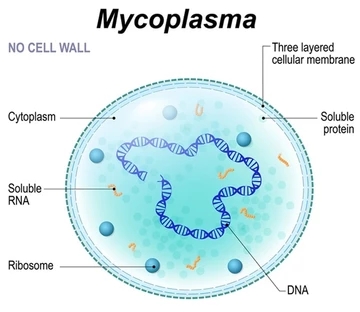
This was obviously a trick question. Mycoplasma has an equal sensitivity (better seen as an equal lack of sensitivity) to both penicillin and cephalosporins because while both classes of drugs work on bacterial cell walls,it has to be understood that Mycoplasma does not have a cell wall, and specifically, a cell wall with peptidoglycan! Consider this similar scenario. A person has no ears, and cannot effectively listen or hear anything. Which would give him a more enjoyable music-listening experience: earbuds or headphones? Hahaha!
The teacher’s original question is good because it reinforces the concepts which students are taught. This is how students actively learn: by seeing how the dots connect. A student can learn these three things separately: 1) the mechanism of action of cephalosporins; 2) the mechanism of action of penicillins; 3) the characteristics of Mycoplasma. Questions like the one asked by the teacher are effective in getting students to integrate the knowledge that they have learnt separately, at least from anecdotal experience.
As of the time of writing, Mycoplasma is arguably the smallest known living organism. What defines life? What defines a living organism? While there isn’t a unanimous consensus within the scientific community regarding the definition of life, a majority within the scientific community agree that prions, plasmids, transposons, bacteriophages, viruses all do not constitute life. As such, bacteria would generally constitute the smallest and “simplest” life forms. They are prokaryotes and are unicellular.
Most bacteria have cell walls. Why do they need a cell wall? Well, they need cell walls to prevent osmotic burst as their cell membranes are unstable due to a lack of sterols, which confer stability to the cell membrane. Recall that the cell membrane consists of mostly consists a lipid bilayer. The difference between a phospholipid and a triglyceride is that instead of having 3 fatty acid chains attached to a glycerol backbone in triacylglycerols, there are only 2 fatty acid chains attached to a glycerol backbone in phospholipids. A polar negatively-charged phosphate group takes the place of where the third fatty acid would have been connected. As such, the phosphate group, along with the carboxylic esters formed between the glycerol backbone and the two fatty acids constitute the hydrophilic head of the phospholipid while the tails of the two fatty acid constitute the hydrophobic tails of the phospholipid. What I have explained is beautifully illustrated in the diagram below.
With the hydrophilic heads of phospholipids facing the extracellular fluid and the cytosol, polar and charged substances are not able to diffuse through the cell membrane. However, despite being a polar molecule, water is able to diffuse through the cell membrane because it is a very small molecule.
As such, if not for the cell wall, bacteria would undergo osmotic burst or cytolysis due to excess water diffusing into the cell (we have just previously established that water is able to diffuse through the lipid bilayer despite being a polar molecule), and that the cell membrane is not large enough to accommodate the excess fluid.
This is where the cell wall comes in to help the bacteria resist cytolysis. But before we discuss how the cell wall, let us first discuss which living organisms have cell walls and their variations.
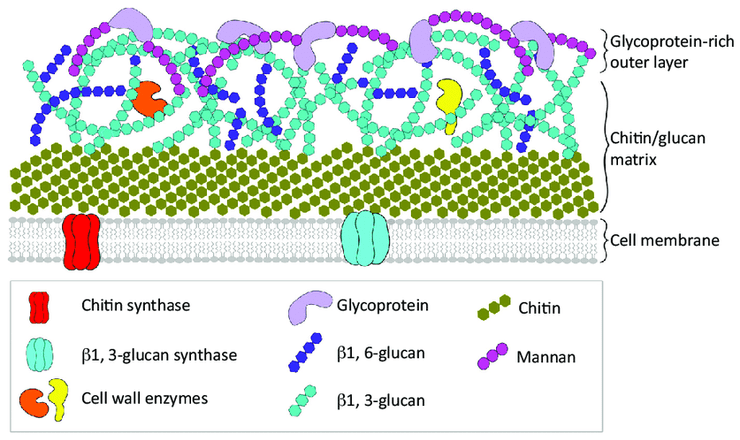
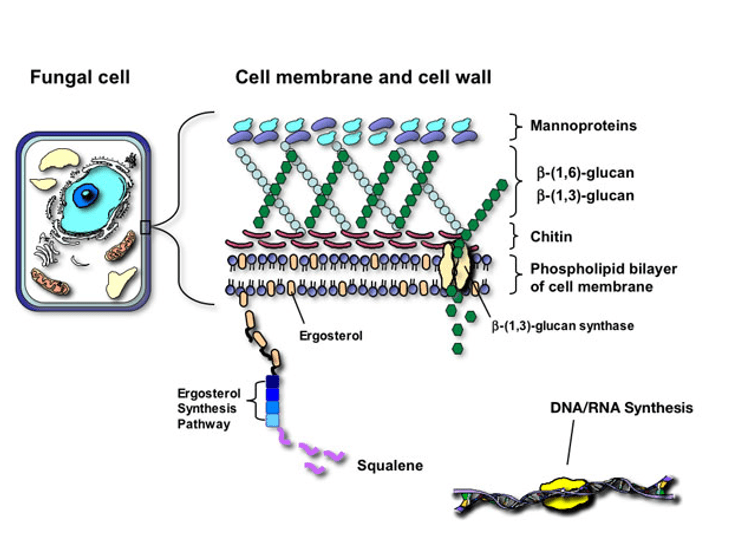
For the sake of our discussion, let us ignore plants and non-infectious agents since I am interested in infectious agents. For eukaryotic infectious agents, we have fungi, protozoa, helminths, and ectoparasites. Of these eukaryotic infectious agents, only fungi have cell walls. As for prokaryotes, we basically only have bacteria, and most bacteria have cell walls. Here is a diagram showing the structure of a fungi cell wall.
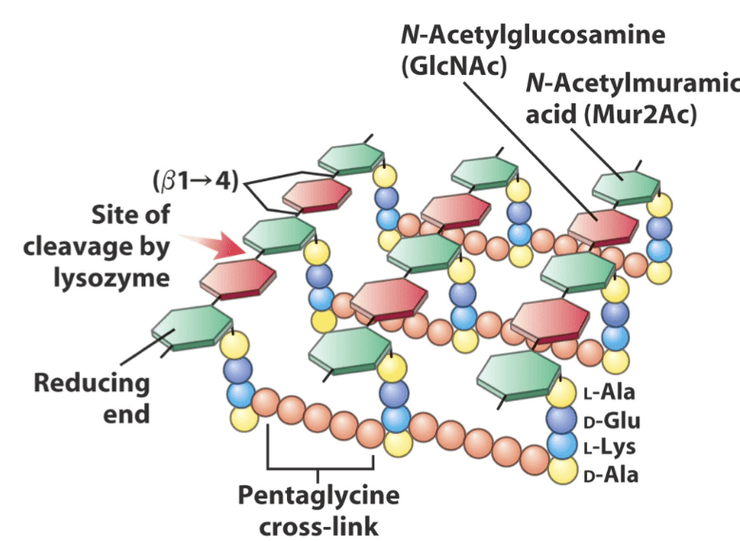
The difference between the cell walls in fungi and in bacteria is in the composition. Fungi cell walls consist of chitin, a polymer of N-acetylglucosamine, which is a glucose derivative. On the other hand, bacteria cell walls consist of peptidoglycan. The first step to understanding peptidoglycan is simply looking at its name. Consider “peptido-” and “-glycan”. This tells us that peptide bonds and sugar or sugar derivatives are involved in peptidoglycan’s structure. Consider this excellent diagram below which illustrates the structure of peptidoglycan beautifully:
With a cell wall, bacteria are able to resist cytolysis.
The answer is that Mycoplasma has sterols within its cell membrane for stability. This presence of sterols within the cell membrane is unique among prokaryotes and it strongly suggests that sterols function as regulators of membrane fluidity.
The most well-known sterol that probably all of us have heard of is none other than cholesterol. The prefix “chole-” means bile or gall, which is a fluid produced in the liver. Bile consists mainly of water (97%), bile salts (0.7%), other substances, and of course, cholesterol.
Let’s take a look at the diagram involving peptidoglycan again. Do you see those pentaglycine cross-links? As the term suggests, these cross-links consist of 5 (penta) glycine residues linked together, with one terminal glycine joined to L-Lysine while another terminal glycine is joined to D-Alanine.
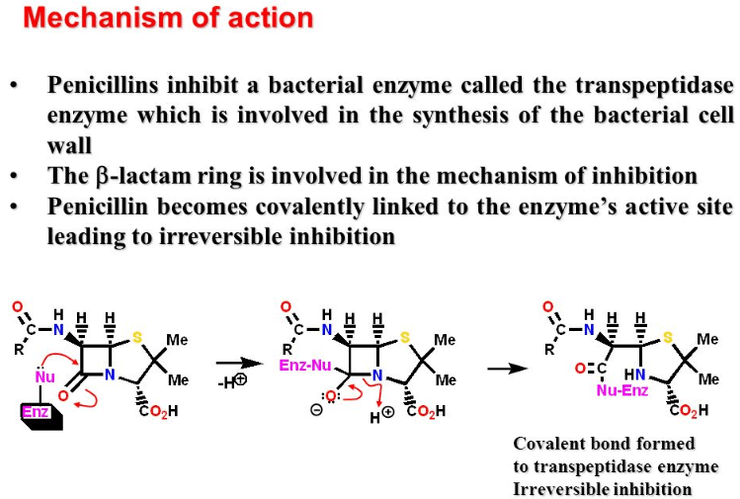
Penicillin works by binding to penicillin-binding proteins, which ultimately leads to cytolysis. One such protein is transpeptidase, the enzyme which catalyses the pentaglycine cross-links that connect the amino group on one N-Acetylmuramic acid to the amino group on another N-Acetylmuramic acid. When penicillin binds to transpeptidase, penicillin inhibits transpeptidase.
As such, with penicillin, these pentaglycine cross-links do not form, and the cell wall is not as sturdy as it should be, causing the bacterium to be more susceptible to cytolysis.
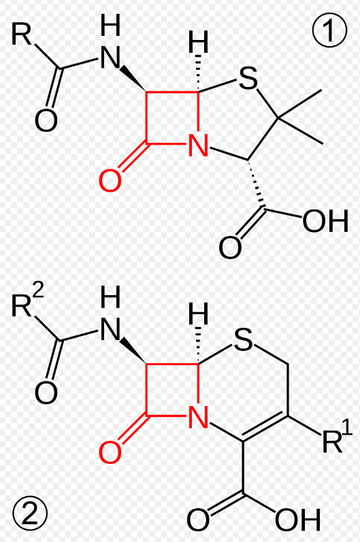
In the above image, we have the core structures of penicillin above (1), and the cephalosporins below (2). The part highlighted in red is known as the beta-lactam ring. It is named as such because a lactam is a cyclic amide (which is evident from C=O and the C-N bonds within the red 4-membered ring), and it is a beta-lactam because if the peptide bond were hydrolysed, then the nitrogen atom would be attached to the beta-carbon. The takeaway is that both penicillins and cephalosporins both belong to a broader category of antibiotics known as beta-lactams.
In all 20 standard naturally occuring amino acids, the amino group is bonded to the alpha-carbon, which is defined as the carbon immediately adjacent to the carboxylic acid group. It then follows that the beta-carbon would be immediately adjacent to the alpha-carbon and so on.
NB: This is why the most common ketone body in our bodies, 3-hydroxybutyrate, is also called beta-hydroxybutyrate (not technically a ketone). In beta-hydroxybutyrate, the hydroxyl group is attached to the beta-carbon. This is also why mitochondrial lipolysis is also known as beta-oxidation.
Some bacteria contain enzymes known as beta-lactamases, and as its name suggests, they degrade and thus inactivate beta-lactams. Such enzymes can be thought of as bacteria’s defence against our antibiotics. Bacteria which are capable of producing beta-lactamases include Staphylococcus, Neisseria gonorrheae, Mycobacterium tuberculosis, etc.
In response, to these beta-lactamases, we stubborn human beings who refuse to succumb to bacteria have developed what is known as beta-lactamase inhibitors. This is our strategy of combating the resistance put forth by the bacteria in the form beta-lactamases which break down our beta-lactam antibiotics. So, we developed a weapon against their weapon which worked against our initial weapon.
It wouldn’t be surprising if bacteria develop an enzyme which inactivates our synthetic beta-lactamase inhibitors. Then perhaps, we need to come up with something called the beta-lactamase inhibitor-inactivator inhibitor. This is a vicious cycle that may just carry on: beta-lactamase (inhibitor-inactivator) (inhibitor-inactivator) (inhibitor-inactivator) (inhibitor-inactivator) ad infinitum!
NOTE: To make this blog post more educational, I have decided to come up with some questions throughout this blog post which you can contemplate to reinforce your understanding. My suggested answers can be found at the bottom of the post, just above the references. Feel free to give me feedback so that I can improve these questions and/or answers.
—-
For a long time, I thought that the (-) in blood type labels represents the lack of an antigen while the (+) represents the presence of that same antigen. I thought that the Rh system worked just like the ABO blood group system. So, I had always thought that the truly universal blood was O(-), and not O(+). My understanding was incomplete as the ABO system and the Rh system are not that similar. Even within the ABO system, O is not truly universal as individuals of the Bombay blood type cannot receive type O blood. Surprised? Allow me to explain.
There are many red blood cells (RBCs) in our body. These red blood cells are also called erythrocytes (“erythro-” comes from the Ancient Greek word ἐρυθρός or ‘eruthros’ which means ‘red’; “-cyte” comes from the Latin cyta, which in turn comes from Ancient Greek word κύτος or kutos which means ‘vessel or jar’). In most scenarios, the suffix “-cyte” just means “cell”.
NB: Not all substances with the -cyte suffix are cells. For example, platelets are called thrombocytes. Just looking at prefix and suffix of this word suggests that platelets are cells that lead to the formation of a thrombus. This is only partially right because while platelets help in the formation of a thrombus, platelets are not cells. Platelets are large fragments which are produced and released by megakaryocytes, which are basically large cells in the bone marrow. Platelets are not considered cells because they lack a nucleus and hence, lack nuclear genes. They do however have mitochondrial DNA, and nearly every other feature of a normal cell.
All of us have heard of blood donation. Some of us have even gone for blood tests or donated blood. The first time I went for a blood donation drive, all was fine until the last moment, where the volunteer was unable to find a suitable vein to draw blood from. Such an anticlimax. How does this all work? Historically, when blood transfusions were first attempted, immediate or delayed agglutination and subsequent hemolysis often occurred, and this often led to death.
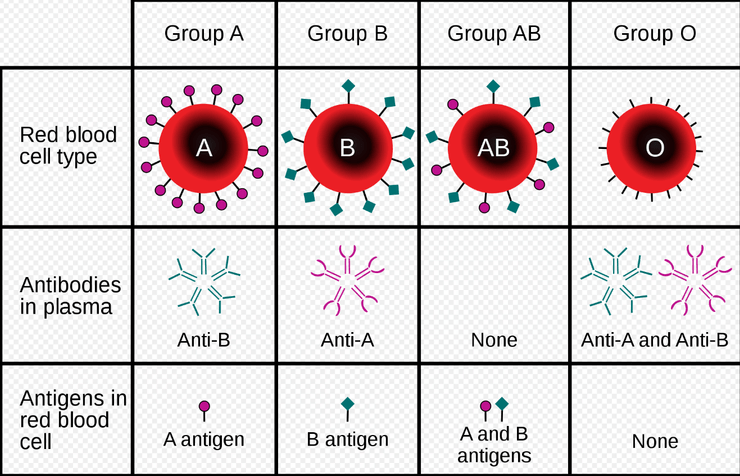
As you might imagine, doctors were curious as to why this was happening. It was soon discovered that the bloods of different people have different antigenic and immune properties. Hence, what happened in those adverse transfusion cases was that the agglutinins present in the plasma of one person binded with the agglutinogens present on the RBCs of a different blood type. The antigens were treated as foreign invaders and this triggered a severe immune reaction. Fortunately, what this also meant was that if one can predict ahead of time the blood types of individuals, one could also thus predict if an adverse reaction would occur.
It should also be said that there are many other types of antigens on the outer surface of RBCs (about 30 which are common and hundreds of other rare antigens), which can all trigger antigen-antibody reactions. However, most of these reactions are weak. So, these other antigens are mainly used for studying the inheritance of genes to establish genealogy. Two particular types of antigens are much more likely to cause blood transfusion reactions, so we will be discussing those two types today: 1) the O-A-B system of antigens, and 2) the Rh system.
Firstly, within the O-A-B system, people typically have one of four blood types: O, A, B, AB. Whether one’s blood type is O, A, B, or AB is determined by the presence or absence of the two agglutinogens: the A and B agglutinogens, which are glycoproteins. What this means is that if your RBCs have neither the A or B, you are blood type O. If you have the A but no B, you are blood type A. If you have the B but no A, you are blood type B. If you have both the A and B, then you are type AB.
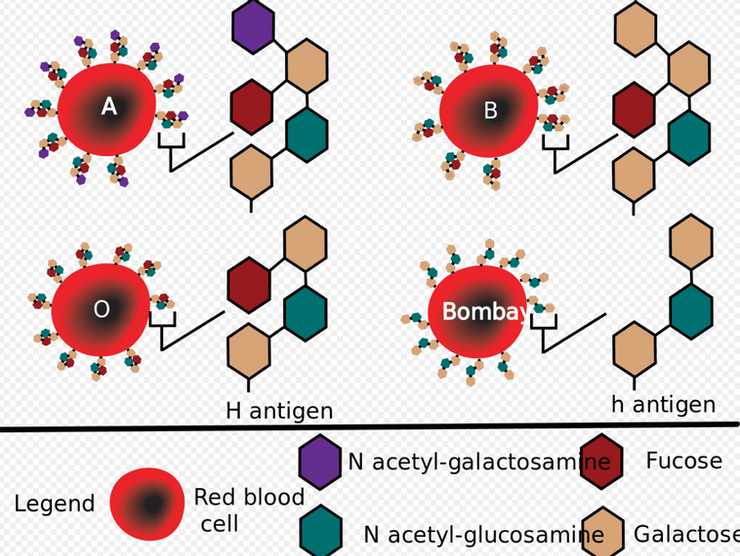
The type of agglutinogen you have depends on your genes. The genetic locus for the ABO blood group has three alleles (i.e. three variations of the same gene). For simplicity’s sake, we’ll call the alleles A, B, and O. To be extremely precise, Allele O technically results in the production of agglutinogen H, which is the precursor for for agglutinogens A and B (I’ll talk more about this antigen H later; for now just know that antigen H is also expressed on people blood types A, B, and AB). The diagram below is an excellent visual aid. You can clearly see that to get antigen A from antigen H, N-acetylgalactosamine needs to be added to the distal galactose group on antigen H. You can also see that to get antigen B from antigen H, a galactose group is added to the distal galactose group on antigen H.
Antigen h forms instead of Antigen H when the terminal fucose group is missing. People who lack antigen H and have antigen h instead are known to have the Bombay blood type or hh blood type. But of course, you will almost never hear of this Bombay blood type being mentioned online or in any textbook because of its sheer rarity (4 per million worldwide). Hence, even the production of the H antigen itself is often ignored because it is often deemed the baseline which almost everyone already has.
On the other hand, the alleles A and B result in strong agglutinogens on the cells. Thus, the O allele is recessive to both the A and B alleles, both of which demonstrate codominance.
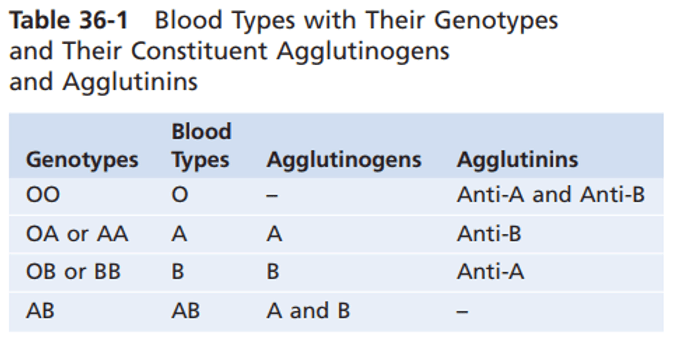
However, each person only has two sets of chromosomes (one set from your mother and one set from your father). While a person with blood type AB may have all three antigens A, B, H, he can only have a maximum of two of the three alleles (i.e. A and B). Since there are 3 different alleles and 2 chromosomes, then 3 * 2 = 6 genotypes are possible: OO, OA, AA, OB, BB, AB. OO will give rise to type O blood, OA and AA will give rise to type A blood, while OB and BB will give rise to type B blood. Since the A and B alleles demonstrate codominance, having both the A and B alleles will give rise to type AB blood.
When a person doesn’t have a particular agglutinogen on the surface of his red blood cells, he develops the corresponding anti-agglutinogen antibodies which are known as agglutinins. For example, if my blood type were B, then I would develop anti-A agglutinins. If my blood type were O, then I would have both anti-A and anti-B agglutinins.
Qn 1: a) If my blood type were A, what agglutinins (if any) would I have in my plasma? b) If my blood type were AB, what agglutinins (if any) would I have in my plasma?
Earlier, I mentioned that when blood transfusions were first attempted, agglutination and hemolysis often occurred. How does this happen? Well, this is because agglutinins are immunoglobulins and they are either IgG (immunoglobulin G with 2 binding sites) or IgM (immunoglobulin M with 10 binding sites). Hence, a single agglutinin can bind 2 or more RBCs at the same time, thereby causing RBCs to be bound together by agglutinin. Such binding causes many RBCs to clump together, which is the process of ‘agglutination‘. These clumps then plug all the small blood vessels throughout the circulatory circulation. While stuck in these small vessels, the RBCs in these clumps either undergo physical distortion or phagocytotic attack which destroys the membranes of the agglutinated cells. This releases hemoglobin into the plasma, which is called hemolysis of the RBCs.
Qn 2: Apart from blood transfusion, how are agglutinins produced within the blood of people who do not have the corresponding agglutinogens on their RBCs?
Well, that was a lot of text. Secondly, there is also this thing called the Rh system. There are 6 common types of Rh antigens, each of which is called an Rh factor. They are C, D, E, c, d, e. A person with the C antigen will not have the c antigen, while a person with the c antigen will not have the C antigen. The same works for D-d and E-e. Because of the manner of inheritance of these factors, we all have one antigen from each of these 3 pairs of antigens. The type D antigen is widely prevalent in the population and is way more antigenic than the other Rh antigens. It is precisely the presence and absence of this type D antigen which is responsible for the (+) and (-) you see in blood group type labels respectively. So a person with antigen “D” would be Rh-positive, while a person with antigen “d” (i.e. does not have antigen “D”) would be Rh-negative.
Qn 3: We normally hear of people having (+), a Rh-positive, in their blood types way more frequently than (-), Rh-negative. From a simplified perspective, do you think that the gene that codes for antigen D is autosomal dominant, or do you think that it is autosomal recessive?
The major difference between the earlier discussed O-A-B system and the Rh system is that in the latter, spontaneous agglutinins almost never occur. Instead, the person must first be exposed to large amounts of the Rh antigen before enough agglutinins develop to cause a significant transfusion reaction.
Qn 4: Given the info in Qn 3 and your response to it, why do you think it can be problematic when a Rh-negative woman is pregnant? (Hint: her husband is likely to be Rh-positive; what does this mean for her fetus?)
Having given a pretty decent overview (hopefully) of the two main blood type systems, I want to share with you a piece of amazing news I read which prompted me to write this article in the first place. Just a few days ago, researchers analysing bacteria in the human gut published an article in Nature, a leading peer-reviewed journal, where they discussed how they discovered that microbes there produce two enzymes which can convert type A blood to type O blood. If all goes well, this could revolutionize blood donation and transfusion.
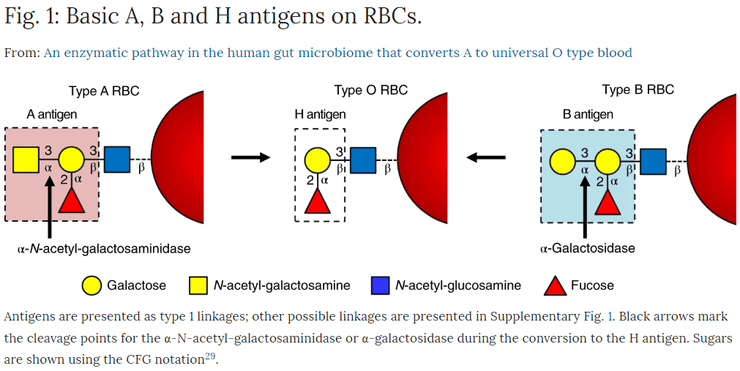
As we have discussed above, type O blood has no A or B agglutinogen, and this makes type O donor blood ideal as it is virtually universal. Scientists have tried transforming the second-most common blood type, type A, into type O by snipping off the terminal N-acetylgalactosamine from antigen A. Recall this excellent diagram:
This has had limited success because currently known enzymes which can catalyse the conversion of antigen A to antigen H are not efficient enough to make the process economically feasible.
After 4 years of trying to improve on those enzymes, a team led by Stephen Withers, a chemical biologist at the University of British Columbia (UBC) in Vancouver, Canada, decided to look for a more efficient enzyme produced by bacteria in the human gut. Some of these microbes latch onto the gut wall, where they digest the mucins. Mucins’ sugar groups are similar to that which are found on the antigens on RBCs.
So, UBC postdoc Peter Rahfeld collected a human stool sample and isolated its DNA, which in theory would contain genes that encode the bacterial enzymes that digest mucins. Chopping this DNA up and loading different pieces into copies of the commonly used lab bacterium Escherichia coli, the researchers monitored whether any of the microbes subsequently produced proteins with the ability to transform agglutinogen A into agglutinogen H (its exclusive expression in the absence of antigens A and B defines blood type O).
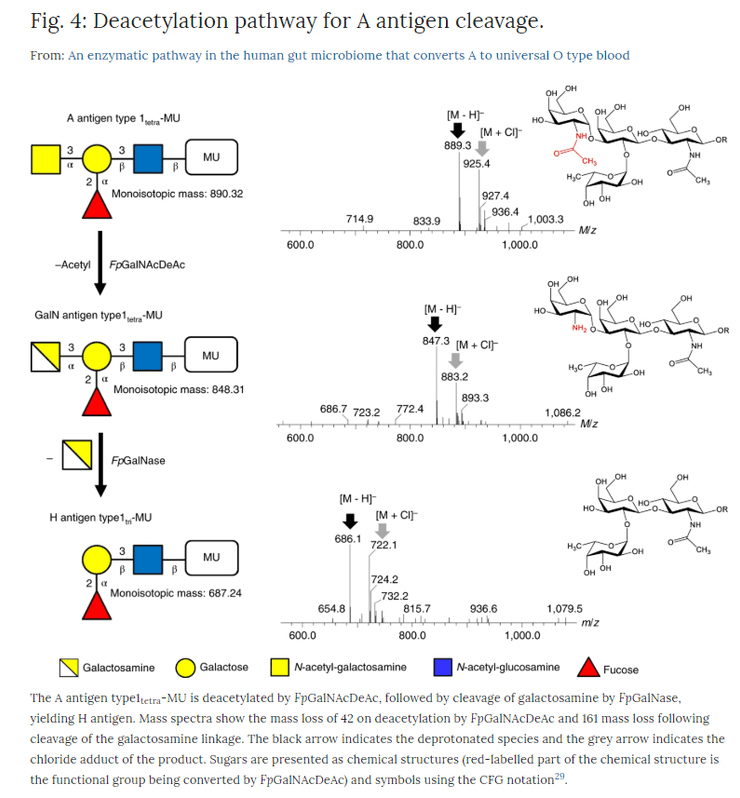
At first, nothing promising was found. However, when two of the resulting enzymes from the obligate anaerobe Flavonifractor plautii were tested simultaneously, the N-acetylgalactosamine could be removed from antigen A. This worked because the two enzymes worked together in a pathway. First, N-acetylgalactosamine is deacetylated to galactosamine in a reaction catalyzed by N-acetylgalactosamine deacetylase.
With the second enzyme, the galactosamine linkage was cleaved. The cleavage would not have occurred unless antigen A was first deacetylated. The necessity of having both enzymes is illustrated in the image below:
The most remarkable thing about this pair of enzymes is their ability to completely convert antigen A to antigen H on RBCs of the same rhesus type at very low enzyme concentrations. If this finding can be replicated, then this could indeed simplify their incorporation into blood transfusion practice, increasing the amount of “universal donor” blood.
Qn 5) Explain why people with the hh/Bombay blood type cannot receive supposedly “universal donor” type O blood.
Answers
Ans 1a) Anti-B agglutinins; Ans 1b) Neither the anti-A nor the anti-B agglutinins
Ans 2) Small amounts of A and B agglutinogens enter the bloodstream via food, and via bacteria, and these agglutinogens initiate the development of the corresponding anti-A and anti-B agglutinins.
Ans 3) The gene that codes for antigen D on the surface of red blood cells is autosomal dominant.
Ans 4) The fetus is affected by the pathological Erythroblastosis Fetalis, aka: “Hemolytic Disease of the Newborn” (HDN). Since the gene that codes for Rh-positive is autosomal dominant, a Rh-negative woman is statistically more likely to have Rh-positive man than a Rh-negative man. This also means that the fetus is statistically more likely to Rh-positive. When the fetus is Rh-positive, the fetus has antigen D on its RBCs. The mother develops anti-Dantibodies due to exposure to the fetus’ RBCs which express antigen D. Now, this is fine for the mother since she doesn’t have the antigen D. However, the synthesised anti-D agglutinins diffuse through the placenta into the fetus, and cause RBC agglutination. Good luck to the fetus. The agglutination leads to fetus RBC hemolysis and the released hemoglobin is broken down to bilirubin by the fetus’ macrophages. Bilirubin is a yellow substance and it is this that causes the baby’s skin to become yellow (jaundice). The anti-D agglutinins circulate for another 1-2 months after birth, destroying even more RBCs.
Ans 5) People with the Bombay blood type lack the terminal fucose group that is found on agglutinogen H. Hence, they have antigen h instead and thus produce anti-H agglutinins. When a person with Bombay blood receives type O donor blood, the anti-H agglutinins in the plasma will bind with antigen H found on the RBCs of type O blood. This will trigger the adverse blood transfusion reaction.
“Hey bro, do you have this thing called G6PD? What is this G6PD?” What do the title and the preceding sentence have in common? These are perhaps the words of full-time national servicemen, both 30 years ago and now respectively, to their fellow soldiers as they are left perplexed by the medical questionnaires they are tasked to complete.
Whilst serving in the SAF as a full-time national serviceman, I had the opportunity to go on overseas military training exercises. Before embarking on these overseas training trips, servicemen would need to ensure that they are certified to be medically fit for the relevant training. This would often entail getting the required vaccinations at the camp, declaring one’s vaccination history, and declaring any medical conditions to the senior medics or the medical officers at the medical centre of the army camp, either verbally or through the completion of forms.
I remember filling in some of these questionnaires and one of the points on these questionnaires would be:
“2. G6PD: Yes/No”.
I’m not even kidding. It was just this, word for word. Allow me to explain why such wording can technically be misinterpreted. Servicemen have to fill in these forms individually. A few weeks prior to leaving for training in Australia, my entire company was given such a form to fill in. In the company office, someone from another platoon asked one of the platoon commanders, “Sir, how do we fill this in? I’m not sure what G6PD is”. The lieutenant replied, “If you are not sure what it is, you probably don’t have it.”
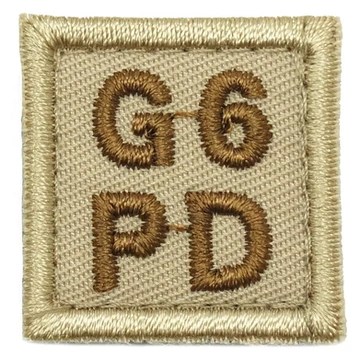
On the surface, this seems to be a reasonable position to adopt. After all, if you have gotten through life this far without doctors ever having diagnosed you with G6PD (glucose 6-phosphate dehydrogenase) deficiency, you probably do not have the said condition. Here is an image of a patch that a soldier can put on his ILBV to indicate his G6PD deficiency:
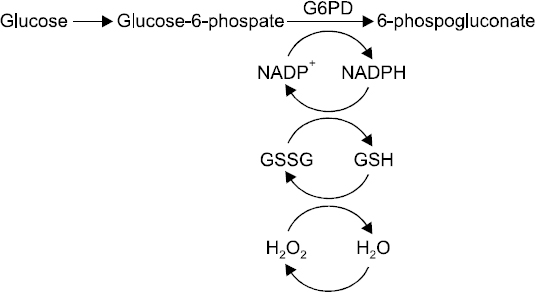
Most students who have learnt of G6P (glucose 6-phosphate) first studied it in the context of glycolysis, gluconeogenesis, and glycogenolysis. However, the G6PD enzyme is relevant in neither of these pathways. Instead, it is an enzyme that is relevant to the pentose phosphate pathway/HMP (hexose monophosphate) shunt, which occurs in the cytosol. Now, this HMP shunt is quite important because it provides a source of NADPH from the available G6P. NADPH is used in reductive reactions such as glutathione reduction inside RBCs (red blood cells), fatty acid and cholesterol synthesis. Additionally, the shunt also yields ribose for nucleotide (those ATCGs in DNA) synthesis and glycolytic intermediates (fructose 6-phosphate and glyceraldehyde 3-phosphate). This is particularly important in RBCs because NADPH is needed to keep glutathione reduced, which in turn detoxifies free radicals and peroxides.
In other words, here are the pairs of redox reactions. Firstly, G6PD catalyses the irreversible oxidation of G6P to 6-phosphogluconolactone, which reduces NADP+ to NADPH.
NB: 6PGL (6-phosphogluconolactonase) then catalyses the oxidative hydrolysis of 6-phosphogluconolactone to give 6-phosphogluconate.
Next, NADPH is oxidised back to NADP+ when glutathione reductase catalyses the reduction of GSSG (glutathione disulfide) to 2 GSH (glutathione). NB: The ‘S’ and ‘H’ in GSSG and GSH represent sulfur and hydrogen atoms respectively. Lastly, 2 GSH is oxidised back to GSSG when glutathione peroxidase catalyses the reduction of H2O2 to 2 H2O.
I’m sure you can now clearly see the problem with having G6PD deficiency. When there is deficiency in G6PD, all the above reactions are inhibited. There won’t be as much NADPH produced, because there isn’t as much dehydrogenation from G6P to 6-phosphogluconolactone. Consequently, there would be hemolytic anaemia due to poor RBC defence against oxidising agents (remember the last step in the chain in the above paragraph where H2O2 is reduced to water; that now doesn’t occur as much). H2O2 is a reactive oxygen species that can be converted to hydroxyl radicals, which can attack the proteins in the cell.
Consider this quote from reference [4]:
“Protein oxidation is defined as the covalent modification of a protein induced either by the direct reactions with reactive oxygen species (ROS) or indirect reactions with secondary by-products of oxidative stress. ROS can cause oxidation in both amino acid side chains and protein backbones, resulting in protein fragmentation or protein-protein cross-linkages. Although all amino acids can be modified by ROS, cysteine, and methionine that are the most susceptible to oxidative changes due to high reaction susceptibility of the sulfur group in those amino acids. Oxidative modifications of proteins can change their physical and chemical properties, including conformation, structure, solubility, susceptibility to proteolysis, and enzyme activities.“
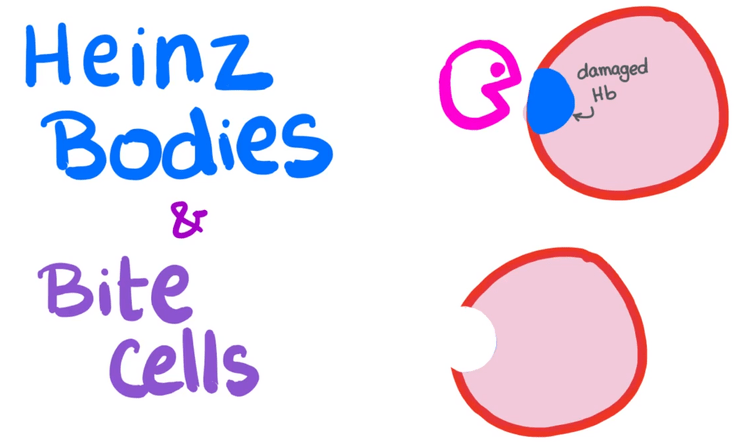
As the quote above says, amino acids with sulfur-containing R-groups are most susceptible to oxidative attack due to the relatively high reactivity of sulfur. Hence, it isn’t a surprise to learn that the hydroxyl radicals can attack haemoglobin in RBCs, causing a cross-linking of sulfhydryl groups on globin chains, which in turn causes haemoglobin to be denatured and precipitate. And what happens when oxidised haemoglobin precipitates?
Heinz bodies.
Look at this image above. That damaged haemoglobin coloured in blue represents a Heinz body. That pink Pac-man thing represents a splenic macrophage, which comes and “eats” the Heinz body. Bite cells, represented by the cell below the cell with the damaged haemoglobin, thus result from the phagocytic removal of Heinz bodies by splenic macrophages. Such original and creative naming. Lol.
G6PD deficiency is an X-linked recessive disorder, and is the most common human enzyme deficiency.
If we were to be quite pedantic, then the construct “2. G6PD: Yes/No” is, strictly speaking, problematic because it is people who are deficient in the enzyme G6PD that have the condition known as G6PD deficiency. In other words, people who havesufficient G6PD are fine and do not have G6PD deficiency. So, since normal people have G6PD, would it be wrong for people to circle “Yes”? On the other hand, the form is probably asking people whether they have the deficiency.
My recommendation to the SAF is to unambiguously alter the construct in the medical questionnaire to “G6PD deficiency: Yes/No”.
Personally, I wouldn’t be surprised if some people think that the “D” in G6PD means “deficiency”. After all, it doesn’t help that there is a practice where people repeat the full word of the last letter of acronyms (e.g. POP parade, IPPT test, PSLE exam, GUI interface, PIN number, ATM machine, D-Day, HIV virus, DC Comics, LCD display, OPEC countries).
Ironically, such a practice is known as RAS syndrome, where RAS stands for “redundant acronym syndrome”. What a term! For all who design invitation cards. please take note. Please don’t put “Please RSVP” on invitations!
The world’s tiniest motor, ATP synthase, or F1FO-ATPase, stands at about 20 nm in height and 10 nm in diameter.
Look at the above artist’s impression of ATP synthase. What a beautiful image. This protein complex is something that many biology, biochemistry, health sciences students are required to learn about. Today, I wish to talk about ATP synthase as I find it quite fascinating.
To begin, let us resolve some issues regarding its nomenclature. ATP synthase belongs to a broader group known as ATPases. This might leave you wondering, as it did for me: “why does ATP synthase fall under this category? From its name alone, don’t ATPases couple the hydrolysis of ATP with endergonic reactions? In other words, don’t ATPases catalyse the dephosphorylation from ATP to ADP which would generate energy that would be harnessed by the ATPase to drive reactions which would otherwise not occur? ATP synthase isn’t hydrolysing ATP; it’s making ATP” It turns out that for most ATPases, ATP is hydrolysed; however, ATPases also include the inverse reaction to ATP hydrolysis, to wit, the phosphorylation of ADP with inorganic phosphate to give ATP.
It’s just like how the oxidation of succinyl-CoA to succinate is catalysed by succinyl-CoA synthetase. Even though succinyl-CoA isn’t the product in the forward reaction, the same enzyme is being used in both the forward and reverse reaction.
Under the umbrella term of ATPases, there are sub-categories: F-, V-, A-, P-, and E-ATPases. I will focus on F-ATPases (aka F1FO-ATPases), the most notable of which is ATP synthase. Unlike most of the other sub-categories of ATPases, F-ATPases catalyse the synthesis of ATP. A-ATPases work like F-ATPases too; it’s just that A-ATPases are found in Archaea. ATP synthase is sometimes known as Complex V.
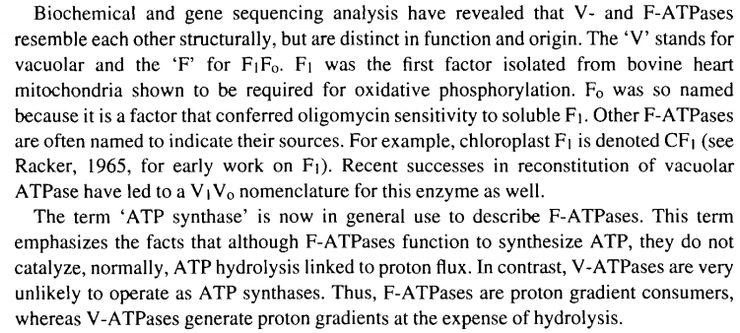
“Nicholas, why is the F-ATPase called F1FO-ATPase? Shouldn’t it be named F1F0-ATPase? After all, isn’t the preceding number to 1 is obviously 0?” Let me explain. Oligomycin is an antibiotic that inhibits ATP synthase by blocking its proton channel through the Fo subunit. In my opinion, F0 has become commonly adopted by many authoritative textbooks and peer-reviewed articles for the following reasons:
1) The letter ‘o’ is visually similar to ‘0’. In classrooms or lecture theatres, where teachers and professors write about the Fo sub-unit by hand on the whiteboard, it might be impossible to determine if an ‘o’ or ‘0’ was written.
2) This is probably the biggest factor: ‘0’ precedes ‘1’. Meanwhile, ‘o’ is a letter while ‘1’ is a number.
3) There are many more symbols where ‘0’ is the subscript instead of ‘o’.
4) Many authoritative texts and teachers use F0 instead of Fo and when other people read or listen to them, they also do the same and adopt the convention. As such, the use of F0 is rapidly adopted.
5) There is little mention about this historical development in various resources.
This two-paragraph extract from a paper by McCarty (1992) elaborates on the situation.
Also of note is the fact that some older texts refer to ATP synthase as ATP synthetase.
According to the JCBN (Joint Commission on Biochemical Nomenclature)/NCIUBMB (Nomenclature Committee of the International Union of Biochemistry and Molecular Biology) newsletter in 1984, the word synthase can now be added to the name of any substance to signify an enzyme that catalyses a reaction producing that substance, i.e. its range is extended to include enzymes catalysing reactions that involve hydrolysis of a nucleoside triphosphate, which previously could not be called synthases. In addition, “synthetase” is now synonymous with “ligase”.
In view of this update, it is thus more precise to refer to Complex V as ATP synthase instead of ATP synthetase. I also want to talk about the theoretical or experimentally-determined values regarding how many ATPs are produced for each molecule of NADH or FADH2 that enters the mitochondrial electron transport chain. The oldest values are: each NADH and FADH2 molecule leads to the production of 3 ATP and 2 ATP respectively.
However, we also see values such as 2.5 ATP and 1.5 ATP for each molecule of NADH or FADH2 respectively. Some modern texts even state that each NADH leads to 2.7 ATP being produced and 1.6 ATP/FADH2. Which is it?
To understand how we got into this mess, we must understand the relevant historical development. In the 1960s, ATP was known to be the energy currency of life, but the mechanism by which ATP was generated in the mitochondrial matrix was assumed to be substrate-level phosphorylation. After all, substrate-level phosphorylation was seen in glycolysis, and the Krebs cycle where succinyl-CoA is oxidised to succinate, while dephosphorylating GTP to GDP, which in turn phosphorylates ADP to ATP.
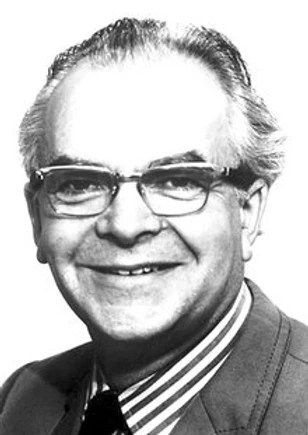
A scientist named Peter D. Mitchell realised that the movement of ions across an electrochemical potential difference could provide the energy needed to produce ATP. His hypothesis was actually derived from information that was already well known in the 1960s. He knew that living cells had a membrane potential; interior negative to the environment. The movement of charged ions across a membrane is thus affected by the electrical forces (the attraction of positive to negative charges). Their movement is also affected by the chemical potential, where substances diffuse from regions of higher concentration. He went on to show that ATP synthesis was coupled to this electrochemical gradient.
But of course, as with many great scientists who came up with seemingly absurd hypotheses, I’m sure he was mocked and ridiculed for this. Here is a quote from a biography of Mitchell: “It is a striking fact that, at the time Mitchell proposed his theory, there was not a shred of experimental evidence in its favour.” When Mitchell died in 1992, the following obituaries were published:
FromThe Times, a British daily national newspaper, on 15 April 1992: “His hypothesis met, initially, with an almost derisory reception. Few of the workers in the field had the necessary background knowledge of electrochemistry to appreciate the proposals and they spent many years searching for a chemical intermediate, which Mitchell argued did not exist.”
From The Independent, established in 1986 as a politically independent national morning newspaper published in London, on 16 April 1992: ‘For 20 years Mitchell was ridiculed, and Jennifer Moyle was his only professional supporter’.
Mitchell’s contemporaries have been criticised for their hostility towards Mitchell’s chemiosmotic hypothesis. Such criticism may be misplaced, though. For example, the elegance of the hypothesis was immediately recognised by some. In a review published in 1962, Lehninger (yes, this is the same Lehninger as the one who authored the renowned biochemistry textbook) gave a sympathetic summary of the chemiosmotic hypothesis, and Mitchell was invited by his peers to present his hypothesis in seminars at various European universities.
Anyway, the chemiosmotic hypothesis eventually became the leading hypothesis. The brilliance of the chemiosmotic coupling was that it allows nonintegral stoichiometries of oxygen consumption and ATP synthesis. Let me explain.
Before the chemiosmotic model for oxidative phosphorylation was accepted, the assumption was that the overall reaction equation would take the following form because everyone thought that it would be substrate-level phosphorylation:
where the value of ‘x’ would be an integer. When intact mitochondria are suspended in solution with a oxidisable substrate such as NADH or succinate, along with addition of oxygen, ATP synthesis is readily measurable, as is the decrease in oxygen. In theory, this should allow ‘x’ to be calculated. However, measurement of ‘x’ is complicated by the fact that 1) in intact mitochondria, any ATP that is produced is used by the mitochondria in other reactions in the matrix. Also, 2) oxygen is also used in reactions unrelated to oxidative phosphorylation. Hence the discrepancy due to these two factors need to be taken into account. Most experiments, after the necessary corrections, have determined x to be between 2 and 3 when 1 mole of NADH is used as the oxidisable substrate.
Given the assumption that x was to be an integer, most experimenters agreed that the x should be 3 and 2 for NADH and succinate respectively. Just like that, these values have been used for years in peer-reviewed articles and textbooks.
With the chemiosmotic model involving the coupling of ATP synthesis (involving phosphorylation) and electron transfer (involving oxidation), there was no longer a theoretical requirement for x to be an integer. The measurement of proton fluxes (how many protons are pumped through the various complexes) is quite complicated but basically, the experimental consensus is that for each pair of electrons, 10 protons and 6 protons are pumped into the intermembrane space for one molecule of NADH and succinate respectively. For flow back into the matrix from the IMS, the most widely accepted value is that 4 protons are required to drive the synthesis of 1 ATP.
Since 1 NADH leads to 10 protons being pumped from the matrix into the IMS, and 4 protons are required for synthesis of 1 ATP, it follows that x = 10/4 = 2.5 for NADH. Thus, 1 NADH leads to the production of 2.5 ATP. It also follows that since 1 succinate molecule leads to 6 protons being pumped from the matrix into the IMS, then x = 6/4 = 1.5 for succinate. Thus, 1 succinate leads to the production of 1.5 ATP.
Since 1 NADH leads to 10 protons being pumped from the matrix into the IMS, and 4 protons are required for synthesis of 1 ATP, it follows that x = 10/4 = 2.5 for NADH. Thus, 1 NADH leads to the production of 2.5 ATP. It also follows that since 1 succinate molecule leads to 6 protons being pumped from the matrix into the IMS, then x = 6/4 = 1.5 for succinate. Thus, 1 succinate leads to the production of 1.5 ATP.
You might have noticed that I talked so much about succinate. What happened to FADH2? Here’s the brilliance of the mitochondrion. The TCA Cycle takes place in the matrix, and recall that one of the steps of the TCA involves the oxidation of succinate to fumarate. Now, this oxidation actually occurs at Complex II of the mETC. The oxidation of succinate to fumarate simultaneously reduces FAD to FADH2. FAD is a prosthetic group, a covalently-attached cofactor that is found within Complex II. FADH2 is then oxidised back to FAD when it reduces Q to QH2. QH2 then shuttles to Complex III. This is how electrons are carried from the TCA, through II to III, etc! Amazing, isn’t it? Thus, it could be alternatively said that 1 FADH2 leads to 1.5 ATP.
We could use the same logic and apply it to NADH, but then NADH could come from so many places. Just imagine. 1 isocitrate produces 2.5 ATP; 1 α-ketoglutarate produces 2.5 ATP; 1 malate produces 2.5 ATP. This isn’t practical at all. From the TCA cycle alone, NADH is produced in 3 instances:
1) the oxidation of isocitrate to α-ketoglutarate simultaneously reduces NAD+ to NADH 2) the oxidation of α-ketoglutarate to succinyl-CoA simultaneously reduces NAD+ to NADH 3) the oxidation of malate to oxaloacetate simultaneously reduces NAD+ to NADH
NADH can also come from another reaction within the mitochondrial matrix which is not, strictly speaking, part of the TCA. Firstly, consider the earlier oxidation of α-ketoglutarate to succinyl-CoA, where this reaction is catalysed by α-ketoglutarate dehydrogenase complex. α-ketoglutarate (5 carbons) is oxidised to succinyl-CoA (4 carbons). What happened to that one carbon? Well, it escaped as CO2. Look at the product of the reaction too. A “CoA” is added. Also, an NADH is produced. The enzyme is a dehydrogenase complex.
Does this ring a bell?
If you thought of the oxidation of pyruvate to Acetyl-CoA, then CONGRATULATIONS, you got it!
The thing you must understand is this: α-ketoglutarate dehydrogenase complex is virtually identical to pyruvate dehydrogenase complex. Within the matrix, the oxidation of pyruvate (3 carbons) to Acetyl-CoA (2 carbons) produce CO2, brings about the addition of a “CoA”, and lastly, reduces NAD+ toNADH.
In addition, NADH can be shuttled from the cytosol into the matrix to be used as substrate at Complex I.
Let’s go back and talk about the proton flux where protons move from the IMS into the matrix. How does it work? ATP synthase consists of two parts: Fo and F1. Fo has a number of sub-units and the number of sub-units is equal to the number of protons that move through Fo. In animal mitochondria, n = 8 (it varies, depending on the organism; in E. coli, n = 10). This means that 8 protons move through Fo in one revolution of Fo. Also consider the F1 portion, where one revolution of F1 produces 3 ATP. Since the synthesis of each ATP molecule requires the transfer of 1 Pi into the matrix, at a cost of 1 proton for each Pi transfer, that means that 3 additional protons are required for the synthesis of 3 ATP. This means that 8 + 3 = 11 protons are needed for the synthesis of 3 ATP. Remember that this is animal mitochondria that we are talking about. 11/3 gives 3.7 protons/ATP for ATP synthesis in animals. When we use the values of 10 protons/NADH and 6 protons/succinate or FADH2, we get: 10/3.7 = 2.7 ATP/NADH and 6/3.7 = 1.6 ATP/succinate or FADH2 in animals.
Then you might be wondering: how does this relate to 2.5 ATP/NADH and 1.5 ATP/NADH respectively? Recall that the experimental consensus was 4 protons/ATP. Now, what organisms were used to obtain that value? That is the crux of the matter. In the previous paragraph, I mentioned that the number of Fo sub-units vary depending on the organism. This totally changes everything. For example, in the case of E. coli andyeast, where n = 10, the values you get will be 2.3 ATP/NADH and 1.4 ATP/succinate or FADH2, if you follow the same calculation process in the previous paragraph.
These above calculated values of x (aka P/O ratio) define a range that includes the experimental values of 2.5 ATP/NADH and 1.5 ATP/FADH2. Thus, 2.5 and 1.5 are ubiquitous in biochemistry textbooks. Yet, for simplicity, some still choose to use 3 ATP/NADH and 2 ATP/FADH2.
I hope this blog post has perhaps allow you to understand why I find ATP synthase so fascinating. It is a pity that a lot of the above background information which includes highly interesting historical development isn’t discussed enough in textbooks, classrooms, and lecture theatres because of a lack of time, resources, etc.
Ask any kid what he thinks of when he comes across the word “scientist”. It is not surprising to hear scientists being described as weird, introverted, bespectacled old men with grey hair in white lab coats who do crazy stuff involving explosive chemical reactions in the laboratory. This stereotypical portrayal is perpetuated by the abundance of children’s books, cartoons and the mass media. Sometimes, these scientists go to extreme lengths to prove a particular point. For example, they might use their own bodies as experimental vessels to test their hypotheses simply because ethics committees wouldn’t allow them to test their hypotheses on the bodies of others as it would be “unethical”. Would you knowingly infect yourself with dangerous bacteria to test a hypothesis?
I thought so.
Neither would I. Yet, this is exactly what Dr Barry Marshall did. The Australian doctor infected himself with bacteria. Due to what he did, he demonstrated that most stomach ulcers are actually an infectious disease. This valuable information has helped save many lives.
Peptic ulcers are open sores found in the endothelial lining of the stomach and/or the upper portion of the small intestine. The most common symptom associated with these ulcers is abdominal pain. If things get bad enough, one can start bleeding, or even have one’s stomach burst.
Back in the 1970s, ulcers were most common in middle-aged men who smoked and drank alcohol. Having ulcers seemed to run in the family. As such, doctors assumed that ulcers occurred when there was overproduction of acid in the stomach, and the ulcers were a result of stress, and perhaps some genetic defect. As such, the typical advice was for the patient to relax, watch what he consumes, and take some antacids.
Most notably, it was assumed that the stomach was sterile (ie completely bacteria-free). It is understandable to see why people thought that. After all, the pH of the stomach lumen is around 2-2.5, indicating its high acidity. What organism could possibly survive such an acidic environment?
Then, in 1979, an Australian doctor, Dr Robin Warren began to have his doubts. This was because the pathologist began to regularly see comma-shaped bacteria in the samples from patients who had gastritis. In that same year, Dr Barry Marshall was appointed as “Registrar in Medicine” at the Royal Perth Hospital (RPH). Dr Warren and Dr Marshall met in 1981 while Dr Marshall was doing his internal medicine fellowship training at the RPH.
In 1982, the duo established a formal study and found that a majority of all their ulcer patients had been infected with the bacteria too. They identified the bug as Helicobacter pylori, and suspected that its presence was the true reason for peptic ulcers and gastritis.
NB: At the time of the study, this bug wasn’t known as H. pylori. It was first known as Campylobacter pyloridis. However, in 1987, it was re-named Campylobacter pyloris. This was because ‘pylori’ is the genitive case of the Latin nominative ‘pylorus’, which is the circular opening leading from the stomach into the duodenum. As mentioned in the paper, ‘pyloridis’ is a linguistic error that had to be corrected. The Latin word ‘pylorus’ in turn comes from the Greek word ‘πυλωρός’, transliterated ‘puloros’, which means ‘gatekeeper’.
Then, when 16S rRNA (component of the 30S small subunit of a prokaryotic ribosome) gene sequencing and other research showed two years later (by October 1989) that the bacterium didn’t belong in the genus Campylobacter, the bacterium was placed in its own genus Helicobacter. As you might have guessed, the prefix of the new genus name ‘helico-‘ comes from the ancient Greek word helix.
Anyway, back to the study. The hypothesis was absurd for its time and I’m sure very few of the duo’s peers were convinced that anything useful could come out of it. How could anything survive the highly acidic environment of the stomach? If this were true, why hadn’t someone discovered it earlier? The odds seemed to be against Dr Warren and Dr Marshall.
By 1984, Marshall was convinced of his results and must have been exasperated that others were not convinced. This was because in 1983, the previous year, the duo had submitted their findings hitherto to the Gastroenterological Society of Australia. However, the reviewers turned the papers down, rating it in the bottom 10% of the papers received in 1983.
So, Marshall did something radical. After ensuring he had no H. pylori of his own, he became his own guinea pig, and in one gulp of meat broth at 10:00 am, he purposefully swallowed a whole load of the bacteria. Unsurprisingly, he began to experience indigestion, nausea, bad breath, and began vomiting in the coming days. Although he hadn’t developed an ulcer, it was close. It was gastritis. H. pylori penetrates the mucosa layer of the stomach lumen and exposes the submucosa epithelial cells to all that acid in the lumen.
The infection usually takes a while to cause a problem, and the symptoms can be exacerbated by things like smoking and stress. This could be why older men with less-than-stellar health records seemed the most susceptible. Nevertheless, correlation is not the same as causation. Without H. pylori, most people would never even get peptic ulcers. Marshall and Warren also went on to demonstrate that certain drugs could get rid of H. pylori. In recognition of this groundbreaking work, the Australian duo was awarded the 2005 Nobel Prize in Physiology or Medicine. Marshall is the younger of the two.
This disco-era discovery turned out to have an even bigger impact than anyone imagined. Today, the World Health Organization recognises H. pylori as a carcinogen. The same damage the bacteria does to the lining of the stomach with an ulcer also causes gastric cancer. As more people got antibiotics to cure their ulcers, gastric cancer incidence rates plummeted.
Yet, the situation turned out to be not that simple. While most ulcers are caused by H. pylori, most people with H. pylori don’t develop ulcers, and even fewer get gastric cancer. The presence of H. pylori might even help as it seems to protect people from developing heartburn, and protect people from getting cancer in the oesophagus. Unfortunately, we can’t get the best of both worlds. The strains of H. pylori that are the most dangerous to the stomach are also the most protective to the oesophagus. As such, the current consensus among doctors seems to be to keep the status quo unless H. pylori starts causing problems. If it does cause problems, then green lights to the most common initial treatment – a ‘triple therapy’ for one week:
1) Amoxicillin, a penicillin-type antibiotic, which means that it is similar to penicillin. So, if the patient is allergic to penicillin, he should avoid all drugs in the penicillin family and take something like metronidazole. 2) Clarithromycin, which is an acid-stable macrolide with a broad spectrum of antibacterial activity, well absorbed with a wide tissue distribution and with mild side effects. Clarithromycin has a low minimum inhibitory concentration (MIC50) for H. pylori and its effect is potentiated by acid inhibition. 3) Proton pump inhibitor (eg omeprazole). It works by irreversibly inhibiting H+/K+ ATPase on gastric parietal cells.
However, even this may not be sufficient. The main reasons for the eradication failure of the standard ‘triple therapy’ above include escalating antibiotic resistance, poor compliance, and rapid metabolism of proton pump inhibitor. Generally, resistance to clarithromycin and metronidazole has been on the rise. Interestingly, though amoxicillin is one of the most commonly used antibiotics, resistance to amoxicillin remains extremely low (<5%) in most countries. If the rates of clarithromycin resistance are known to be > 15%, then bismuth-based quadruple therapy can be tried.
You might still be wondering how H. pylori is able to survive the acidic environment of the stomach lumen. The answer lies in the specific adaptations that H. pylori has developed.
Do you see the things that look like tails? They are called flagella (plural of ‘flagellum’). The flagella confer H. pylori motility. With the flagella, H. pylori burrows into the gastric mucin gel to reach the epithelial cells, where it is less acidic. This is possible because of chemotaxis. H. pylori senses the pH gradient in the mucus and tends to move towards the region of lower acidity.
In addition to chemotaxis, H. pylori produces lots of an enzyme called urease. As its name suggests, the cytosolic urease catalyses the conversion of urea (found within the stomach) to ammonia and carbon dioxide:
(NH2)2CO + H2O → CO2 + 2NH3
The ammonia reacts with the strong acid in the vicinity of H. pylori to give rise to a relatively neutralised buffer zone that surrounds H. pylori. Thus, with these adaptations, H. pylori is able to endure the acidity of its environment.
In fact, the cytosolic urease in H. pylori is the very basis of the urea breath test: a rapid diagnostic procedure used to identify infections by H. pylori. For the test, patients swallow urea labelled with an uncommon isotope. The detection of isotope-labelled carbon dioxide in exhaled breath indicates that the urea was split, which in turn indicates that urease (the enzyme that H. pylori uses to metabolise urea) is present in the stomach) is present. This thus corresponds to the presence of H. pylori.
The handspan, or simply “span”, can be defined as the distance between the tip of one’s thumb and one’s pinky of the same hand. Understandably, a pianist is going to have a headache if his hand is not able to accommodate a particular series of notes as dictated on the sheet music. The hands are sometimes forced into awkward positions. How does he get around this? He has several options:
1) omit some notes or omit a single note 2) roll the chord (hence, all the notes of the block would not be played at the same time) 3) not even play the piece at all
That which needs to be done needs to be decided on a case-by-case basis.
In this post, I shall talk about some scenarios that I have encountered, some research that has been done regarding this issue, and the historical development that is partially responsible for this.
Let us start by considering one of the most well-known pieces that isn’t technically too challenging. The piece is Minuet in G Major.
NB: Contrary to popular belief, this piece is not written by Bach. Since 1970, it had been discovered that this piece was actually composed by another person: Petzold. Regardless of who composed this, its legendary status remains forevermore. Most people would recognise the piece just from the first bar alone! Nevertheless, it has been thought that it was composed by Bach for so long that it has its own catalogue number in Bach’s catalogue of works (i.e. BWV Anh. 114).
The minuet is a technically simple piece and it would not be uncommon for beginners to the piano to learn this piece. The largest harmonic interval that this piece demands (or requests) is a major sixth. This is found in the last bar of the piece.
This is highly manageable and virtually everyone who attempts this piece should be able to play a major sixth with his span. Even young children should be able to do a major sixth. Here are spans of some notable pianists and composers:
Move to the Romantic/20th century repertoire and you find that the pieces are more technically challenging. They make Petzold’s minuets look like child’s play (*shhh, they really are*). There are now huge runs which span multiple octaves with accidentals strewn everywhere. Here are the opening bars of one of Chopin’s etudes. How deceptive the first four bars are:
We have come to the age of the virtuoso, where humble harpsichords fade away. Keyboard instruments have become bigger. Thanks to the precedent established by performers such as Paganini and Liszt, performers would now play from memory. Audiences now constantly look forward to the “next big thing”.
I quote from the Wikipedia article on the piano: “In the period from about 1790 to 1860, the Mozart-era piano underwent tremendous changes that led to the modern form of the instrument. This revolution was in response to a preference by composers and pianists for a more powerful, sustained piano sound, and made possible by the ongoing Industrial Revolution with resources such as high-quality piano wire for strings, and precision casting for the production of massive iron frames that could withstand the tremendous tension of the strings. Over time, the tonal range of the piano was also increased from the five octaves of Mozart’s day to the seven octave (or more) range found on modern pianos.“
In many compositions, octave harmonic intervals on both the left and right hands are common. At the most extreme end of the spectrum, harmonic intervals of tenths are not unusual, particularly in works by Liszt and Rachmaninoff. After all, take a look at this:
This other infographic below is perhaps more useful for telling you how the handspan (in inches or centimeters) corresponds to the interval that you would be able to reach.
My 1-5 handspan measures 9.8 inches, and I’m an Asian male. Let’s see some interesting statistics from the literature review that was done in 2015 (Australian study of 473 pianists where 2/3 participants were Caucasian and 1/3 were Asian). See reference [4] for the link to the full literature review in PDF format.
Assuming a Gaussian distribution for the above data, then:
my 1-5 span would be at the 98.8 percentile among all 473 adult pianists.
my 1-5 span would be at the 94.6 percentile among all 159 male (73% Caucasian and 27% Asian) adult pianists. my 1-5 span would be at the 99.8 percentile among 37 adult Asian male pianists.
Not bad at all. Here is my 1-5 span for the right hand:
Both my left and right hands can do 11ths semi-comfortably. This has been so useful once, where I needed to play the final chord of a piano transcription of the Aria from Bach’s third orchestral suite, better known as “Air on the G String”. The ending chord for that piano transcription is what you see in the photograph above. In my opinion, rolling the chord would kill the majestic end of the piece as each note of the chord is so paramount in establishing the sheer character of the conclusion. They all needed to be heard simultaneously. The piano transcription I played from was highly faithful to the original parts of the string orchestra (see the four individual parts below). Essentially, the piano transcription covered all four voices from the four instruments accurately! Such are the benefits of being able to stretch an 11th!
If I really tried, I can do a 12th too, but that is not realistically achievable under performance circumstances at all.
Meanwhile, some modern Rachmaninoffs can do the infamous C-Eb-G-C-G. This is absolutely mind-blowing. With this kind of handspan, you can probably play some beginner pieces meant for both hands, with just one hand. This is the largest handspan I have ever seen. If anyone has seen an image/photograph of a handspan greater than that of the image below (online/real life), let me know!
Well, I’m contented with what I have. With my handspan of an 11th, I can play the opening block chords of Rach 2 comfortably (thank God these are semibreves and not crotchets). Personally, I feel that the full effect of the dissonance and the rising tension can only be exuded when all the chords are played as blocks. Of course, for pianists who do not have such large handspans…
Recently, I learnt a piece that I had actually wanted to learn for quite a long time. It is Animenz’s transcription of Departures, one of the ending songs for a Japanese animation series called “Guilty Crown”. I learnt an extract of the transcription, which you can view here:
I frankly don’t know if I could live with learning this piece if I had to do away with all the tenths that Animenz puts into his transcription. A harmonic tenth simply adds more flavour than an octave. Look at the following six bars. The highlighted chords are huge intervals.
Once again, look below. This must be rather discouraging for anyone who wants to play the tenths faithfully as blocks but is unable to.
The following six bars of music are one of the most beautiful and unique I have come across in a piano transcription. They actually motivated me to learn this piece! Observe how the melody is in the upper voice of the left hand. The lower portion of the left hand plays consistent rhythmic notes while the right hand drones up and down beautifully. Charming! At some points, such as the the first beat of bar 32, I could not realistically do that C-A-C-F# chord. Hence, I needed to use my right hand to play the F#. The more interesting point is the Bm7 chord in bar 35. For a while, I actually did the full chord in my left hand. However, accuracy was being compromised because the transition duration to the chord was short. So, I decided to play that top D with my right hand instead, and that turned out quite well.
I didn’t go on to learn the rest of the piece after bar 38 because I felt that it would take too much time and effort to learn the entire piece. So, we see that even though my handspan is pretty large, that alone isn’t enough to learn and master pieces. There must also be that technical ability that allows the pianist to navigate challenging pieces, along with a million other factors for him to consider. One must also be clever when choosing the fingering to adopt for a particular passage. The example regarding the Bm7 chord in bar 35 is classic.
Moreover, playing the opening block chords of Rach 2 doesn’t mean that I can play the entirety of Rach 2. On the other hand, there are internationally-acclaimed concert pianists who cannot play the block chords for the opening of Rach 2 but can play Rach 2 reasonably well.
In conclusion, I would say that being able to stretch large intervals certainly does help when learning more advanced piano repertoire. If you can do a tenth comfortably, virtually the entire repertoire is accessible, at least according to one of the infographic above. Nevertheless, don’t be complacent. One still has to work on technique, and put in deliberate effort when striving to perfect a piece. For those who cannot stretch large intervals, I would say: don’t fret! As I mentioned at the start of the post, there are many things you can do to work around it: omit some notes, roll the chord, use a different fingering, use the pedal, choose a different piece, etc. There is so much more to piano music than just being able to stretch and play some chords with big intervals (as much as I feel that playing block chords as written is quite important). In either scenario, the important thing is not to be complacent or discouraged respectively. One must work diligently and put in serious effort in order to become a competent pianist.
The content enclosed between the following two dividers is a direct quote from reference [1] which I found particularly interesting. It succinctly illustrates yet another aspect of the piano which has evolved over time, in addition to the increased dynamics and range. Modern pianos have wider keys than the pianos 200 years ago. This partially accounts for why certain pieces that were composed a long time ago have intervals that alienate a significant proportion of contemporary pianists when attempted on a modern piano. On the pianos of the past, these intervals wouldn’t have required the same extent of hand-stretching as that of today. A consequence of the widening of the piano keys over time has been that a smaller proportion of modern pianists is able to play octaves, ninths, tenths, etc. Well, the piano has historically revolved and been designed for the adult European male pianist. Go figure.
Given that Caucasians have larger hands on average than Asians, I’m not at all surprised that the widening of the piano keys over time has simply reinforced the perception that the piano is a challenging instrument, particularly in predominantly Asian societies such as Singapore.
“It’s worth noting that piano keyboards used to be smaller! The keys on so-called fortepianos – the early pianos that Haydn, Mozart and Beethoven played – were slightly narrower. Moreover, the keys were much lighter to play and only could be pressed about half as far as today’s grand pianos. This certainly affects pianists when we play music written for these older pianos on modern instruments with their much heavier keys that we also need to press further down. Beethoven wrote a pianistically novel passage in his second published piano sonata. The opening movement of the Sonata in A major, Op. 2, No. 2, has this passage:
“This is a rare example of Beethoven specifying fingering. However, even pianists with large hands are unable to play this passage using Beethoven’s fingering on a modern piano. (If you know of anyone who does so, please leave a comment below. I’ve never heard of any modern-day pianists using this fingering.) The keys on today’s pianos are simply too wide for this fingering to make any sense. Instead, the best solution in this case is to split the passage between the hands:”
One of my modules this semester is titled “Communication for Improved Patient Care”. Yesterday, we had a lecture from 1-2pm, followed by a workshop from 2-4pm. The theme for this week was “Creating the right therapeutic environment”.
When delving into the realm of medical ethics and the nature of the relationship between doctor and patient, it behooves us not to neglect the work of Beauchamp and Childress. I quote from reference [1]. They are American philosophers best known for their work in medical ethics. Their book Principles of Biomedical Ethics was first published in 1985, where it quickly became a must read for medical students, researchers, and academics. The book was written in the wake of some highly unethical biomedical experiments – most notably the Tuskegee Syphilis Study, where hundreds of rural black men, their partners, and subsequent children were infected or died from treatable syphilis. Beauchamp and Childress aimed to identify healthcare’s “common morality”.
The four principles that they established were: 1) Respect for autonomy; 2) Beneficence; 3) Non-maleficence; 4) Justice. With these principles, it is not difficult to see why the Tuskegee Syphilis study was deemed outrageously unethical. Some will claim that morality is subjective and that the weighing of these different ethical principles, which are often in tension with one another, is subjective. What I will talk about in this post is not about whether these principles are valid. Debating the innate fundamental validity of these principles, or even whether morality is subjective, is something probably best left to the devices of philosophers and theologians. In this post, I instead make the assumption that these four principles are all valid principles to be considered in the context of modern evidence-based medical practice.
During the tutorial, we were told to get into pairs or trios, as part of one of the initial activities, to discuss the question: “What is meant by patient-centred care?” I started by first sharing with my group partner how the term is somewhat self-explanatory. Patient-centred care would just mean placing the patient’s needs and welfare above all else to ensure optimal patient outcome. It’s so simple. What could possibly go wrong?
Reality is not so straightforward. The tutor voiced her disagreement regarding one of the points I made (I shall elaborate on this soon) in front of the entire tutorial group during the tutorial. The disagreement probably stemmed from misunderstanding as there wasn’t enough time for me to fully explain my views. Hence, I have written this post.
The impression I got from her was that she views patient autonomy as being the most important thing to consider in the context of “communication for improved patient care”. Understandably, she might feel this way due to the nature of the topic and perhaps, even some past experience where she feels that her autonomy should have been emphasised. I am not her and I cannot say with certainty what she thought, and so I’m merely speculating.
In the context of patient communication, we cannot directly control the minds of patients and influence their responses and behaviours. What we can change, however, is what we can do on our part (eg our diction, our tone, our body language, our holistic response). For example, you may encounter an unreasonable patient who raises his voice and shouts at you during the consultation. In such a scenario, it would be inappropriate to respond likewise. Raising your voice at the patient as a way to vent your frustration will likely land you in trouble. It will likely provoke an even more emotional response from the response, and this will not help in de-escalating the situation at all. The last thing you want is a letter of complaint from the patient which ultimately gets you berated from your superior, which might in turn cost you your job. What you can do, however, is to insist on behaving in a professional manner and adhere to a standard of decorum which is expected of a medical practitioner.
While optimal patient care requires both the patient and doctor to play their part, the sole focus tends to be on what the doctor can do, at least for this particular module I’m currently taking. After all, the patient tends to be passive while the doctor tends to be active. Some people talked about the power differential between the doctor and patient; some talked about the state of vulnerability of the patient.
I talked to my group partner about a hypothetical scenario where there are two treatment options for a patient’s condition. Let us suppose first that hypothetically, all options work equally well given the patient’s condition, and that treatment A and B cost $50 and $100 respectively. Patient-centered care in this context would mean explaining to the patient that both options work equally well and that treatment A costs less than B. The rational patient would likely choose the former option since it is more affordable and it works just as well as the more expensive option. Everyone lives happily ever after. Simple, right?
Let me now introduce you to something slightly more realistic. What if Treatment B works better, and that it improves the patient’s quality of life more than A? You explain how both treatments to the patient and the patient gives informed consent to proceed with a particular treatment. The patient’s autonomy is respected. Even if the patient rejects either treatment, the doctor accepts it and the patient’s autonomy is respected, and everyone still lives happily ever after. Still simple, right?
I talked about this issue with my group partner. Specifically, I talked about how certain medications can be administered to lower peripheral vascular resistance, so as to treat hypertension by lowering blood pressure. Blood pressure in our bodies is governed by the equation BP (Blood Pressure) = CO (Cardiac Output) * PVR (Peripheral Vascular Resistance), which can be further broken down to BP = SV (Stroke Volume) * HR (Heart Rate) * PVR. There are so many things you can do to influence blood pressure in the body. Let’s talk specifically about PVR (Peripheral Vascular Resistance).
With the equations above, you can lower BP by lowering the vascular resistance. There are at least three ways you can lower the PVR.
According to a doctor who knows well how hospitals in Singapore operate, treatment 1 is relatively affordable. Treatment 2 is moderately priced. Treatment 3 is relatively expensive. In Singapore, at least, Treatment 1 tends to be given more in public hospitals whereas Treatment 3 tends to be given more in the private hospitals. These treatments have different levels of effectiveness in people with different conditions. Do you see the different principles at play here? As much healthcare providers would like to provide quality patient care, there are other considerations, particularly so for public hospitals which have more red tape and standard operating procedures. Resources are scarce and subsidies are limited. Who gets to decide what constitutes an equitable distribution of resources? How much subsidy should a patient receive? Means-testing? How then is the criteria decided? There are endless questions one can ask. Many stakeholders are involved, and the ever-changing laws and advancements in medical technology just further complicate matters. These issues cannot be analysed as though they constitute a static cross-section in the moving tubular fabric of time.
Still manageable? Well, let me now bring you to murkier waters. I want to discuss informed consent, which is a sacred cow in healthcare. There is information asymmetry between a doctor and his patient, and this was the point of disagreement and contention between my tutor and me. I said that a doctor is likely to have a far better understanding of the patient’s condition than the patient, and objectively speaking, it is the doctor who has a much better chance of making the informed decision. After I raised this, she immediately said that she disagreed. She talked about how the patient also considers the non-medical aspects of his situation. For example, in deciding which treatment to get, or whether to even get treatment, a patient would also consider whether he would be able to cope with his work/daily activities as he would have to deal with the side effects of the treatment. Finances are involved too. Medicines can be quite expensive and insurance plays a huge part. Insurance policies are notorious for their fine print and it doesn’t help that there are so many types of insurance policies. The patient’s policy might not cover a particular treatment. In this aspect, I agree with the tutor regarding how the patient is and should able to make an informed decision because of two reasons:
1) There should be respect for patients’ autonomy. 2) The patient knows and understands the non-medical aspects of his life more than the doctor. In this sense, the patient can take into account the medical and non-medical aspects of his life when making a decision whereas the doctor will only have a superficial understanding of the patient’s non-medical aspects. Regarding the non-medical aspects, the doctor is limited by what the patient tells the doctor. However, the caveat is that the patient’s understanding of the medical aspect of his condition is limited by how much his doctor tells him about the condition and how much the patient understands what the doctor is telling him.
However, there is one factor that we cannot neglect in the above scenario:
Externalities.
If my tutor insists on the notion of giving utmost precedence to patient autonomy without carefully weighing the impact of these externalities, I would have to respectfully disagree with her stance. There are externalities associated with different treatment options or rejection thereof. These externalities can be positive or negative, and externalities bring us directly to the heart of the tension between the four principles. If patient autonomy were given utmost precedence under every circumstance, the issues of anti-vaccine groups, abortion, euthanasia would not even be controversial. In Singapore, it is compulsory for a child to be vaccinated against measles and diphtheria. If patient autonomy (in this case, the parent decides on behalf of the child) were to always take precedence, why is it then legally mandatory for children to be vaccinated against measles and diphtheria? After all, shouldn’t they have the right to reject the treatment? Haha.
These are highly contentious issues, and we need to remember that patients’ decisions regarding medical treatment often do not just affect themselves but also the people around them, the general public, and even another powerless entity whose life depends on the patient (in the case of abortion).
In addition to the issue of externalities, another thing for us to consider is the power differential between doctors and patients. When you go beyond the clinical setting and consider the big picture, saying that doctors are always in a position of power and authority over their patients is an oversimplification. Patients have ways of getting back at their healthcare providers in the form of complaints, litigation, etc. Allow me to quote from an article entitled “Things are looking up for the medical profession. Really.” written by Salma Khalik, Senior Health Correspondent, published on 21 March 2019 by The Straits Times (reference [4]), regarding the case involving a $100,000 fine:
In January, a doctor was fined $100,000 for not telling his patient about the side effects of a steroid jab, which is fairly common injection. The disciplinary tribunal said it was the correct treatment, but took exception to his not telling the patient about the possible side effects, which she suffered from. An expert witness during the hearing said that while it is good practice to do so, not all doctors do, since the side effects are both rare and transient.
The judgment and the size of the penalty upset doctors in both the public and private sectors. Some wrote in to the Forum pages, others signed a petition to the MOH, and the subject was also raised in Parliament.
In the light of the two recent cases in Singapore, we see that doctors don’t take that high-and-mighty role all the time. Even when they act reasonably in good faith, they can be subject to disciplinary tribunals, litigation, and can be meted out with unreasonably harsh penalties. Do we really want to see defensive medicine in Singapore, where doctors order excessive tests, create more paperwork and forms to sign, spell out the comprehensive list of side effects for even ubiquitous drugs such as paracetamol to avoid getting sued and avoid having to pay exorbitant sums of money? This will only bloat the healthcare sector, particularly the public sector, with more inefficiency, smother everyone with red tape, and ultimately cause healthcare costs to skyrocket.
In conclusion, while I do believe that patient-centered care is a noble objective that doctors must strive for, it is quixotic to take this to the extreme by insisting that the patient’s desires and views must be at the forefront at the expense of other factors that need to be considered. Respect for the patient’s autonomy is one thing, but what about beneficence, non-maleficence, and justice? The needs and limitations of other people, in addition to his patient, need to be considered carefully as well. These principles are often in tension with one another and drawing the line is not easy. Patients should acknowledge that the doctor does not have an easy time as the doctor needs to carefully weigh all these factors because he is not just accountable to his patient alone; he is also part of a network of healthcare providers which is responsible for the healthcare of an entire population.
Yours faithfully, Nicholas Loh 22 March 2019
P.S. (2019-03-22, 2:16pm, ACDT) One of the readers of this post, a medical student, has given valuable feedback. He talked about how in the context of Singapore’s healthcare, some older patients are more accustomed to medical paternalism, and I think it is good for medical students to be aware of this. Hence, they can be somewhat shocked when they are confronted with “choices”. They have grown used to having the physician as the authority figure who knows what is best for them. Hence, they can be taken by surprise. What is the physician then to do? Can there truly said to be “informed consent” in this scenario? I contemplated discussing in this post the Bolam and Montgomery tests. However, I decided against it as to do the issue justice would require a separate blog post!
“Don’t forget to complete questions 3 to 7a. We shall be going through them on Thursday! Remember this, I can’t help you if you choose not to help yourself. So please, be true to yourself!” reminded Mr Toh, our Physics teacher. As the school bell sounded like it always did on the hour, my classmates erupted into incessant chatter, likewise with the other classrooms adjacent to ours. Lorraine, who sat nearest the door, immediately faced towards the diagonally-opposite corner of the class, and tried to catch the attention of Jolene, her best friend. “Jo!” Lorraine beckoned. “What do you wanna do later?!”
Lorraine’s shrieks faded into the background as I made my way out of the classroom, trailing Mr Toh. With some effort, I jostled through the pairs and trios of students who were walking along the corridor. Disgruntled, I made my way to the ground floor. Surrounding me were class benches.
It was the same old sight every day. In their cliques, girls engaged in gossip. People charged their portable chargers at the wall sockets while they perused their lecture notes. The same people had their earbuds fitted nicely, with which they enjoyed what was supposedly their favourite music. Unattended laptops, phones and other valuables lay atop the class benches. And yes, I know, I know – how can we forget that group of people – the same old familiar faces masquerading around school. Though they didn’t hold hands (which they were certainly not allowed to), it was obvious to anyone with half a cerebrum that they were couples. In the evening, some of these couples even shared earbuds, that they might listen to the same music while “studying”. The sight went in stark contrast with what my father described to me when he himself was a student. When he was in my shoes thirty years ago, things were different. Back then, discipline and order were apparently upheld and championed with pride. Even girls were only allowed to have short hair. C’est la vie. As for whether the past could be coined “the good old times”, well, that’s ultimately up to our imagination, isn’t it?
At that moment, I couldn’t help but recall a picture I had chanced upon online. The picture was divided into four quadrants. Each quadrant contained one sentence. Strong men lead to good times. Good times lead to weak men. Weak men led to bad times. Bad times led to strong men. One-sided arrows connected the quadrants. Chuckling to myself, I made my way to the gate at the side of the school led me on my way to the nearby Starbucks joint.
As I opened the glass door to the Starbucks joint, the gush of cool air comforted my face. In its embrace, I was there and then relieved of the discomfort from the beads of perspiration that had been cascading down my forehead and cheeks.
Oh, thank God for the air-conditioner.
I headed towards one of the chairs and promptly set my brown leather sling bag on it. After glancing around, I then glanced at my watch at the flick of a wrist. Hmm. It was barely a quarter past one.
Shouldn’t there be more of a crowd? Well, in that situation, I wasn’t one to complain. This was a blessing.
“What you want today sir?” hissed the bespectacled woman who donned a sulk on her face. Well, there can never be enough negativity for one day huh.
“Do you do Trentas here?”
“Huh? Tlenta ah? That is what ah? Got such thing meh?” she replied, baffled.
“Never mind then. A Venti Iced Teavana Shaken Strawberry Green Tea Infusion Lemonade with sugar and caramel syrup.”
“Huh? Sorry can repeat again?”
That phrase bugged me. The word “again” is redundant, unless of course, I had already repeated myself, something I clearly had not done.
After successfully completing that unusually arduous task which seemed to take aeons, I proceeded to my seat and whipped out the tutorial questions that I had to complete by Thursday. While I don’t normally do schoolwork in places like Starbucks, this time was different. Somehow, I felt that I should just complete it before going home.
I opened the booklet containing the tutorial questions, while also laying beside it ruled paper. Just at that moment, the door swung open, initiating the chime of the miniature bells that adorned the top of the door frame. In walked a girl whose hair was neatly tied into a ponytail, with a black hairband holding it in its place. The badge on the left collar of her beige blouse was no strange sight. Though I knew not her name, I had seen her frequently, albeit from a distance, as I traversed the school premises. It must be something like the Baader-Meinhof at play here. Given her petite figure, I doubt she would even order half of what I ordered.
“A Short Iced Coffee please, and also, without sugar or syrup”, she remarked, with a smile plastered on her face. As expected – how predictable.
She soon returned to her seat which was three seats on my right. While sipping on her coffee, she glanced out of the window, looking at the vehicles zipping past along the road, all while maintaining her pleasant smile, as her visage basked in the glory of the majestic limpid sunlight that filtered through the speckless windows. Putting her cup of coffee down, she soon began to glance around the joint, just like I had done. Briefly, just so ever briefly, our curious eyes met.
I immediately darted away. It soon dawned on me how long I had spent gazing at her – from a distance. Oh dear. I certainly hope she didn’t think I was a creep. That was certainly not a first impression of myself that I intended to establish. What’s wrong with choosing to be more cognizant of one’s surroundings?
I started doing the tutorial questions. Yet, I yearned to talk to her. Who was she? I simply wanted to know the name of someone whose face I kept seeing. I could not focus on the questions that lay on the table. Though they were right before my very eyes, they were taunting me.
I glanced back at her.
With her left thumb holding a verso and a recto of a paperback apart, she gently sipped on her coffee once again. That was it. I was going to walk up and talk to her. Thoughts were running through my mind. “What if she just stares at me upon approaching her?” Anxiety coursed through my veins. “What if she just stands up and walks away without saying a word?” After overcoming the internal cognitive dissonance, I mustered whatever ounce of courage I had in me. With the faith of a mustard seed, I departed for her table (which was technically my table since all the seats shared a single long table). No sooner had I taken three steps than she glanced at me in surprise. However, upon arriving at her seat, whatever courage I had was now depleted.
“Hey, my name’s Nic. I couldn’t help but notice you when you walked in. You see, I somehow notice you a lot lately on campus, I mean…not that I actively look for you, but…”, I stuttered slightly in a way that was not representative of my usual coherence.
Mmmmm. Pretty sure she donned a Gucci Bloom – a rich floral scent that suits her so well. I was now close enough to her that I could see in full view her dark hazel iris and sharp gaze as though her eyes lined with shards of glass around the edges. The calculating coldness at the centre of her pupils drew me closer.
She put her book down, with the front cover against the cool surface of the pine table. The look of surprise soon morphed into one of serenity. And now, this time, though her lips were delicately against each other, she sat there smiling. Those few seconds of silence felt like an eternity. How was she going to reply? To say that I had mixed emotions was an understatement. There she sat, smiling at me. I wonder if she knew the effect that she was currently having on me. The dimples on her cheeks now further catalysed the melting of my heart. Yet. Yet, I could feel my heart palpitating with trepidation, as consternation and uncertainty engulfed my thoughts. Soon, she spoke with a delicate and mellifluous voice that caressed my earlobes like the petals of a rose.
“I was wondering when you would approach me”, she beamed.
My Primary One English teacher was addressed by us students as Mdm Siti. In secondary school, I had a Chemistry teacher who wished to be addressed as Ms Ngo. Then, when I was in Primary Four, I had a teacher who was to be addressed as Mrs Loh. On the other hand, addressing my male teachers was so much more straightforward. Women have it more complicated than men in many aspects of life. Of the many aspects, the aspects of titles is one. Before we discuss the distinctions between the various forms of social address that women have, permit me to first discuss social titles given to men.
Consider the name: Mr John Smith. The typical man would have the title “Mr”. This is the most common honorific for men under the rank of knighthood. “Mr” is an abbreviation of “Mister”; the title derives from earlier forms of “master”. On the other hand, men who are knighted are addressed with the honorific “Sir”. For example, after Mr András Schiff was knighted in 2014, he became known as Sir András Schiff.
There is another honorific for males, albeit highly traditional. You won’t ever hear it in Singapore, but you might still hear it within conservative circles in the UK. That honorific is “Master”, and it is used as an honorific for boys and young men. Typically, when you imagine a young boy being addressed as “Master”, you would conjure a typical movie scene of a butler in a wealthy household addressing the young son of the head of that household. I quote from the Wikipedia article for the honorific “Master”:
“Master” was used in England for men of some rank, especially “free masters” of a trade guild and by any manual worker or servant employee addressing his employer (his master), but also generally by those lower in status to gentlemen, priests, or scholars. In the Elizabethan period, it was used between equals, especially to a group (“My masters”), mainly by urban artisans and tradespeople. It was later extended to all respectable men and was the forerunner of Mister (Mr).
After its replacement in common speech by Mister (Mr), “Master” was retained as a form of address only for boys who have not yet entered society. By the late 19th century, etiquette dictated that men be addressed as Mister, and boys as Master.
In regions which abide by British tradition, abbreviated forms of social titles and degree titles generally do not contain periods between the letters (eg Mr/Dr/MD/PhD/BS/BA). On the other hand, it is customary in the US and places influenced by US tradition for there to be periods between the letters (eg Mr./Dr./M.D./Ph.D./B.S./B.A.). Singapore abides by the British tradition. Hence, we do not have periods after titles.
Having established what it is like for men, let’s talk about the titles that women need to deal with. To begin, the titles “Ms”, “Miss”, and “Mrs” all ultimately derive from the term “mistress”, which dates to the 15th century. Here are some example texts from the OED (Oxford English Dictionary):
1463 in S. Tymms Wills & Inventories Bury St. Edmunds (1850) 36, I … be qwethe to my maistresse Clopton a spoon of berell.
1471 J. Paston in Paston Lett. & Papers (2004) I. 443 Iff it come to Mestresse Elysabeȝ Hyggens … sche schall comveye it to me.
Today, the use of “mistress” to denote a married woman is now the least common meaning of the word.
“Miss” is an honorific for young women (typically under thirty years of age) who are unmarried. It can also be used as a form of address. This is increasingly uncommon, as “Ms” becomes increasingly popular. The distinction between “Miss” and “Mrs” became problematic with the rise of feminism and more opportunity for women as more women entered the white-collar workforce. Women who became famous before marriage often kept their birth names, stage names, pen-names, or pseudonyms.
“Mrs” is an honorific that is reserved for married women. Very traditionally, this is used along with the husband’s first and last name. For example, if John Smith were to marry Jane Doe, Jane Doe will be referred to as Mrs John Smith. However, it is now quite uncommon for a woman to be addressed by her husband’s first name. Typically, a woman is addressed by her husband’s first name only when they are addressed jointly. For example, “Mr and Mrs John Smith were invited to the gala”. Many married women now adopt only their husband’s last name after marriage. For example, Jane Doe would be referred to as Mrs Jane Smith after marriage. Here is a quote from the Wikipedia article which elaborates on the use of “Mrs”:
In several languages, the title for married women such as Madame, Señora, Signora, or Frau, is the direct feminine equivalent of the title used for men; the title for unmarried women is a diminutive: Mademoiselle, Señorita, Signorina, or Fräulein. For this reason, usage had shifted toward using the married title as the default for all women in professional usage. This had long been followed in the United Kingdom for some high-ranking household staff, such as housekeepers, cooks, and nannies, who were called Mrs as a mark of respect regardless of marital status. However, in the late 20th century the marital-neutral Ms became more common for women professionally and socially.
According to Wikipedia, “Ms” arose in the 1970s when this term started being used by those seeking to diminish the importance of marriage to a woman’s social identity. When in doubt, just use this title. You can’t go wrong because “Ms” is neutral and would be equivalent to the male “Mr” as it is not marriage-dependent.
Now, for the last one, we see the clash of cultures in Singapore. Singapore is in many aspects, the interface of the East and the West. This is where the term “Madam” or the abbreviated “Mdm” comes in. A variant of “Madam” is “Madame” and it comes from the French term “ma dame” which means “my lady”. In Southeast Asia, it is traditional for women to continue using their maiden name after marriage. It is not uncommon to see women being addressed by their maiden surname after “Madam”, while women would be addressed by their husband’s surname after “Mrs”. Women who use “Mrs” over here are typically more inclined to Western culture and influence. Of course, there are inconsistencies too. I know this particular woman whose maiden surname I know not. Hence, I address her as Mdm Tan (her late husband’s surname is Tan). Remember my Primary One English teacher I mentioned in the first paragraph? I’m pretty sure “Siti” is her given name and not her last name.
Take-home message: Aren’t you awed by the sheer amount of historical baggage that accompanies women’s honorifics? So many of these developments occurred because of societal norms which changed over the years. Some people (eg divorcees, single unwed mothers with children, older women who were unmarried) did not fit nicely into the categories which society had established. Furthermore, conventions from other languages have also influenced the use of these titles in English. The culture and history of a region does play a big role in how honorifics are used. As such, there have been inconsistencies regarding how the titles were used and are being used across the women, particularly for women.
Ultimately, a woman chooses a particular title for herself probably because she feels that it best reflects her values, beliefs, and current position.
Ask her how she wants to be addressed if you are unsure!
One of my topics this semester is Pathophysiology. According to the topic co-ordinator, the “purpose of this topic is to introduce you to the pathophysiology of the cardiovascular system with a special interest in Acute Coronary Syndrome (ACS) & ECG Interpretation. The cardiovascular system is an integral part of every patients’ [sic] presentation and understanding its function in health and disease is essential for optimal assessment and managment [sic] of your patients. This topic will briefly review cardiac A&P, then analyse the cardiac conduction system and what happens when it becomes pathological in cardiac emergencies such as ACS, STEMIs & cardiac failure.”
The content this week consisted of a review of cardiac anatomy and physiology. Allow me to share some stuff I found interesting.
1. Below is an image that depicts some of the main branches of the aorta.
What I wish to talk about is the brachiocephalic artery. Did you know that apart from its alternative name, brachiocephalic trunk, it has yet another name? The brachiocephalic trunk is also known as the innominate artery. How ironic. Yet, it is interesting to note that “brachiocephalic artery/trunk” started getting coined earlier than “innominate artery”. Why then is this trunk described as “brachiocephalic”? As I discussed in a previous post, a lot of medical jargon consists of Greek and Latin roots cobbled together. In this case, the term “brachiocephalic” can be broken down into “brachio-” and “-cephalic”. The former and latter terms mean “arm” and “head” respectively. It is easy to see how in many cases, the name of something gives a clue as to its function. It is thus not surprising to learn that the innominate artery supplies blood to the right arm, head, and neck.
2. Another thing I found interesting was the word coronary. Why are the coronary vessels described as “coronary”? For a long time, I thought this adjective came from the Latin word for heart – “cor”. However, the true etymology is such that the word comes the Latin word “corona”, which means “wreath” or “crown” (cf Elizabeth II’s coronation in 1952).
In the image above, the green line is the interface of contact between the crown and the person’s head. The way the right and left coronary arteries encircle the heart makes the term “coronary” an apt descriptor.
3. What do you know about the coronary dominance of hearts?
As I watched the video, this diagram came up. What is depicted above is the most typical form of the heart. Here, the posterior interventricular artery branches from the right coronary artery. However, as I saw this diagram, I thought to myself: “Wow, the end of the right coronary artery is so close to the end of the circumflex artery. I wonder if they join together, in some people, to produce a true “crown” that encircles the heart.”
Regarding coronary dominance, according to the video at least, dominance of the coronary arterial system is defined by which artery gives rise to the posterior descending artery (PDA)/posterior interventricular artery. Apparently, the PDA arises from the RCA (see image below) 60-80% of the time. Hence, we don’t normally talk about a “right dominant heart” because that is usually the assumption.
In a minority of people, the PDA arises from the circumflex artery, which ultimately comes from the left coronary artery. The hearts of such people would be termed “left dominant”.
In an EVEN smaller minority of people, the PDA would arise from both the circumflex artery and the right coronary artery. Such people are said to have co-dominant hearts.
Interesting, isn’t it? It turned out my intuition was right after all. Haha.
Have you ever wondered how the digits and letters within your NRIC relate to one another? The most recent news shrouding the NRIC concerns the nature of its collection, use, and disclosure. According to a Straits Times article published last August, it will be illegal for organisations to collect, use, or disclose NRIC numbers or make copies of the identity card, under stricter rules spelt out by the PDPC (Personal Data Protection Commission), from 1 September 2019.
Why are NRICs treated more highly than other personal particulars? Well, that’s because the NRIC number is a “permanent and irreplaceable identifier which can be used to unlock large amounts of information relating to an individual” (quoted from the Channel NewsAsia article).
The structure of the NRIC number is as follows: there is a prefix (which can be either S, T, F, G), followed by 7 digits (each ranging from 0-9), and a suffix (which can be one of many possible letters, as we shall we shortly). The following information regarding the structure of the NRIC number has been adapted from the relevant Wikipedia article:
The structure of the NRIC number/FIN is #0000000@, where:
A. # is a letter, the prefix, that can be “S”, “T”, “F” or “G” depending on the status of the holder.
1) Singapore citizens and permanent residents born before 1 January 2000 are assigned the letter “S“. 2) Singapore citizens and permanent residents born on or after 1 January 2000 are assigned the letter “T”. 3) Foreigners holding long-term passes issued before 1 January 2000 are assigned the letter “F”. 4) Foreigners holding long-term passes issued on or after 1 January 2000 are assigned the letter “G”.
Fun fact: Before 1 January 2000, it was commonly thought that “S” stood for Singapore” and “F” for Foreign. In 2000, the “T” and “G” ranges (which are one letter after “S” and “F” respectively) were introduced to avoid conflicts with previously issued numbers. As “S” is the 19th letter of the alphabet, it was reinterpreted as denoting that the person was born or registered in the 1900s (1900–1999), “T” is the 20th letter of the alphabet, denoting that the person was born in the years 2000 to 2099.
B. 0000000 is a 7-digit serial number assigned to the document holder.
For Singapore citizens and permanent residents born on or after 1 January 1968, their NRIC number will start with their year of birth e.g. 71xxxxx#. For those born on or before 31 December 1967, the NRIC number does not relate to year of birth, and commonly begins with 0 or 1. Non-native Singaporeans who were born before 1 January 1967 are assigned the heading numbers 2 or 3 upon attaining permanent residency or citizenship. They are randomly assigned according to the issuance number. Subsequent numbers are only for people attaining permanent residency or citizenship after 2008 (“4” or “5”).
C. @ is the checksum letter calculated with respect to # and 0000000.
Fun fact: Special NRIC numbers that are numerically significant have been issued to notable people:
S0000001I (Yusof bin Ishak, first President of Singapore, deceased November 1970) S0000002G (first Chief Justice of Singapore Wee Chong Jin, deceased June 2005) S0000003E (first Prime Minister of Singapore Lee Kuan Yew, deceased March 2015) S0000004C (Kwa Geok Choo, wife of Lee Kuan Yew, deceased October 2010) S0000005A (first Deputy Prime Minister of Singapore Toh Chin Chye, deceased February 2012) S0000006Z (second Deputy Prime Minister of Singapore Goh Keng Swee, deceased May 2010) S0000007H (first Minister for Culture S Rajaratnam, deceased February 2006)
I quote from the Channel NewsAsia article yet again: “The NRIC algorithm was never meant to be an impenetrable cipher, but a check for input errors,” Mr Lee said. “With a large enough data set, any budding cryptoanalyst would be able to solve this algorithm.”
Indeed, some people have reverse-engineered the algorithm. See references [5] and [6] for more information. All information below has been obtained from reference [6]. Now, we get to the part which you have been waiting for.
Consider the following random IC: S1234567@, where @ is the valid letter that we shall determine.
Step 1) You take the 1st number and multiply it by 9, then take the 2nd number and multiply it by 4, take the 3rd number and multiply it by 5, take the 4th number and multiply it by 6, and carry on until you take the 7th number and multiply it by 9. Now, take the sum of all these products. In the case of our example, the number will be 202.
Step 2) Divide the sum by 11 and determine the remainder. In other words, 202 mod 11 = 4. This remainder value is known as the checksum.
The above two steps are illustrated in the image below:
Step 3) Look-up the corresponding suffix letter from the following checksum table.
Since the original NRIC (S1234567@) has a prefix letter of ‘S’, we shall consider the first row of values. We see that the checksum value of 4 corresponds to the suffix letter of D. Hence, given the prefix and seven digits of S1234567, we can deduce that the valid NRIC must be S1234567D.
In Singapore, we drive on the left side of the road. As such, people use the right lanes for overtaking, and so, it is natural for expressway exits to branch out from the left-most lane on the highway, so that cars on the right lanes can continue on their journey without let. However, not every expressway exit in Singapore branches from the left lane. There is still one left that has the exit on the right. I present to you:
Having previously lived in the vicinity after the exit, I am familiar with this road. For people unfamiliar though, this must certainly be a source of momentary confusion. There are so many problems with this design.
The main problem with this layout is that all the buses and trucks which need to use that exit have to filter from left side of the expressway all the way to the right. This is a safety hazard for the road users. This is particularly challenging for the trucks and buses (they also not allowed to exceed certain speeds) because they normally have a nice exit on the left to just follow. It certainly isn’t the case here.
Moreover, it certainly doesn’t help that the right lane will have many speeding motorists. It is quite common for there to be cars which travel around 100-110 km/h in this region. Imagine having to change your lane and/or halve your speed for buses which are filtering lanes to get to this exit.
What a mess.
As such, the LTA has decided to do something about this situation and made the following announcement last April:
“The Land Transport Authority (LTA) has awarded a contract to Megastone Holdings Pte Ltd for the construction of a vehicular underpass at PIE. The new underpass will replace the existing PIE Exit 26A leading towards Clementi Road.
When completed, motorists will be able to exit the expressway via the left lane leading towards Clementi Road, improving overall traffic flow for this stretch of the PIE. As part of the works, part of Hua Guan Avenue will be realigned and widened to a standard dual-1 lane road.
Works are expected to commence in the second quarter of 2018 and scheduled to complete in the fourth quarter of 2021.“
In order to have an exit on the left at this region, there will need to be an underpass. See this map for a clearer view of how this is exactly going to play out.
What image is conjured in your mind when you encounter the word “Latin”? You would probably think of a bunch of old priests in parishes chanting in an esoteric language, and indeed – you would be right. As I type this, I am reminded of James Joyce’s phenomenal encyclopaedic novel, Ulysses. I shall first talk about this book and one of its passages before I talk about the legacy of Latin in general.
According to its Wikipedia article, Ulysses is a modernist novel and since its publication, the book has attracted controversy and scrutiny due to its anti-Christian rhetoric. The novel’s stream-of-consciousness technique, careful structuring, and experimental prose – replete with puns, parodies, and allusions – as well as its rich characterisation and broad humour, have led it to be regarded as one of the greatest literary works in history. The book even has its day of celebration (known as Bloomsday) – June 16! This is because the events as chronicled in the book all take place within a single day: 16 June 1904!
This is a quote from the author himself: “I’ve put in so many enigmas and puzzles that it will keep the professors busy for centuries arguing over what I meant, and that’s the only way of insuring one’s immortality.”
This book certainly appeals to those who are very well-read. When I say “very”, I mean “very“. To fully appreciate the book would require one to be well-acquainted with the Bible, classical works in various fields (philosophy, literature, history), practices of the Roman Catholic church, Greek and Roman culture and mythology, etc. Fully appreciating even just the title of the book requires familiarity with Greek mythology. It requires one to recognise that “Ulysses” is the Latin variant of “Odysseus”, the name of an entity in Greek mythology. Unsurprisingly, the events of the book resemble the events that Homer’s Odysseus undergoes. This is but one of the many examples of the contextual knowledge required to appreciate this monstrous work.
On a relevant Wikibooks page of the book, it is stated that the book’s encyclopaedic nature and voluminous display of erudition have proved to be stumbling blocks for many readers. The reader’s initial enthusiasm for the book is whittled away at the expense of a growing sense of bewilderment, as a mass of unexplained references and quotations piles up. Bewilderment inevitably gives rise to frustration, and this frustration provides the reader with an excuse to give up.
I would argue that it is precisely because this book is so challenging to the casual reader, that many people would strive to understand all the puns, parodies, and allusions. Moreover, there is much that can be learnt if one goes to the extent of probing into why Joyce writes about a particular thing or why Joyce writes in a certain way. Learning new information this way is certainly more accessible than doing what Joyce did to procure all of the knowledge he needed to produce this work.
The book opens with the following passage:
Meanwhile, here are the annotations to the above passage:
Mind-boggling, isn’t it? This is madness. God bless the soul of any student of English Literature who dares attempt to trudge through this labyrinth of a novel on his own.
The reason I gave such an extensive introduction to Joyce’s work is that I ultimately wanted to talk about the Latin phrase which is used just on the first page alone.
“Introibo ad Altare Dei”. I self-studied some basic Latin previously, so allow me to help in dissecting this phrase for you so that you too, can understand its meaning. 1) Perhaps the most challenging word for most people in this phrase would be the first-word “Introibo”. Doesn’t this bear resemblance to the word “Introit” that we see during church services? It shares the same root prefix as the word “introduce”. Indeed, the word “introibo” is an inflection of the word “introeo” – specifically, the first-person singular future active indicative (Latin is a highly-inflected language). The ending “-o” in “introibo” tells us that it is the first-person. Hence, the word “introibo” has the meaning “I will enter”.
2) The word “ad” should be fairly easy to understand. It is a preposition in Latin and usually means “at”. It can also mean “to; for; on”. In fact, “ad” and “at” are cognates. It is seen within set phrases such as “ad hominem”, “ad nauseam”. “ad infinitum”.
3) The Latin word “altare” should be pretty self-explanatory. It bears much resemblance to the English word “altar” and is unsurprisingly, the word from which the word “altar” is derived.
4) The Latin word “Dei” is the genitive form of the nominative “Deus”, which is Latin for “God”. When we say that the word X is in the genitive form, it is helpful to think of it as “of X”. Hence, “Dei” means “of God”. It is from “Deus” that we get words such as “deity”, “deus ex machina” (this plot device literally means “god from the machine”). As I was typing this, I suspected that the word “Deus” might have come from the Greek word “theos” which also means “God”. It is where we have words such as “theology”. Surprisingly, despite the superficial similarity in form and meaning, “Deus” and “theos” are not related as the two come from different roots. Kudos to Wiktionary for that piece of information.
Hence, we can piece everything to decipher the meaning of “Introibo ad Altare Dei”. It thus means: “I will go in to the altar of God”. I will now quote the relevant portions in the above-mentioned annotations.
Consider that first sentence once again: “Stately, plump Buck Mulligan came from the stairhead, bearing a bowl of lather on which a mirror and a razor lay crossed”. By the way, this first sentence in Ulysses is rated by The Guardian the top 10 best first lines in fiction. A stairhead is a level space at the top of a flight of steps. Buck Mulligan, in mockery of the Catholic ceremony of the Tridentine Mass, has just ascended the steps in imitation of a Roman Catholic priest ascending the steps to the altar.
Moreover, the shaving bowl which Mulligan carries is a mockery of the chalice that a Roman Catholic priest would hold (the chalice holds the wine). Interestingly, Roman Catholicism adheres to the doctrine of transubstantiation (they hold the view that the wine transforms into the actual blood of Christ upon consecration). Such audacity – that the shaving bowl is being compared to a chalice that holds the blood of Christ. Outrageous indeed.
Within the practices of the Roman Catholic Church, the Latin Tridentine Mass (Traditional Latin Mass) opens with the Prayers at the Foot of the Altar. After making the Sign of the Cross, the priest and his servers intone an antiphon (a short sentence sung or recited before or after a psalm) based on Psalm 43:4 (Psalm 42:4 in the Vulgate), Iudica Me, Deus (Latin for “Judge Me, O God“), which Buck Mulligan quotes. By intoning these words after he had ascended the steps, Mulligan has perverted the order of the liturgy.
Interesting, isn’t it?
At the risk of an oversimplification, Latin should have died totally when the Western Roman Empire ultimately fell. Of course, Latin didn’t totally die. It didn’t because of the world’s continuously functioning institution – the Roman Catholic Church. Since time immemorial, Latin has been the official language employed by the Church. In the medieval ages, the papacy was highly influential and there was always a tension between the monarchs and the Pope: who wielded more influence? On one hand, the monarchs were the ones with direct control over the troops, but on the other, the monarchs had their positions only by the grace of God (note that the Roman Catholic Church affirms that the Pope is the Vicar of Christ; hence, the “divine right of monarchs” would not be valid without the Pope’s approval). The Church was a dominant influence on Western civilization from Late Antiquity (fall of the Western Roman Empire) to the dawn of the modern age (Renaissance).
I briefly mentioned the Vulgate earlier. For those who are unfamiliar with the term, it refers to the late 4th-century Latin translation of the Bible. It was basically the only Bible translation that people ever knew for over a thousand years (AD 400-1530). It was, unsurprisingly, the invention of the printing press that led to the widespread dissemination of translations of the Bible in other languages. The printing press made it much tougher for the Church to curb the dissemination of alternative translations (basically anything other than the Vulgate). Prior to the printing press’ invention, Bibles were painstakingly produced by manual copying, and virtually all these Bibles were Vulgates. How laborious indeed. Latin was the language of the Church, the educated, the elite, and the whole system just ensured its continued usage.
The Vulgate had a large influence on the development of the English language, especially in matters of religion. Many Latin words were taken from the Vulgate into English nearly unchanged in meaning or spelling: creatio, salvatio, justificatio, testamentum,sanctificatio, regeneratio, and raptura. The word “publican” comes from the Latin publicanus (cf Mt 10:3), and the phrase “be it far” is a translation of the Latin expression absit (cf Mt 16:22). Other examples include apostolus, ecclesia, evangelium, Pascha, and angelus.
Regarding the English language, borrowing from Latin occurred from ecclesiastical usage established by Augustine of Canterbury, and indirectly after the Norman Conquest in 1066 through the Anglo-Norman language. During the Renaissance and beyond, as the term suggests, many writers “re-discovered” the works of classical antiquity. As such, English writers cobbled together huge numbers of new words from Latin and Greek words, dubbed “inkhorn terms”. The title of my first blog post is a partial example of an inkhorn term: “Blogogenesis”!
The influence of Roman governance and Roman technology on the less-developed nations under Roman dominion led to the adoption of Latin phraseology in some specialized areas, such as science, technology, medicine, and law. For example, the Linnaean system of plant and animal classification was heavily influenced by Historia Naturalis, an encyclopedia of people, places, plants, animals, and things published by Pliny the Elder. We have terms such as Homo sapiens (literally Latin for ‘wise man’) to describe our species. Binomial nomenclature characterises the Linnaean system.
Roman medicine, recorded in the works of such physicians as Galen, established that today’s medical terminology (e.g. atherosclerosis, hypoglycaemia, ophthalmology) would be primarily derived from Latin and Greek words, the Greek being filtered through the Latin. Roman engineering had the same effect on scientific terminology as a whole. Latin law principles have survived partly in a long list of Latin legal terms (e.g. mens rea, in absentia, ex post facto, habeas corpus).
Basically, in any technical field, Latin and Greek roots will be used to come up with new terms to describe a particular phenomena or object. It certainly sounds fancy and certainly makes the people who use such jargon to appear more sophisticated.
Now, I shall talk about Latin’s legacy in some words and contractions that I find interesting. You may be surprised by some of the words’ history.
AD/BC: As a child, I knew that the Gregorian calendar uses Jesus’ life as a reference point that demarcates the two eras: the era before Jesus’ birth and the era after Jesus’ birth. I knew that BC meant “Before Christ”. So, I had just thought that AD meant ‘After Death’ without giving it much thought. Of course, 10 seconds of thinking about it seriously would tell you that this didn’t make any sense at all since Jesus didn’t die the year he was born. AD is short for the Latin “Anno Domini” which translates to “In the year of the Lord”. People sometimes erroneously translate it as “In the year of our Lord”. While that would still be factual, that isn’t strictly what “Anno Domini” says. For the translation “In the year of our Lord” to be valid, the phrase would need to be “Anno Domini Nostri”. The word “Nostri” is what gives the meaning “our”. We see this somewhere else too. The Romans would call the Mediterranean “Mare Nostrum”, which literally translates to “Our Sea”. At its peak, the Roman Empire occupied all the territory that surrounded the Mediterranean Sea.
You might notice how some people use CE/BCE (Common Era/Before Common Era) instead of the AD/BC system respectively. The change is simply one of semantics—that is, AD 100 is the same as 100 CE; all that changes is the label. The advocates of the switch from BC/AD to BCE/CE say that the newer designations are better in that they are devoid of religious connotation and thus prevent offending other cultures and religions who may not see Jesus as “Lord”. The irony, of course, is that what distinguishes BCE from CE is still the life and times of Jesus Christ.
Auspicium Melioris Aevi: Rafflesians should recognise this. The word ‘auspicium’ comes from the word ‘auspex’ which means ‘augur or priest’. ‘Auspicium’ can mean ‘sign or indication’. It is where we get the English words “auspicious”, “auspice”, The word “melioris’ comes from the nominative “melior”. It means “better” and this is where we get words such as “ameliorate” – a fancy word for “improve”. The word ‘aevi’ comes from the nominative ‘aevum’ and means ‘time; eternity; age’. Both ‘Melioris’ and ‘Aevi’ are in the genitive case. “Melioris” is an adjective, and it describes “Aevi”. Thus, one rendering of this motto is “Hope of a Better Age”.
am/pm: We use these contractions all the time. They stand for “ante meridiem” and “post meridiem”, which literally mean “before the mid-day” and “after the mid-day” respectively. Fascinating, isn’t it?
Dominus illuminatio mea: This is Oxford’s motto and it means: “The Lord is my light”. Not too tough, right?
eg/ie: These are among the most frequently used Latin contractions. They stand for the Latin “exempli gratia” and “id est”, which mean “for the sake of example” and “that is” respectively. Many people use them wrongly. The use of the former is self-explanatory, hopefully. The latter is used when when you are re-phrasing something (ie using other words). See what I did there?
etc: This is short for the Latin “et cetera”, which means “and others”.
ibid: You might see this in research papers and academic writing. This is short for the Latin “ibidem” and means “in the same place”
LLB/LLM: These mean “Bachelor of Laws” and “Master of Laws”, which come from the Latin “Legum Baccalaureus” and “Legum Magister” respectively. You might now ask: why then are there two letter ‘l’s in LLB/LLM? Well, that is because ‘legum’ is the plural of ‘lex’, the Latin singular for the word ‘law’. Latin plurals often abbreviate by doubling the first letter (eg ‘pp’ for pages).
NB: When you use BC, ensure that you put the year before the term BC (i.e. 37 BC), whereas the year comes after the term AD (i.e. AD 2019). Were you wondering what NB means? Well, it is short for the Latin “Nota Bene” which literally means “good note”. It is from the Latin word “bene” that we get words such as benevolence, benediction (literally means “good words”) and of course, the name Benedict.
Nil Sine Labore: This is VJC’s motto. The word “sine” here means ‘without’ and this word also appears in the phrase “sine qua non”. As you might easily guess, the motto means “nothing without labour”.
PhD/DPhil: Some people have told me jokingly that a ‘PhD’ stands for ‘Permanent Head Damage’. Well, see that lowercase ‘h’ over there? That means that ‘Ph’ is a contraction of a single word. The term ‘PhD’ stands for ‘Doctor of Philosophy’, which comes from the Latin ‘Philosophiae Doctor’. Do you see that ‘-ae’ ending in ‘Philosophiae’? Well, that is the genitive for you right there. ‘Philosophiae’ thus means ‘of Philosophy’, just as ‘Dei’ means ‘of God’ as we discussed earlier.
PS: This is short for “Post Scriptum”. Traditionally, it is used when you realise that you forgot to write something but you unfortunately, you already signed off on your letter. Given that digital communication is increasingly ubiquitous, using PS doesn’t make sense anymore, strictly speaking.
QED: Some people erroneously think that this means “Quite Easily Done”. This is actually a contraction of the Latin “Quod Erat Demonstandum”, which loosely translates to “that which was to be demonstrated”. It is often found at the conclusion of mathematical proofs.
Veritas: This is Harvard University’s motto. It is Latin for ‘truth’. Veritas is the goddess of truth in Roman mythology. It is where we get words such as ‘verify’ and ‘veracity’. It also follows that we are not using the word ‘very’ correctly.
viz: This is short for the Latin “videlicet”, which means “namely”. This is another one of those terms you will encounter in academic writing. This belongs to the realm of words with “et al”, “ibid”, etc.
As I hopped on to my computer to conduct a search on Google this morning, I noticed that today’s doodle featured lanterns. Did you notice that there is a pig in lieu of what would be the second letter ‘o’? Hahaha. In Singapore, people are busy with their work and school and oftentimes, if there isn’t a public holiday associated with a particular event or festival, it gets overlooked, and nobody knows about it.
According to the relevant Wikipedia article, the Lantern Festival, also known as the Spring Lantern Festival, is a Chinese festival celebrated on the fifteenth day of the first month of the lunisolar Chinese calendar. It marks the final day of the traditional CNY celebrations. It is the Chinese equivalent of Valentine’s Day. Since the Chinese calendar is lunisolar (read my previous posts for more details), the day of the Lantern Festival would thus not fall on the same day from year to year in the Gregorian calendar. Likewise, the first day of CNY varies from year to year.
I know what you’re thinking: are there years where the Lantern Festival falls on February 14, Valentine’s Day?
Indeed, such years exist. However, they are uncommon. The last year in which the coincidence occured was 2014, and the coincidence occurs every 19 years. Hence, the next year where such a coincidence occurs again would be 2033.
Today, 19 February 2019, marks the day of the Lantern Festival. As early as the Western Han Dynasty (206 BC-AD 25), it had become a festival with great significance. During the Lantern Festival, children go out at night carrying paper lanterns and solve riddles on the lanterns (simplified Chinese: 猜灯谜; traditional Chinese: 猜燈謎).
In ancient times, the lanterns were fairly simple, and only the emperor and noblemen had large ornate ones. In modern times, lanterns have been embellished with many complex designs. For example, lanterns are now often made in the shape of animals. The lanterns can symbolize the people letting go of their past selves and getting new ones, which they will let go of the next year. The lanterns are almost always red to symbolize good fortune.
It should not to be confused with the Mid-Autumn Festival; which is sometimes also unhelpfully also known as the “Lantern Festival” in locations such as Singapore and Malaysia. The MAF celebrations are significant, particularly in my alma mater, Hwa Chong Institution, where it serves as one of the significant celebratory events of the year!
I can still remember exactly how I started learning the piano. My family had paid a visit to Plaza Singapura and as a boy at the tender age of six, I marvelled at the majesty of the grand pianos that were showcased at one of the top levels of the mall. For those who are familiar with Plaza Singapura, the store which showcased the pianos was, and still is, the flagship branch of Yamaha. I enjoyed visiting malls as a child because of the sheer myriad of products that would be displayed. Hitherto, I was intrigued with music. This first-time visit to Plaza Singapura was my first time in real-life seeing grand pianos displayed in their full grandeur.
Previously, I had known that pianos were common instruments used for music-making, and that pianos were perhaps among the most versatile instruments. One of my favourite shows as a child was “Tom and Jerry” and I remember one episode to this day. It was entitled “Cat Concerto”. As you might guess from its name, that episode has something to do with music. Basically, it featured Tom playing the well-known Hungarian Rhapsody No. 2 by Franz Liszt. A single sentence summarises the narrative of the episode: “Tom fights off Jerry as he tries to disrupt his concert without missing a note on his piano.”
Here is a video of someone trying to synchronise her actual playing with the chronology of the episode!
As typical of Liszt, this piece is a somewhat show-off piece and is appropriate indeed for this episode. One thing I greatly enjoyed about the piano (or keyboard instruments in general) was its ability to allow the pianist to play more than one voice at once. Potentially, up to ten notes could be played in a single instant. The bass and the treble are covered. Thus, a piano is a “complete instrument” in its own right. I once learnt a piano transcription of Bach’s famous aria from his third orchestra suite in D Major, BWV 1068, better known as “Air on the G String”. This is one of my favourite pieces of music. The piano transcription was comprehensive in that it basically covered all the voices that would be played by the various stringed instruments. The ability to play multiple voices on the piano allowed me to cover the parts of the first and second violins, violas, and cellos.
So, as a six-year-old, I stood rooted to the ground as I appreciated the beauty of the pianos within the store and soon enough, I found myself sheepishly imploring my parents if I could learn how to play the piano. They replied in the affirmative. It wasn’t an immediate decision, though.
My parents had no formal musical training and they must have been surprised at my question. I constantly look back and am grateful that my parents had faith in me that I would learn it well, despite knowing that they were treading unknown territory. After all, I was the oldest child and I was almost always the guinea pig. I essentially served as a precedent to guide the path for my younger siblings to follow. It wasn’t an entirely smooth-sailing journey, but I am glad with where I am today. My situation is quite unusual in that usually, it is the other way around. In a society such as Singapore where many parents have a “kiasu” mentality (a fear of “losing out” to other people) and want the best for their kids, music lessons are authoritatively inflicted upon their children. The harsh reality is that many parents live vicariously through their children. They want their children to achieve their dreams because they were not able to do it themselves while they were younger.
I suppose a major factor that made my parents decide to support my endeavour was the fact that there was a well-known pianist who lived just a few floors above us in our block. She had students who would come from as far as Woodlands to her house for 1-hour piano lessons. She was a concert pianist who had studied music at university. Her fees were somewhat high, as you can imagine. Nevertheless, her students’ parents must have felt that it was worth it, given her impeccable qualifications.
What truly astounded me was what I saw when I first walked into her penthouse. It was my first time seeing a grand piano in a house. She had not one, but two grand pianos! Who in the world has two grand pianos in his house? It is already amazing that a house can have a grand piano. Most homes only have an upright! What was even more incredible that one of them was a Steinway! Of course, I did not know that I was playing on such an exquisite and fine piano when I first started lessons as I did not know about Steinway’s reputation then. Before I played on the Steinway each lesson, she would make it a point that I use the hand-sanitizer!
One of the first songs I learnt which involved playing both hands was a simplified rendition of the hymn “As The Deer”. It was a simple two-part piece (with each hand playing once voice). The hymn is based on Psalm 42:1-2 which reads from the Authorized Version:
1 As the hart panteth after the water brooks, so panteth my soul after thee, O God. 2 My soul thirsteth for God, for the living God: when shall I come and appear before God?
Fun fact: The word “hart” is a more specific word than the generic word “deer” as “hart” refers specifically to an adult male deer. You might then ask, “What is the word for a female deer then?” Well, I think the first line of a famous song from the musical “Sound of Music” is instructive. After all, “Doe, a deer, a female deer…”.
I enjoyed playing the piano initially but somewhat lost interest as I progressed through primary school. This can be attributed to various reasons. However, I opine that the most significant factor was that the popularity of computer games was experiencing burgeoning growth. My classmates introduced it to me while I was Primary 2. Naturally, I was intrigued by how computer games work. I was most fascinated with the fact that you could communicate with someone from another part of the world by simply transmitting information across the “Internet”, which was novel to us primary school students then.
It also didn’t help that progression in piano learning was marked by the milestones of passing the grade examinations of music boards (for ABRSM, the most well-known music board in Singapore, the grades range from 1 through 8). I suspect that many music students have their interest in music waned because a huge component of the ABRSM grade examinations is the “Set Pieces” section. Students are required to present three set pieces (each of which has a maximum mark of 30; the grade examination has a total mark of 150). Hence, the set pieces account for 90 of the maximum 150 marks. Parents who are results-oriented (*cough cough* basically the typical parent in Singapore) would thus encourage their children to practise the same three pieces over and over again. Each of the three pieces has its own category (A, B, C). For the grade examinations, there would be a range of pieces to choose from within each category. A huge factor that goes into the decision-making process for choosing which piece to prepare for the exam is its technical difficulty. Once again, it goes back to the marks. Whether the student enjoys the chosen piece is secondary to the technical difficulty of the piece. After all, to us, the ends justify the means, doesn’t it?
As such, I would imagine that in many cases, teachers choose the pieces which they think their students can score the highest marks in. Often, this is a piece which presents the least technical challenge. After all, for a teacher to continue attracting students, it is certainly helpful if he can speak of how his students have achieved stellar results in the music examinations. Of course, I was quite fortunate in that this concert-pianist teacher of mine was not like that. She allowed me to choose the pieces I wanted to play for the examination. Nevertheless, the monotony associated with practising the same three pieces incessantly for an examination got to me. When coupled with the increasing popularity of video games, other time-consuming activities, and increasing academic rigour, it is not difficult to see why so many students today abandon their initial musical endeavours. Many parents’ desires are insatiable. Their children must go for swimming lessons, ballet classes, tuition, taekwondo classes, and in some cases, even abacus classes for better mental calculation. Wow.
My first-ever piano exam was an ABRSM Grade 2 (2005), followed by a Grade 5 (2008). I think the reason I stopped lessons with my first piano teacher was that I was preparing for the PSLE. Furthermore, I no longer had much interest in piano. As such, the high fees were not justified, and lessons were stopped.
Shortly after I completed the PSLE, my parents got me to learn under another teacher within the same condominium complex. However, the arrangement was ephemeral. We changed piano teachers yet again and alas, I started attending a music school near my house. The teacher under whom I learnt piano would be my last piano teacher. I wasn’t a serious student. Nevertheless, I just did things for the sake of doing things, went with the flow, and managed to get my Grade 6 (2011), and Grade 7 (2013) exams under her tutelage.
On a fine afternoon while I was attending the music school, everything changed. On that day, while waiting for my turn to enter the room within the music school for my piano lesson, I listened intently to the piece that the student before me was playing. I liked it so much, but I did not know what it was called. I was determined to find out what it was called so that I could learn it. Eventually, the door opened and out walked the girl who had been playing that piece (which turned out to be one of her three set pieces for her Grade 6 exam). It was that day that I learnt about Dussek’s Sonatina in E-flat, Op. 19, No. 6: Rondo Allegretto (A2 of the 2013-2014 Grade 6 Piano Syllabus). It is a charming piece. I highly recommend you to listen to it!
Soon enough, I looked at music through a different lens and started learning all the pieces I liked, and re-learnt past exam pieces that I enjoyed thoroughly. Most importantly, I spontaneously learnt pieces that were beyond the examination repertoire of the grade examinations. I flipped through the music books that I had, and learnt one of Mozart’s most endearing piano sonatas: Piano Sonata in C Major, K545. I also learnt transcriptions of soundtrack from film, animation, and even games. This was done by actively scavenging the Internet for sheet music that other musicians had painstakingly transcribed.
However, one of the most serendipitous events that motivated me to aim for even greater musical heights occurred while I was a Secondary Three student in 2012, perhaps a few months after I had heard the rondo in the music school. At that time, I had already completed my Grade 6 and was preparing for my Grade 7 exam. One day, I was walking along the backstage of the school hall when I chanced upon my classmate playing on the piano. I knew that he was a bassoonist in the school’s symphonic band, but I never knew that he could play the piano. I found out that he was an accomplished pianist, percussionist, and violinist, in addition to being a bassoonist. This was a student who truly embraced music. I played my Grade 7 exam pieces for him and I was encouraged by his particularly kind remarks of my performance of the piece from the A category, a piece by Scarlatti:
When I encountered him in the school hall, before I performed my piece, he was playing Scherzo No. 2 by Chopin. It is a very famous piece. In fact, in the established general repertoire, it is over-played.
We became quite close and we would share our musical insights with each other. In fact, I am very grateful to him for introducing IMSLP to me. That platform has been useful in allowing me to obtain even the most obscure sheet music. All sheet music and resources on IMSLP are public domain! That helps many people because published music books in music stores are often expensive. Often, one is faced with the scenario where one is only interested in a particular piece among a set of pieces. However, music stores often will not sell the sheet music of a single piece that is part of a larger set on its own, unless the single piece is so famous to the extent that it gets its own product (e.g. the Pathétique sonata by Beethoven). As such, if one were to get sheet music from music stores exclusively, one would have to pay a lot.
Eventually, I passed the Grade 7 exam in 2013, which also happened to be the year I took my GCE ‘O’ Level exam. Due to the fact that I wanted to focus on preparing for the ‘O’ Level and that I had attained a milestone, I decided to stop lessons. Who could have known that that would be the last time I would have a piano teacher? From that point on, I self-learnt and prepared for all subsequent music examinations all on my own.
I actually did not want obtain my Grade 8 Piano initially, at least so soon after my Grade 7 exam. However, a few months before the GCE ‘O’ Level exam, in September 2013, I met another person in yet another moment of serendipity and inspired him to take up music again. He learnt the violin from a young age and attained Grade 8 when he was Primary 5 (c. 2008). However, from what he related to me, he did not enjoy it one bit. He saw it as a chore and had the mentality of “Good riddance” when he finally obtained the Grade 8 Certificate. He told me that ever since he passed the Grade 8 Violin exam, his violin case had been left dormant in his cupboard, untouched for half a decade. I am glad I managed to play a role in helping him rekindle his passion for music, because he is currently undergoing a Music Performance diploma at NAFA (Nanyang Academy of Fine Arts), majoring in violin. I think life would be very different for him if I had not met him on my way back home from school one fine afternoon.
This person was also somewhat decent at the piano. He was self-taught as I knew that he had never gone for formal piano lessons. Apparently, his older brother learnt piano but stopped at Grade 6, if I remember correctly. So, he had a piano in his house. It must have been after the ‘O’ Level, sometime in December 2013, that I went to house and was surprised to see that he had purchased the Grade 8 Piano Exam Pieces book. I was impressed by his ambition and so I thought: if a self-taught person dared to attempt the Grade 8 exam on his own without having had any formal piano lessons ever, surely I, a Grade 7 holder, could?
My first day in junior college was 6 February 2014. There had been approximately a three-month interim period between the conclusion of my last paper of the GCE ‘O’ Level and the start of JC. It was during this three-month period that I chose which pieces I would want to play, based on what I felt was the most musically enjoyable. Remember that I was on my own. I had to learn the scales, arpeggios, and all the pieces on my own without the help of a teacher. It was daunting.
By that time, I had grown to like the music of Bach, Mozart, and Chopin (for sheer majesty of musicality, Bach’s music reigns supreme; however, Mozart’s melodies are unparalleled). Hence, my choice pieces were quite easily selected (for the Grade 8 Piano 2013-2014 syllabus):
I chose the following three pieces: A5: J. S. Bach – Praeambulum, 1st movt from Partita V in G, BWV 829
B6: Mozart – Rondo in D, K. 485
C9: Chopin – Waltz in F, Op. 34 No. 3.
These are all such charming pieces. Even though I practised the pieces repeatedly, I never felt that they were stale. Somehow, now that my learning and preparation was entirely self-motivated, everything was different. I yearned to quench my thirst for musical prowess and perfection.
Eventually, I sat for my Grade 8 Piano exam. I still remember how that morning went vividly. It was around 9:30 am on 19 August 2014, Tuesday. I was having an Economics lesson and when it was appropriate, I told my teacher that I needed to take my leave to attend the exam. I then proceeded to the area outside one of the school’s auditoriums to have my last-minute practice on the piano while waiting for my father to come to the school to fetch me to the venue: Regent Music Centre Pte Ltd (Schubert) at Peninsula Shopping Centre. My exam timing was 11:15 am.
I remember telling the examiner prior to the examination’s commencement that I was feeling anxious. He reassured me and told me to remain calm. I suppose I was quite encouraged by his gracious gesture. Then, the exam started. “Would you like to play the scales or pieces first?” he asked. “Scales”, I replied, heeding the advice by my previous teachers to always play the scales first because they served as a form of ‘warm-up’ for one’s fingers. I remember doing the sight-reading section better than I normally would. The rhythm and note accuracy was great. However, the tempo was just too slow. I also played the three pieces somewhat well. After the exam, my father drove me back to the school and all I could think about were the aspects of the exam that had not gone as well as I had expected. When I returned, it a Physics class.
Soon enough, I received the results of the Grade 8 Piano exam and…
I had obtained a distinction as icing on the cake!
I was ecstatic. I had never achieved this before. Also, I achieved this without a teacher’s help. The highest I had previously attained was a merit!. I was incredibly humbled by this result.
After receiving this result, I was glad that I had attained this milestone. Having their children attain a Grade 8 qualification is something that many Singaporean parents hope for. For many Singaporean parents, this milestone would mean a sigh of relief as they no longer have to fork out money for expensive piano lessons or having to endure listening to the same exam pieces over and over again. For the children of such parents,such an achievement would also warrant a sigh of relief because it would mean they no longer have to “waste time” on music-making. They could now spend the time on hanging out with their friends, or dedicating the time on their academic pursuits. What is the one thing we see in common in the most typical mindsets?
Music is not treated as an end unto itself. Rather, it is used as means for something else. Parents and their children may use it for superficial “bragging rights” when “comparing” with other parents’ children; some use it to boost their portfolio for admission into prestigious institutions. What happened to the intrinsic joy that music is supposed to fundamentally spark?
Do the learners use the skills they have acquired from their musical training to learn pieces outside the examination syllabi which they would genuinely enjoy? From what I have observed among my peers, that does not seem to be the case. Most of my peers whom I have observed were somewhat glad when the ordeal of music lessons came to an end (either when they hit a satisfactory milestone or they stop lessons due to commitment issues, financial burdens, reluctance to practise, etc.)
I did my two years of junior college from February 2014 to November 2015. I then did my two years of full-time NS from January 2016 to November 2017. Then, I started my medical studies February 2018. From the time I passed my Grade 8 in August 2014 till the end of my first semester of my first year in university in June 2018, I entertained the idea of doing a diploma. Although Grade 8 is still seen as the “standard” end-game milestone for most learners of music in Singapore, I nevertheless knew of friends who went beyond Grade 8. Perhaps they (or their parents, hmm) wanted more of a challenge.
After the grade examinations, there are what we call ‘Diploma’ examinations. For Trinity College London and ABRSM, they each award three levels of music diplomas. For simplicity’s sake, let us only consider performance diplomas, since these constitute the diplomas that the majority of learners would take. For Trinity College London, the three levels are: ATCL (Associate), LTCL (Licentiate), and FTCL (Fellowship). According to Trinity College London’s website, an ATCL award is equivalent in standard to the first year of an undergraduate degree; an LTCL award is equivalent in standard to the final year of an undergraduate degree; an FTCL award is equivalent in standard to a postgraduate course at a conservatoire or university. For ABRSM, its three diplomas are DipABRSM, LRSM, and FRSM. They are equivalent to the ATCL, LTCL, and FTCL diplomas respectively.
All but one of the people whom I know personally took the ATCL. Regarding that one person, she took the LTCL. I do not know anyone personally took the ABRSM diplomas. This could be because of the disparity in the assessment criteria for the ABRSM and TCL diplomas. ABRSM demands a more holistic assessment of the candidate’s musicianship. There are more regulations associated with the exam and there is just a lot more to deal with. On the other hand, TCL places an emphasis on the performance component. Here is some information pertaining to the DipABRSM syllabus (with effect from 2015):
Having considered all the above information, I made the pragmatic decision to do the ATCL instead of the DipABRSM for the following reasons:
1) In strict consideration of qualifications, an ATCL is equivalent to a DipABRSM. The general public would probably not even know that there are three different diploma levels, let alone the differences between the music boards regarding assessment criteria for performance diplomas.
2) The presence of additional components of Viva Voce and Quick Study in the DipABRSM requirements strongly suggests that the weighting of the performance component is lower in the DipABRSM (60% performance; 25% Viva Voce; 15% Quick Study) than in the ATCL (90% before 2019 syllabus revamp; 10% Programme Notes). Considering that most people associate a Performance diploma with one’s ability to perform music, I feel that giving the performance component as high a weighting as possible is desirable. After all, we are not dealing with a general musicianship diploma, but a performance diploma.
3) I felt that I could excel more in the performance component than the Viva Voce and Quick Study. Hence, I felt that I had a much better chance of overcoming the hurdle of meeting the assessment requirements. It is easy to see why many people would be somewhat more uncomfortable with the requirements of the DipABRSM. There is so much more uncertainty associated with the non-performance aspects of the diploma. The fees for the diploma are certainly not cheap. I doubt anyone has the intention of failing when registering for the diploma examination!
4) Performing ability was, and is, ultimately what I, and probably many others, deem to be the most important element of being a musician.
Apparently, the ATCL examination I took turned out to the be one of the last of its kind as the Trinity College London diploma syllabus had undergone a revamp that would be valid from 1 August 2019. Among some of the changes include detailed programme notes no longer being required for the ATCL and LTCL, and that there would be increased mark weighting for performance. This would mean that candidates can be sure that their result fully reflects their performance standard.
By June 2018, nearly four years after passing my Grade 8 in August 2014, probably no fewer than a dozen people had asked me if I were going to take a performance diploma after finding out that I was a Grade 8 Distinction holder. My answer had been that I had no intention of pursuing a diploma as there were many things that deterred me from doing so. However, as time went on, I learnt more pieces and I felt that perhaps this next milestone would be a better reflection of my musical abilities and that it would certainly be a nice pat-on-the-back. Furthermore, as the wise words of a friend’s motto go: “Anything worthwhile doing will often be difficult, but doing the difficult is often worthwhile.”
Nevertheless, here were the issues that discouraged me from deciding to get a diploma in end-June 2018.
I only had short time frame to decide whether to register for the diploma examination. TCL Diploma examinations are held twice a year in two periods: mid-May through June and mid-November through December. The former option would not be feasible since I would still be studying in Australia during that time. I have only two major breaks as a university student every year (a winter break of around three weeks in July, and the much longer summer break of around three months from late November to late February).
Since the mid-year exam period was not an option for me, I could decide to do the examination either in November/December 2018 or November/December 2019. Remember the syllabus revamp I talked about that would be effective from 1 August 2019? Well, I considered the syllabus changes when I contemplated the two options.
At the time of decision-making (end-June 2018), I was of the view that the Programme Notes would offer easy marks, at least relative to the performance component. Seeing that the latter option had a decrease in weighting, I felt that I would have a much better chance of doing better in the old syllabus. Hence, being more inclined with the examination being in November/December 2018 period, I would have had to deal with full-time university commitments during my second semester of 2018 while preparing for the ATCL from scratch in only 4.5-6 months. 4.5 months would be the worst-case scenario (if I had gotten an exam date which marked the start of the examination period). Hence, when booking the exam date, I requested to be given a date which was as late as possible, since I would only be back in Singapore on 23 November 2018 (imagine the horror of getting an exam date before you fly back; they are very strict about exam dates and one can only change the dates without penalty under very limited circumstances).
I had no teacher to guide me. It had been five years, since 2013, that I had a formal piano lesson. I was treading on unknown territory as this was nothing like the grade examinations I had taken previously. There were so many more requirements, and the pieces were much more challenging. Anybody who thinks that an ATCL is a linear step-up from Grade 8 like the step-up from Grade 7 to 8 should reconsider his perspective. Doing the ATCL without any guidance from a teacherwas unheard of since even the syllabus explicitly recommends the following:
I had absolutely 0 of the suggested 54 guided learning hours, and if one were to consider 900 hours over a 5-month period, that would work out to be an average of 6 learning hours a day every day just to prepare for this exam. That is excluding the fact that some of the hours are supposed to be guided. It is because of such proscribed requirements that it is quite common to take around 1-1.5 years to prepare for the ATCL (54 guided learning hours would be 54 weeks of weekly 1-hour lessons). The stakes were high as the examination fees were nearly 1k SGD.
Everything seemed to suggest this was a suicide mission.
Yet, the sheer sense of adventure was exhilarating. It also helped that I truly liked all the pieces I chose for the exam (more on that in another blog post).
So, the ambitious and perhaps over-confident Nicholas registered for the exam in early July 2018, while he was in Singapore for his winter break of a few weeks. In that short time in Singapore, I put in the effort in obtaining the currently-published music books which contained the pieces that I was going to perform. I had the choice of performing pieces absent from the syllabus list. However, I already had a full plate and I did not want to add another element of uncertainty. Besides, self-selected pieces were subject to prior approval. I had inspected the syllabus, and after much contemplation, I decided to perform the following four pieces:
1. Bach – Prelude & Fugue in A-flat Major, The Well-tempered Clavier, Book I, BWV 862
2. Beethoven – Piano Sonata No. 8 in C Minor, Op. 13 – ‘Pathétique’
3. Chopin – Nocturne Op. 48 No. 2
4. Rachmaninoff/Kreisler – Liebesleid (from Piano Compositions No. 2)
The examination had strict regulations regarding music protected by copyright. For the examination, I was required to present the examiner with photocopies of the sheet music of the music that I would be performing. To ensure that the music was not illegally obtained, I had to bring the original sources, and that meant having to bring legitimate music books.
Strictly speaking, I could have used music from IMSLP, since resources from that website are public-domain. However, I wanted to play it “safe”.
The pieces by Bach and Chopin were not an issue since I already owned reputable editions of The Well-tempered Clavier, Book I and Chopin’s Nocturnes. Hence, I needed to purchase books for the pieces by Beethoven and Rachmaninoff/Kreisler. Astute readers would remember that I mentioned how single pieces get published alone despite being part of a well-known larger set of works only if these single pieces are very famous. The Pathétique sonata was the perfect example. I managed to find a seller on Carousell who was selling a second-hand ABRSM edition of the sonata for only $4. How happy I was when she agreed to sell it to me for that price! Music books are typically very expensive and I was glad that I could a well-maintained second-hand copy which contained just the piece I needed.
On the other hand, attempting to procure the Rachmaninoff/Kreisler piece was an absolute nightmare. The piece is not that well-known because it is a piano transcription by Rachmaninoff of a piece for violin by Kreisler. The transcription is part of the second volume of Rachminoff’s “Piano Compositions” (the second of three volumes).
I called up stores. “Out of stock”, and “Check the other branch” were all I got over these phone calls. Time was tight and I had less than a week at that time before I flew back to Australia. There was no way I could wait for shops to re-stock. Over the course of a few days, I checked out Synwin’s two branches at Tanjong Katong Complex and Marina Square, a music store at the Esplanade, and music shops at Bras Basah Complex and Serangoon NEX which sold piano books, all to no avail. It was absolutely futile.
Can you imagine how ridiculous this situation was? Many music shops I visited were within the CBD area. I remember one afternoon where I walked from one location to another, under the unforgiving rays of the Sun. It was ruthless. It was a cycle of finding temporary solace in the air-conditioned music shops and trudging in vain to yet another location in the sweltering heat.
Then finally, as a last stand for one of the days, I decided to go to Yamaha’s flagship branch at Plaza Singapura, the place where my musical journey had begun nearly a decade and a half ago. It was a long walk from Marina Square. I was so disheartened when I realised that the store did not have the book. Before the leaving the store, I decided to ask the counter staff if they could help me probe their database to check if they had any other branch which had it.
Words fail to describe the joy I felt when I was told there was one last copy at Yamaha’s Tampines Mall branch. It was the only one of two copies left across all of Yamaha’s branches in Singapore (I was told there was another copy at Yamaha’s Thomson Plaza branch). However, I had already made plans to visit a friend briefly to collect some stuff from him that afternoon. So, that was what I did. I left for my friend’s house after leaving Yamaha’s flagship branch. After collecting the stuff, I made my way for the Tampines Mall branch. I chose the Tampines Mall branch instead of the Thomson Plaza nranch as it was more convenient for me. At my friend’s house, I gave the Tampines branch a call, asking if I could reserve the book. They told me that I would need to come by tomorrow, and if not, the reservation would be forfeited. To their statement I replied, “I’ll be there in 40 minutes”.
I gave them my phone number and off to the Tampines branch I went. I was unfamiliar with the region of Tampines and confused Tampines 1 (another mall) for Tampines Mall. No sooner did I arrive in the Yamaha store at Tampines Mall than I headed straight for the counter, telling them that I had a reservation. The counter staff opened one of the drawers at the counters and revealed a book. Yes, that was the book. I did a final check by flipping to the sheet music for the examination piece within the book.
By the time I purchased the book, it was 8pm – one hour to the store’s closing time. I had not eaten my dinner; yet I was satisfied beyond that which words could describe. The bus ride was unpleasant. It was raining and the roads were congested. The bus was packed. However, that didn’t matter. I finally obtained the book.
How apt that the name of the piece within this book was Liebesleid, which is German for “Love’s Sorrow”.
With the four books that I now had which contained the pieces that I would perform for the ATCL, I headed back to Australia for my second semester. I knew that I had to master all four pieces before I came back to Singapore to sit for the ATCL exam.
While in Australia, I learnt of this app called forScore. It is a paid app, and is used by many professional musicians. How it works is that instead of learning from the physical music books, you can instead learn from the digital sheet music. So, I scanned the relevant pieces from the four books and imported them as PDFs to the app. In retrospect, getting the app was an excellent decision. I should have gotten the app much earlier. This app offered me the following advantages:
1) I would not have to deal with the physical weight and space that is associated with the books. The app is on my iPad and the display is just perfect. The Apple Pencil truly allowed for a realistic experience of annotating the music just as I would with normal book-and-pencil.
2) I wouldn’t mind annotating the book as I deem fit to aid my learning. Personally, I treat books with a lot respect and the most I am willing to do to physical books is to put a faint mark with a pencil!
3) Since my iPad would usually be with me (I use it for a lot of my work), I could access the scores readily and study them with much flexibility.
To cut the long story short (well, this blog post has been quite long), I managed to finish learning the pieces in the short time I had. I was very glad when the administrators of the exam told me that they had given me one of the latest dates within the examination period: 19 December 2018. I was so grateful for this as I had nearly a month to practise even after arriving in Singapore on 23 November 2018.
Finally, the day had come. My examination time was 10:10 am. I had not tickled the ivories for two days leading up to the exam because I had been attending my church’s youth fellowship camp.
I was the second candidate for the day. I sat outside the examination room, thinking, while hearing the magnificent playing of the candidate before me: “It has been two full days since I touched the piano, four years since my last piano exam, and five years since a piano lesson“.
What could go wrong, right?
There were so many things that could go wrong.
Here was my examiner’s profile:
The piano was a Kawai grand. I sat down on the bench, and the examiner’s bench was on my right.
Before I knew it, the examination was over. I headed back to church immediately after the examination to continue my participation in the camp.
Then came the dreaded wait for the examination results.
On my registration form, I had indicated that I wanted to collect the certificate and results from Parkway Parade branch (the main branch) since that was where I took my examination. However, a few weeks after the examination, I requested for a change in collection venue to the Paragon branch. I was quite surprised when that request was granted.
On Wednesday, 13 February 2019, during my visit to National Gallery Singapore with a friend, I received an e-mail which I knew also had the scanned copy of the mark sheet attached to it. I did not check it immediately, for I feared that seeing a fail mark would kill the mood of what would be a highly enjoyable afternoon.
At some point during the visit, I was alone in the toilet and I had an internal debate: “Should I check the results only after I get home?” “I’m going to regret checking this if it turns out that I failed.” Eventually, I decided to check it after about thinking for about half a minute. Though it was only about 30 seconds, those 30 seconds felt like an eternity. I decided to do the rational thing. If I had failed the exam, then so be it.
I clicked on the blue-and-white Mail app icon on my Home Screen.
I clicked on the second e-mail under “All Inboxes”.
I flicked up and clicked on the attachment entitled “Loh Chieh, Nicholas.pdf“.
A chunk of text appeared – revealing the examiner’s detailed comments. My eyes darted straight for the lower right-hand corner of the screen.
“Total: 66/100”
I had PASSED!! What a relief! So many thoughts ran through my mind. I shared the news with my family and thanked God. I also shared the wonderful news with my friend. It was a joyous occasion indeed!
When I got back home that evening, I arranged for a lunch meeting with the doctor with whom I had done a clinical attachment. Since I intended to go to Paragon the next day to collect the result, I figured I might as well pay him a visit. After all, his clinic was one of the private suites in Mount Elizabeth Hospital Orchard (just opposite Paragon). It had also been a month since I had finished the fortnight-long clinical attachment with him.
Everything fell perfectly into place. I reached the music school at Paragon at 11am (as stated in the e-mail, it was the earliest I could go to collect the certificate and results). It was a painless process. There was this other lady who was a piano teacher collecting the results on her student’s behalf. She thought I was a piano teacher who was collecting the exam results on his students’ behalf. HAHAHA. After the collection of the certificate, I went for lunch with the doctor and other students who were doing their clinical attachment with him. We had an enjoyable time together at a Japanese restaurant.
For the ATCL, the pass mark is 60, and the minimum mark for a distinction is 80. I was slightly disappointed that I did not achieve a distinction, but oh well, I guess one cannot have his cake and eat it too. As I reviewed the examiner’s comments, I managed to draw some precious insights. First of all, what was most jarring was that I had actually fared worse for the non-performance component (10% allocated to the Programme Notes) than the performance component! How ironic. I had assumed the opposite initially!
Also, as expected, she felt that my best-performed piece was the first piece: the piece by Bach. I was not surprised by this as Bach is my favourite composer and an overwhelming majority of the pieces that I have learnt are by Bach. So, one mistake is that I didn’t focus on my strengths. The piece by Bach was the shortest piece among the four pieces and it only accounted for slightly more than 10% of the total performance duration (excluding breaks).
In retrospect, I might have gotten a distinction if I had 1) chosen to take the examination in 2019 instead of 2018 (having essentially an extra year to prepare), and if I 2) had chosen to focus more on Baroque pieces. Besides, 3) year-end 2019 is also when the new syllabus takes effect (where the performance component accounts for 96% instead of 90% of the marks). Who knows? Hindsight is 20/20 after all.
I definitely will take these learning points into account if I ever do try for the LTCL. Haha. With all that has been said, I nevertheless still remain grateful for the result I obtained.
To conclude this lengthy blog post, my final word to all aspiring musicians and current learners of music would be to seek the intrinsic joy that music can bring to the table. Music transcends languages, cultures, and time. Cultivate your musical ability and use it to learn music that is beyond that which is established within the music examination syllabi. If you attend a church, learn some hymns and edify the brethren! You could also learn how to play soundtrack from a particular film or game. Make your own transcriptions and covers. The list is endless! Don’t let a piece of paper or the prospect of getting a piece of paper extinguish the flames of passion for music. If it has, then, well, rekindle it.
‘His Robes For Mine’ is a hymn consisting of text by Chris Anderson and tune by Greg Habegger. I first heard of this hymn at the conclusion of my church’s youth fellowship camp last December. This hymn was used as the background music of the church camp’s montage. The montage was shown at the end of the camp and yet again during the combined anniversary service of the Youth Fellowship and Young Adults’ Fellowship on New Year’s Eve – which took place prior to the Watchnight Service (a late-night service which commemorates God’s faithfulness in the past year and prepares us for the coming year).
When I first heard the hymn, I was amazed not just by the majesty of the melody and harmony of the tune, but also the sheer theological depth of the hymn’s text. This hymn has had an indelible impact on me, to the extent that I feel much compelled to write this post.
With much gratitude to reference [1], here is the lyrics for ‘His Robes For Mine’, along with my insights from the lyrics:
1. His robes for mine: O wonderful exchange! Clothed in my sin, Christ suffered ‘neath God’s rage. Draped in His righteousness, I’m justified. In Christ I live, for in my place He died.
Ask a typical ‘Christian’ in contemporary Singapore, who is only Christian because of his parents’ religion status: what the effect of Christ’s death on the cross at Calvary was. Most will only say that Christ has forgiven them of their sins as our sins have been imputed unto Christ. Their explanation stops there. They fail to address what the sins were exchanged for. This is haply the consequence of an anthropocentric culture that pervades modern liberal Christianity. The first line of this stanza tells us that this is not all. An exchange has taken place, and how wonderful it is! An exchange is two-way. On one hand, our sins have been imputed unto Christ, the sacrificial Agnus Dei. On the other, his righteousness was imputed unto us (cf 2 Cor 5:21; Rom 3:19-4:8; Phil 3:9). Such is the essence of an exchange. The imagery of ‘robes’ in this hymn is supported by Scripture (Isa 61:10; Zech 3; Matt 22:1-14; Rev 7:9-14), as the doctrine of imputed righteousness and unrighteousness is often pictured by the exchange of garments. Kudos to reference [1] once again for the valuable verse references.
This counters people, particularly those whom are fed the heretical ‘Hyper-Grace’ messages in certain churches in Singapore and around the world, who treat the Son’s expiation as a total farce. They go to the extent of even saying that they can continue indulging in sin because Christ has forgiven them and would forgive them of their sins as long as they ‘believe’ in Him. In sum, hyper-grace teachers turn ‘the grace of our God into lasciviousness‘ (Jude 4), and into a license for immorality. They and their followers flirt with antinomianism (the false belief that there are no moral laws God expects Christians to obey; see reference [3] for more information). It is indeed unfortunate that such people have been imbibed with a spurious understanding of the work of Christ at Golgotha. The rest of the stanza elaborates on the mechanism of substitutionary atonement.
I truly appreciate the structure in this hymn because the latter part of the second line in this stanza alludes to its analogue in the refrain. The idea of Christ suffering underneath God’s rage baffled even the earliest of theologians at the Council at Nicaea. Are not both God? How can God exist as three distinct persons, where the Son is subordinate but not inferior to the Father? The core of this statement is the doctrine of the holy triune God, better known as the Trinity.
The last line reminds me of Galatians 2:20, which was coincidentally the theme verse for the youth fellowship camp last year. Many years ago, I was given a gift of memory verse cards which, as you might easily guess, aid in memorising verses. One of the first verses I worked on was Galatians 2:20. Time and time again, this verse has cropped up. When I was still in Adelaide last September, I attended the church’s Integrated Fellowship Retreat, and its theme was “Not I, But Christ” (no prizes for guessing the theme verse). The hymn of the same name (which was also used as the theme hymn in the youth fellowship camp) has its roots in *surprise surprise* Galatians 2:20.
Refrain: I cling to Christ, and marvel at the cost: Jesus forsaken, God estranged from God. Bought by such love, my life is not my own. My praise-my all-shall be for Christ alone.
I did not think much of the words of this hymn until a friend told me about how she was so amazed by the words of this hymn’s refrain: ‘God estranged from God’. To quote her, ‘Who can comprehend such love? The Trinity, which has always been in perfect union since the beginning, had to be broken in order to redeem Man from his sinful state and become the sons of God’. Indeed, for Christians, our existence and entire being should be centered on Christ and the Godhead. The first point the Westminster Shorter Catechism addresses this issue: What is Man’s chief end? Man’s chief end is to glorify God, and enjoy him forever.
2. His robes for mine: what cause have I for dread? God’s daunting Law Christ mastered in my stead. Faultless I stand with righteous works not mine, Saved by my Lord’s vicarious death and life.
The word ‘vicarious’ is a big word and those unfamiliar with the faith might not know it. One definition of this adjective is as such: ‘acting or done for another’. Hence, Christ’s death can be described as a ‘vicarious atonement’. The word comes from the Latin word ‘vicarius’, which means ‘substitute’. Basically, this is a fancy word for ‘substitutionary’. Similarly, we have the English word ‘vicar’. According to Wikipedia, a vicar is a representative, deputy or substitute for a superior.
Fun fact: Linguistically, the word ‘vicar’ is cognate with the English prefix ‘vice’ (cf Vice-President = Deputy President).
3. His robes for mine: God’s justice is appeased. Jesus is crushed, and thus the Father’s pleased. Christ drank God’s wrath on sin, then cried “‘Tis done!” Sin’s wage is paid; propitiation won.
The cry of “‘Tis done!” brings to mind John 19:30, which reads ‘When Jesus therefore had received the vinegar, he said, It is finished: and he bowed his head, and gave up the ghost.‘ The wages of sin is death (cf Rom 6:23). However, instead of us who rightfully deserved such a death, Jesus received the wages on his sheep’s behalf. Such is the essence of vicarious atonement. What stark contrast – the Word incarnate who was absolutely free of sin, and at the other end of the spectrum: a group of depraved wretches. The word “propitiation” is yet another one of those theological terms which can confuse those who are unfamiliar with such jargon. According to Google Dictionary, the “propitiation” is “the action of propitiating or appeasing a god, spirit, or person; atonement, especially that of Jesus Christ”.
4. His robes for mine: such anguish none can know. Christ, God’s beloved, condemned as though His foe. He, as though I, accursed and left alone; I, as though He, embraced and welcomed home!
The word “accursed” just means the state of being under a curse. This is similar to the word “athirst”, which describes the state of being thirsty.
Congratulations if you have read this far. I hope this hymn and my insights on it have blessed you.
On the evening of the first day of the Lunar New Year, my family paid my maternal grandparents a visit. In the living room of their residence sat an upright, and it was the piano with which I had grown up. In fact, my earliest videos on my Youtube channel feature that Christofori upright. That upright was the first piano that I used and it was the piano that my home would ever know until late 2017, when my family moved to a larger apartment. The upright was then moved to my maternal grandparents’ place while we procured a grand for our new residence. Since then, I have been playing on the grand while the upright has been lying dormant within the confines of my grandparents’ house.
After dinner at my grandparents’, I approached the upright and opened the lid that I was supposed to be familiar with. Yet, it felt foreign. What a peculiar feeling indeed. I had played on this upright for more than a decade. Yet, merely after a year of not playing on it, even the mere act of opening its lid was strange.
I started playing it and I was shocked. Compared to the grand which I had become accustomed to, this was so…bright. The notes lacked depth, and the sound wasn’t as rich and full as the grand back home. What exactly makes a grand piano better than an upright piano?
The development of the piano goes all the way back to Europe. Originally, all pianos had the shape of the modern grand piano. There were no uprights. Uprights were devised because people either had issues with space and/or cost.
Despite the title, grands don’t necessarily always sound better than uprights. In a holistic assessment, one would consider the material quality, craftsmanship, string length, soundboard size, etc. However, uprights are usually better than grands in somewhat ‘extreme’ cases. For example, the tallest uprights will have longer strings and larger soundboards than the smallest grand pianos (around 5 feet or even shorter). Nevertheless, generally speaking, people who get uprights don’t get the tallest ones, and people who get grands don’t get the smallest grands. Larger soundboards and longer strings will lead to greater tonal quality and volume, ceteris paribus. It goes without saying that a Steinway D-274 would absolutely destroy a 45″ upright any day.
With that being said, why would people not just get the tallest uprights to save on space? After all, they do sound as good as the smallest grand pianos and moreover, space would be less of an issue. The answer lies in the action of grand pianos. Kudos to reference [2], for allowing me to learn the information that I am about to present.
The mechanical components that start with the keys that your fingers depress and end with the hammer that strikes the strings creating the sound constitute the action. In a grand piano, most of the components move up and down, and take advantage of gravity to reset them to the resting position, ready to be played again. From one end of the keyboard to the other, gravity acts uniformly. In an upright piano, many of the parts move in a horizontal direction, and since gravity does not work in that direction, springs are used to move these components back into the rest position. The key takeaway is that while these springs can be regulated to be uniform, they can never bring the same degree of uniformity as gravity!
Springs succumb to wear and tear over time, thus leading to unevenness from one note to the next throughout the keyboard. Moreover, in order to repeat a note on an upright, the key must be allowed to come all the way back to the top of the stroke before it can be played again. In a grand, a note can be repeated after the key has come up about a third of the way to the top. This means that a grand’s action gives the player more control. There is also thus a greater limit to the number of times the same note can be played per unit time when a grand is used.
For most beginning pianists, who deal with incorrect rhythm and notes when playing elementary pieces such as ‘Twinkle Twinkle Little Star’, what I have discussed is far beyond what they need to consider. In most cases where the sound comes out uneven from an upright, the pianist’s inability to depress the notes evenly is the main culprit, rather than the variation in spring tuning. In such cases, the pianist ought to work on finger independence in order to cultivate a tone which is even. However, for seasoned pianists who have mostly overcome these elementary hurdles, the differences between the average grand and upright are magnified when playing pieces which test the limits of the piano.
I used to wonder why the train ride between Caldecott (CC17) and Botanic Gardens (CC19) was unusually long (5-min) while taking the train home from school. I looked at the MRT network map and then realised that there was a skip from CC17 to CC19! Usually, train rides are 2-3 minutes. Sometimes, they can be as short as 1 minute (e.g. ride between Potong Pasir station and Woodleigh station).
Public transport is the most common form of transport in our land-scarce city-state. Singapore’s public transport consists of buses and trains. For the train network, the following lines have been established (when they commenced operation chronologically): North-South Line (red), East-West Line (green), North-East Line (purple), the Circle Line (yellow), and most recently, the Downtown Line (blue).
Fun fact 1: The red, green, and yellow lines are operated by SMRT, while the purple and blue lines are operated by SBS Transit.
It turns out that there is, after all, a CC18 station – Bukit Brown. The station is located in the Novena planning area. It is non-operational due to a lack of development in the area. Being a ‘shell’ station, its facilities are only used as emergency escape shafts. As you might guess, the station sits on the former Bukit Brown Cemetery.
There are stations that were once in Bukit Brown station’s shoes. Two such stations are Woodleigh (NE11) and Buangkok (NE15). Woodleigh MRT station was opened on 20 June 2011. When the North-East (purple) line first commenced operations, Woodleigh and Buangkok were non-operational due to low development in their vicinities then.
Readers who use the North-South line frequently might notice that, similarly, NS6 and NS12 are not present on the list of currently operational stations. Let us talk about NS12 first. For this station, it is set to open this year!
The new station is Canberra and is located between Sembawang (NS11) and Yishun (NS13) MRT stations. According to the LTA website, the Canberra MRT station will ‘serve commuters living in nearby estates such as Sembawang Springs, as well as a mix of upcoming public and private residential developments in the neighbourhood’. With a direct connection to the MRT network, the new station will reduce travelling time towards Jurong East or the city centre by about ten minutes.
Fun fact 2: Canberra is Australia’s capital, NOT Sydney. Basically, it was because Australians couldn’t agree between having either Sydney or Melbourne as their capital that they compromised and decided that a region geographically between the two cities would constitute their capital!
For NS6, it is likely to be named ‘Sungei Kadut’, if it ever does become operational. Similar to the case involving Caldecott and Botanic Gardens, the train ride between Yew Tee (NS5) and Kranji (NS7) is about five minutes!
Likewise, DT4 is missing from Downtown Line. It is probably going to be called ‘Hume’. However, just like the case of ‘Woodleigh’ and ‘Bukit Brown’, DT4 is not operational because there is not enough development in the region to justify its operation.
I hope you have found this article interesting! Stay tuned!
People in their early twenties will remember Disney’s High School Musical series. The first of the existing HSM trilogy was released on 20 January 2006 as a Disney Channel Original Movie (DCOM). It has been the most successful DCOM yet. Songs from its soundtrack such as ‘Breaking Free’ and ‘We’re All In This Together’ became highly popular. When Youtube first became popular, ‘Breaking Free’ was one of the first few videos I looked up then! HSM 2 had songs such as ‘Gotta Go My Own Way’ and ‘Everyday’.
Why did ‘Everyday’ leave me somewhat puzzled? When HSM 2 had been recently released, I was still in elementary school and naturally, I was relatively impressionable then. It was this song’s title and lyrics that gave the erroneous lasting impression that ‘everyday’ and ‘every day’ were interchangeable. The reality is that they are not!
In fact, before this blog post, some of you might not realise that there is a difference between the two terms. Allow me to elaborate. According to my trusty Oxford Advanced Learner’s Dictionary (7e), which I was gifted to me whilst studying in elementary school, the single word ‘everyday’ is an adjective; as such, the word is used only before a noun. In addition to the self-explanatory meaning, it can also mean ‘ordinary’. Here are some example sentences.
1. ‘The Internet has become part of everyday life’. 2. ‘This is a small dictionary for everyday use’.
The adjective runs in contrast with the adverbial phrase ‘every day’. Since it is being used as an adverb, every day (two words) will be modifying adjectives, verbs, or other adverbs, but not nouns. Only adjectives modify nouns.
Here are two stanzas from ‘Everyday’ (the lyrics are quoted directly from azlyrics.com):
Everyday of our lives Wanna find you there, wanna hold on tight Gonna run while we’re young And keep the faith
Everyday from right now Gonna use our voices and scream out loud Take my hand Together we will celebrate
Interestingly, the most popular video of this song on Youtube actually has the grammatically correct forms in the lyrics etched onto the video. Kudos to the person who was responsible for editing the video. Perhaps the people in charge of the HSM 2 soundtrack felt that a single word song title (‘Everyday’) would be more appealing than a two-word song title (‘Every Day’).
As a child, I visited my grandmother weekly and one thing that caught my attention was a calendar with which I was not familiar. Compared to the calendar I was accustomed to, this one had more ‘annotations’ and peculiar symbols. It looked something like this:
This calendar has many names; it is known as the Rural Calendar/Former Calendar/Traditional Calendar/Lunar Calendar. It is a lunisolar calendar (a calendar whose date indicates both the moon phase and the time of the solar year).
The Chinese calendar is based on observations of astronomical cycles, whereas our Gregorian calendar uses set dates that approximate astronomical cycles. The Gregorian calendar is a solar calendar because it is based on the Earth’s revolution of the Sun and the progression of seasons. Consequently, every Gregorian year is the same (except in the case of leap years).
On the other hand, the Chinese calendar tracks time according to the cycle of the moon’s phases as well as the progress of the Sun. Each month begins with the occurrence of a new moon. This results in the Chinese calendar sometimes having an extra month included in the year, and from one year to the next, a variable number of days to make up the length of a year.
Since the months of the Chinese calendar are derived from the lunar cycle, which lasts 29.53 days on average, Its months are either 29 or 30 days long. Like the Western Calendar, the Chinese calendar’s ordinary year has 12 months. However, there will be a leap month every leap year (occurs every two or three years). The ordinary year in the Chinese calendar runs between 353 and 355 days, while a leap year has between 383 and 385 days. The system of having leap months helps ensure that the average duration of a year in the Chinese calendar is reasonably close to that of a solar year.
Unlike some lunisolar calendars, the Chinese calendar does not mark its years chronologically. Rather, the Chinese calendar names its years with two components. The first component denotes an element (e.g. metal, fire, or earth), while the second component denotes an animal (e.g. dragon, ox, monkey). For example, 2019 is the year of the Earth Pig, and it lasts from 5 February 2019 to 24 January 2020. As there are five elements and twelve animals, it follows that there are 60 different combinations (i.e. the next Earth Pig year will occur in 60 years). The following paragraph is a near-direct quote from reference [4]:
Also named the sexagenary cycle or the stem-branch cycle, the Chinese 60-year calendar cycle is based on the combinations of a cycle of ten heavenly stems and twelve earthly branches, as espoused by traditional Chinese myths. Each year is named by a pair of one stem and one branch. The Year of Jia Zi (Jia from the heavenly stems and Zi from the earthly branches) is the beginning of the sexagenary cycle. The next Jia Zi Year will come 60 years later. Jia Zi has had a figurative meaning a full lifespan in ancient times (cf ‘threescore years and ten’ in the Bible (Psalm 90:10)). People would be obviously blessed if they can meet the second Jia Zi in life. Therefore, a 60-year cycle is also called a Jia Zi.
You might be wondering: in combinations, why use a pair of one stem instead of not using a pair of one stem (i.e. a lone stem; one of the ten stems)? With 10 stems and 12 branches, shouldn’t there be 120 combinations? Apparently, the pair comes from the fact that for each of the five elements, there is a ‘yin’ and a ‘yang’. They go together and are always paired up. Hence, we have 60 combinations instead of 120.
Fun fact: Singapore’s prime minister, Mr Lee Hsien Loong, was named with a ‘dragon’ character in his name probably because he was born in the year of the dragon (1952)!
The tenth and twelfth month in our calendar are October and December respectively. Yet, the prefixes of these months suggest otherwise. Has this ever puzzled you? The prefixes ‘oct-‘ and ‘dec-‘ come derive from Greek and they mean eight and ten respectively.
With the prefix ‘oct-‘, you have words such as ‘octagon’ (an eight-sided polygon), ‘octane’ (an alkane with eight carbon atoms), ‘octopus’ (an eight-limbed mollusc). For those of you who are musically inclined, consider the word ‘octave’. Its symbol is ‘8va’ and this is no coincidence as it is a shortened form of the word ‘octava’ (why an octave is divided into 12 semitones should be given a separate blogs post!).
With the prefix ‘dec-‘, you have words such as ‘decimal’, ‘decade’ (period of ten years), ‘decibel’, ‘decagon’ (ten-sided polygon), and ‘Decalogue’ (another term for the Ten Commandments).
Given that December should then be the tenth month by virtue of its name, you might have guessed that the first month of the year might have been March at some point in history, and you would be right! The modern calendar that we use can be traced to the Romans.
Before we go on, it helps to talk about the following terms: ‘equinox’ and ‘solstice’, as some readers might not be familiar with them. Let’s consider the term ‘equinox’ first. The term literally means ‘equal night’ (derived from Latin ‘aequinoctium’), and refers to the instant of time where the plane of the Earth’s equator passes through the centre of the Sun (i.e. the centre of the visible Sun is directly above the Equator). On the vernal (spring) and autumnal equinoxes, the duration for day and night are nearly the same throughout the entirety of Earth, which makes sense, when you think about it.
Let’s consider the term ‘solstice’ next. A Google search defines it as ‘either of the two times in the year, the summer solstice and the winter solstice, when the sun reaches its highest or lowest point in the sky at noon, marked by the longest and shortest days. This should also be quite intuitive.
We have all the above phenomena because the Earth is tilted on its axis by about 23.5 degrees. If not for the tilt, the plane of the Equator would pass through the Sun’s centre throughout Earth’s solar revolution, and there would not be any seasons. There are seasons because in different time periods of the solar year, each location on Earth gets a different daily (as in every day and during the day time) exposure to the Sun’s warmth. This explains why a country such as Singapore (near the Equator) will not experience the four seasons. This is because throughout the year, the Sun strikes equatorial regions at approximately the same angle, and so, these regions have an approximately equal amount of day and night throughout the year.
N.B. Some incorrectly believe that the four seasons are due to the fact that Earth’s solar orbit is elliptical (leading to points at which the Earth is closest to and farthest away from the Sun – perihelion and aphelion respectively). The difference in distances between the perihelion and aphelion (about 3.2 million miles) is not THAT significant, and has a negligible impact on the Earth’s climate.
The time between the equinoxes and solstices, and the duration of a solar year were calculated accurately by ancient astronomers. However, with Mother Nature providing such a prominently displayed Moon in the night sky, many cultures preferred to have their calendars based on the lunar cycle. The original Roman calendar (753 BC; the calendar was adopted by the Romans from the Greeks) had ten months:
1. Martius – March (named after Mars, the god of war in Roman mythology; apart from being the god of war, Mars was also deemed the god of agriculture; the beginning of March corresponds to the transition from Winter to Spring) 2. Aprilis – April (the word April is a variant of ‘Avril’ as in ‘Avril Lavigne’; yes, that singer) 3. Maius – May 4. Junius – June (named after Juno, Jupiter’s wife) 5. Quintilis – July 6. Sextilis – August 7. September 8. October 9. November 10. December
This ten-month did create problems though. As established earlier, many societies liked basing their calendars on the lunar cycle because it was easily observable (the lunar cycle is about 29.53 days long). Each of the ten months would have either 30 or 31 days, and the original ten-month year had a total of 304 days, around 61 days short of the actual solar year (325.242 days).
You might be asking: what happened to January and February? Well, those months correspond to the months during winter. Winter was a pretty harsh time for everyone, and so, people just simply took the new moon before the vernal equinox (aka spring equinox) as the start of the next year. Surprisingly, this arrangement worked relatively well (as long as you didn’t need to figure out the day in the interim 61.25 days)!
One day, Numa Pompilius, who may or may not have existed, felt that even numbers would only bring about bring about misfortune. Hence, he removed one day from all the months with 30 days. As such, Aprilis, Junius, Sextilis, September, November, and December all had 29 days, thereby reducing the total number of days to 298 days.
Numa wanted to have 12 lunar cycles in his calendar, with 56 days being added to the 298, thus bringing the new total to 354 days. This is gonna sound ridiculous (bear with me), but Numa felt that having 354 days would bring bad luck! So, he decided to have an extra day, in addition to the 56 days to be added. The 57 days were divided between two months and just dumped at the end of the year. As you might guess, the two months were Januarius (29 days), and Februarius (28 days), and THAT is how February ended up with 28 days!
I know what you’re thinking. 28 is an even number. How did they accept that? Apparently, February was the month of spiritual purification, so they closed one eye (Februarius derives from the Latin ‘Februum’, which means ‘purification’).
Although this new calendar (355 days) was a massive improvement from the original calendar (304 days), it nevertheless still fell short of the solar year (365.242 days)! As you might imagine, it was only a matter of time before all the seasons did not correspond to certain months, and the whole system was messed up.
Here’s where it starts to get confusing. February actually consisted of two parts: the first 23 days, and the rest. Every year, Numa’s calendar would be out of line with seasons by about 10 days (cf 355 vs 365.242). Hence, every other year (usually two), the ‘rest of February’ (the part after the 23 days) would be ignored and replaced by a 27-day leap month called mensis intercalaris. With this new arrangement, the new calendar would have 366.25 days on average (2 years with leap months and 2 years without leap months would give a total of 1465 days; 1465/4 = 366.25). That is about one day more than what we need, but hey, this is a massive improvement.
This could have worked, in theory, because every 19 solar years correspond to 235 lunar months (with a difference of about two hours). So, as long as there is due diligence in adding the leap months appropriately, things will be fine……except when there ISN’T due diligence.
Politicians would ask for leap months to extend their terms, or ‘forget’ them to get their opponents out of office. Things were worse when Rome was at war. Under such circumstances, the leap month might be forgotten for several years. By the time Julius came to power, things had gotten quite confusing. So, he reformed the calendar!
As we all know, Julius had a thing with *cough* Cleopatra. He spent some time in Egypt, which was a highly sophisticated region. They were perhaps the only culture that used a solar calendar with 365 days then. So, in 46 BC, Julius gave us the Julian calendar, a solar calendar which rendered the lunar calendar that had been used hitherto obsolete. January and February had been moved to the beginning of the year.
Remember how the lunar calendar (355 days) was still about 10 days short of the solar year? Julius resolved this by adding ten days to ten different months (without touching February).
Lastly, to account for the nearly extra average quarter-day difference (since the tropical year was 365.242 days), a leap day would be added to February every four years. This would bring the average Julian year to be 365.25 days long!
Of course, we are not using the Julian Calendar at the moment. There was one more calendar reform that took place. That reform took place to bring the average year from 365.25 days to 365.2425 days (much closer to the actual year). That reform was the Gregorian reform. To learn more about that reform, check out an earlier blog post I made.
I hope you have greatly enjoyed reading this post!
Yours faithfully, Nicholas Loh 3 February 2019
P.S. Quintilis and Sextilis were renamed July and August after Julius Caesar and Augustus Caesar (Julius’ successor) respectively.
We deal with them all the time. ‘Arrghh, I hate Mondays; Monday blues!’ is something that is commonly heard. ‘Let’s have lunch on Saturday’. ‘I have dinner with my family on Sunday’. ‘I have a dental appointment on Wednesday’. These sentences are not unusual, and we do not give the days’ names a second thought even as we cite them throughout our lives.
As with basically anything fancy, it can probably be traced back to the Greeks and Romans. The names of the days of the week are derived from the names of the then-contemporary deities; the planets were, and still are, associated with deities. What the Greeks did with the days of the week was highly influential. After them, the Romans adopted it. Soon enough, the whole world adopted a seven-day week. However, if we dig deeper, we learn that it didn’t begin with the Greeks. It goes all the way back to the ancient Babylonians.
Before the rise of the Greeks, it was the ancient Babylonians who were living in the cradle of civilisation. They were formidable astronomers and they devised their calendars to predict the movements of heavenly bodies. Unlike the year which closely corresponds to the period of Earth’s revolution around the Sun, and the month, which closely corresponds to the Moon’s revolution around the Earth, the week has no analogue. The week came to have seven days because the Mesopotamian astrologers designated one day for each of the seven most prominent objects in the sky: the Sun, the Moon, Mars, Mercury, Jupiter, Venus, and Saturn. Do you see something familiar with the way I listed the seven celestial bodies?
After the ancient Babylonians, in came the Greeks with their extensive mythology, which had been around since 1800 BC. As we said earlier, the planets are associated with deities in Greek.
Between the 1st and 3rd centuries, the Roman Empire gradually replaced the eight-day Roman nundinal cycle (the nundinal cycle, market week, or 8-day week was the cycle of days preceding and including each nundinae) with the seven-day week. Our earliest evidence for this new system is a Pompeiian graffito referring to 6 February AD 60 as dies solis (literally Latin for ‘day of the Sun’). The Latin word for the Sun is ‘sol’. You see the suffix ‘-is’ as in ‘solis’ because the genitive case is being used (i.e. indicating possession; ‘of the Sun’). The word ‘sol’ is where we get words such as ‘solar’.
Another early witness is a reference to a lost treatise by Plutarch (a Greco-Roman biographer), written in about AD 100, which addressed the question of ‘Why are the days named after the planets reckoned in a different order from the actual order?’ I bet this must have been the question in your mind as I told you about the celestial bodies four paragraphs earlier. Well, you’re nearly two millennia late.
Anyway, let’s not get distracted. The days were named after the planets of Hellenistic astrology, in the order Sun, Moon, Mars (Ares), Mercury (Hermes), Jupiter (Zeus), Venus (Aphrodite) and Saturn (Chronos). Yes, that’s the same way the fashion brand is spelt – Hermes. The seven-day week spread throughout the Roman Empire during Late Antiquity. By the fourth century, it was used throughout the empire, and it had also reached India and China.
Let us dissect each day. Before we move on, we should note that people back then had the practice where gods across different mythologies would be one and the same. For example, the Roman goddess of the Moon (Luna) would be taken to be the same entity as the Greek goddess of the Moon (Selene). The Germanic people adapted the system introduced by the Romans by substituting the Germanic deities for the Roman ones (with the exception of Saturday).
Sunday
The Greek word for Sun ‘helios’ is where we get the word ‘heliocentric’ (cf the historical dispute between the geocentric and heliocentric model for the solar system; the phrase ‘solar system’ gives a hint as to what the correct model is; haha).
In OE (Old English) Sunnandæg, meaning “sun’s day”. That strange symbol in that word is called a digraph (a combination of two letters representing one sound). This is a translation of the Latin phrase dies Solis. English. Like most of the Germanic languages, it preserves the day’s association with the Sun. Many other European languages, including all of the Romance languages, have changed its name to the equivalent of “the Lord’s day” (based on Ecclesiastical Latin dies Dominica). In both West Germanic and North Germanic mythology, the Sun is personified as Sunna/Sól. Hence, we see that in Romance languages such as French and Italian, Sunday has become dimanche and domenica respectively. ‘Domenica’ is a Christian reference to Jesus.
In Russian,the word for Sunday is voskresen’je (воскресенье), and it means ‘resurrection’ (cf Christ was crucified on a Friday, which Good Friday commemorates, and resurrected on a Sunday, which Easter Sunday commemorates).
This change to a reference to Christ probably never happened in English because of a division in language between different classes after the Norman invasion of 1066. While the official Norman-French language in use among the lordly elite switched effortlessly into official Latin and used the ‘Lord’s Day’, Anglo-Saxon remained the vernacular of ordinary folk.
It should be noted that Emperor Constantine the Great had converted Rome to Christianity and standardised the seven-day week across the Empire. According to Dr Matthew Nicholls, senior lecturer in Classics at the University of Reading: ‘The Roman context of the spread of Christianity meant that Rome contributed a lot to the structure and calendar of the new faith.’ Rome may initially have acquired the seven-day week from the mystical beliefs of Babylonian astrologers, but it was the biblical story of creation, God’s creation of the heaven and the earth, and resting on the seventh day that would have led the first Christian emperor of Rome to ensure that the seven-day week endures to this day.
Monday
Monday is a shortened form of ‘Day of the Moon’. It shouldn’t be too difficult to see how ‘Luna’ relates to Monday. It is from the Roman goddess that we get words such as ‘lunar’, ‘lunatic’ and ‘lunacy’ – a condition which has been associated with the lunar cycle. In Roman mythology, Diana, the twin of Apollo the Sun-god, is the goddess of the moon, the hunt, and child birth. Diana is considered to be the same as Luna and Selene.
Tuesday
In Greek and Latin, we see that Tuesday is the ‘Day of Ares’ and the ‘Day of Mars’ respectively. As I said earlier, they were considered to be the same entity. Mars is known as the Roman god of war. It is where we get words such as ‘martial’ as in ‘court-martial’ and ‘martial arts’. The English word Tuesday is also derived from OE and from the Norse god of war Tiw (or Týr). Consider the historical development of Tuesday (ME tewesday, OE tiwesdaeg, OHG ziestac). By the way, ME and OHG refer to Middle English and Old High German respectively.
Wednesday
The following chunk regarding Wednesday is a direct quote from reference [1]:
Wednesday comes from ‘Woden’, the Old German and English name for the Norse god Odin. Odin is father and ruler of the gods and mortals, often called ‘the all father’. He is also the god of war, learning, poetry and the dead. He had only one eye, having traded his second for a drink from the Well of Wisdom. Odin was considered to be one and the same with Mercury. He is the ruler of Asgard, the home of the gods, and is able to shift and change into different forms. In contrast, Mercury, the Roman god for whom dies Mercurii is named, is a messenger god. While Woden survives in English, he disappeared from the days of the week in German. This dates from the time Christianity was displacing pagan beliefs in the centuries following the collapse of the Roman Empire. “In Germany they found themselves the heirs to classical Rome as the Carolingian leaders of the Holy Roman Empire, so along with Christianisation went a willingness to embrace all that that new title meant” explains archaeologist Iain Sodden. In German, Wednesday or Woden’s day was replaced with Mittwoch or ‘mid-week’.
Thursday
Thor, Jupiter, and Zeus were all gods of thunder. Thursday comes from ‘Thor’s Day’. Nothing much here.
Friday
Friday is linked with Venus. This day is unique because it is the only day named after a woman. Friday comes from OE/ME Frigedaeg or ‘Frigga’s day’. Frigg was the wife of Odin, and the goddess of love and beauty. Venus was the goddess of sex, love and fertility. She is also associated with marriage and fertility. Venus can outshine any of the other planets, and was the Roman goddess of love, beauty, sex, fertility, prosperity and victory. Venus was closely associated with the Greek goddess Aphrodite.
Saturday
This is an easy one. Saturday (cf OE Saternesdaeg) comes from ‘Day of Saturn’. This is in my opinion, the most interesting day. Saturday is the only day in English which is directly named after a Roman god. Its equivalent in Greek mythology is Chronos/Kronos, the ruler of the titans and the god of time. It is from the Greek word ‘chronos/kronos’ that we get words such as ‘chronometer’, ‘chronological’, ‘chronograph’, ‘synchronise’. Isn’t language fascinating? Saturn is the father of Jupiter, the chief Roman God. The following paragraph is a direct quote from reference [1]:
The association of Saturday with a Roman god in English helps date when the seven-day week came to Britain. According to Prof Mckinnell,, it suggests that the names of the days “may have arrived in the UK along with Latin learning – with or after the conversion to Christianity, between AD 597 and AD 685.” In the Romance languages of southern Europe which are largely derived from Latin, the word for Saturday was changed to mirror Church Latin. For example the Spanish word sábado comes from Sabbath.
The word ‘Sabbath’ is where we get words such as ‘sabbatical’. The Sabbath is observed by adherents of Judaism and Seventh-day Adventists on Saturday as a day of rest and worship.
There are more interesting things that we could discuss: 1) Plutarch’s question: ‘Why are the days named after the planets reckoned in a different order from the actual order?’ 2) Why modern Mandarin only has numbered days (with the exception of Sunday 星期日)? 3) Should Sunday or Monday, or even Saturday be the start of the week?
However, this blog post would be too long. In fact, as it is, this is my longest blog post yet. Thank you for reading!
I first heard the hymn during a church service a few months ago. It was the closing hymn for the service, and I could not help but feel how apt the hymn is as a choice for the closing hymn. Its melody is truly grand and majestic. Do you remember my post regarding the hymn ‘Great Is Thy Faithfulness’? Well, the composer for that hymn, Thomas O. Chisholm, also composed the hymn ‘Living for Jesus’. In case you were wondering, Chisholm’s middle name is Obadiah.
Fun facts: The name ‘Obadiah’ is Modern Hebrew for ‘slave of God’. It is a theophorical name, meaning ‘servant of God’ or ‘worshipper of Yahweh’. The book of Obadiah is the shortest book in the Old Testament; the text consists of a single chapter, divided into 21 verses. Hence, when citing a verse reference from Obadiah, the convention is to omit the chapter reference. For example, quoting from verse 7 would just be ‘Obadiah 7’, and not ‘Obadiah 1:7’. Can you imagine a scenario where someone asks everyone in the group to flip to Obadiah 7, and another person asks, ‘Which verse?’ Haha!
It is cognate to the Arabic name ‘Abdullah’, which is probably much more familiar to you. The suffix of Obadiah’s name (i.e. -iah) means ‘of God’. It thus should not surprise you that there are many names with this suffix in the Old Testament (e.g. Moriah, Josiah, Isaiah, Hezekiah, Jeremiah, Zephaniah, Zechariah; ok, I think you get my point). Interestingly, consider the name ‘Elijah’ too. The suffix ‘-jah’ is basically ‘-iah’, since the letters ‘i’ and ‘j’ are simply variants of each other.
The progression of Chisholm’s life was covered in a previous post, so I shall not be repeating it here. Additionally, you may check out the references for a more detailed exposition of Chisholm’s life. According to Dr Hawn’s article on the history of ‘Living For Jesus’, the late hymnologist William J. Reynolds noted that ‘Living For Jesus’ actually started with the tune. The words were only added later by Chisholm. The following paragraph is a direct quote from Dr Hawn’s article, which expresses the subject matter more succinctly than I could ever achieve:
“C. Harold Lowden [1883-1963] composed the tune about 1915, and it was first published under the title ‘Sunshine Song’ in a Children’s Day Service that he wrote. Early in 1917, while preparing a collection of hymns for publication, he came across this song and was impressed that the tune needed a stronger text. He substituted ‘Living for Jesus’ for the original title and sent the tune to Thomas O. Chisholm, then living at Winona Lake, Indiana for a new text.” Even though Chisholm protested that he had never written a text for a pre-existing tune, Lowden insisted, telling the author that he “believed God had led me to select him” to provide a text for this music. Within a short time, Chisholm returned the tune with four stanzas and a refrain. The hymn appeared as a separate song sheet in the spring of 1917, and was used at a number of youth conferences that summer. More than a million copies of the hymn were sold in this form.”
Once again, enable the annotations to view the lyrics while the video plays.
The three words describe the same thing – holiness. The first is self-explanatory as it is the most familiar to us. The second is more interesting. Where have you seen this word before? Most people would simply note in glee, ‘Halloween!’, and they would be right. According to the etymology as established on Wiktionary, the word ‘Halloween’ is a shortening of of ‘All-Hallow-even’ (i.e. All Hallows’ Eve – the name of the evening before All Saints’ Day). As you might infer, All Saints’ Day falls on 1 November, and as its name implies, it is a Christian festival celebrated in honour of all the saints, known and unknown. However, most people would associate the now-pagan festival of Halloween with children going door-to-door in costume and demanding candy with menaces (mainly in the UK, Canada, USA, and Ireland). Such is the influence of the mass media.
On the other hand, astute Christians would note that the word ‘hallow’ appears in the first petition of the Lord’s Prayer (cf Matthew 6:9), which reads: ‘Hallowed be thy name’. The 101st point of the Westminster Shorter Catechism discusses the first petition more concisely and accurately than I could ever hope to achieve. It is as follows:
Q101. What do we pray for in the first petition? A101. In the first petition, which is, Hallowed be thy name, we pray that God would enable us, and others, to glorify him in all that whereby he maketh himself known; and that he would dispose all things to his own glory.
I could talk extensively about the Lord’s Prayer, but that deserves its own blog post. In the Vulgate, the Latin Bible employed by the Roman Catholic Church for a long time, the first petition is rendered ‘sanctificetur nomen tuum‘. The extensively inflective nature of Latin allows the first petition to be expressed in merely three words, compared to that of four words in the KJV! The Latin word ‘sanctificetur’ is the third-person singular present passive subjunctive of the Latin word ‘sanctifico’. Yes, just let that sink in for a moment. Look how much inflection and conjugation there is in Latin. It puts modern English to shame. The word ‘sanctifico’ is comprised of ‘sanctus’ (holy) and ‘-fico’ (do, make). The verb ‘sanctifico’ thus means ‘to consecrate; make holy’. The legacy of ‘sanctus’ is seen in English words such as ‘sanctuary’, ‘sanctify’, and ‘sanctification’. The word ‘nomen’ is Latin for ‘name’ and is actually where we get our words ‘nomenclature’, ‘nominal’, and ‘nominate’. It should be no surprise that an overwhelming majority of the bombastic words in English have their roots in Latin.
In the spirit of the previous posts, I made a video with a relevant hymn. Some of you might have already seen this coming. The hymn is not ‘Holy, Hallow, Sanctus’, but ‘Holy, Holy, Holy’ (they are technically the same, but oh well, whatever). Haha.
Its lyrics was established by Reginald Heber in 1826 and the music was composed by John B. Dykes in 1861. The hymn is based on the latter part of Revelation 4:8, which reads: ‘…Holy, holy, holy, Lord God Almighty, which was, and is, and is to come.‘
The tune title was named NICAEA, and it was written specifically for ‘Holy, Holy, Holy’. The tune was aptly named after the Council of Nicaea, the 4th-century council at which the Trinity was upheld as an essential doctrine of Christianity. Like the hymns featured in the previous blog posts, this is also a well-known hymn. Once again, please enable annotations to view the lyrics while the video plays. I hope this hymn blesses you.
‘Great is Thy Faithfulness’ is one of the most recognisable hymns of all time. Its author and musician are Thomas O. Chisholm (1866-1960) and William M. Runyan (1870-1957) respectively. It is so popular that it is still sung even in most contemporary and liberal churches which have abandoned the traditional singing on hymns.
This endearing hymn has its roots in the biblical passage of Lamentations 3:22-24, which reads: 22It is of the LORD’s mercies that we are not consumed, because his compassions fail not. 23They are new every morning: great is thy faithfulness. 24The LORD is my portion, saith my soul; therefore will I hope in him.
The above text is a quotation from the Authorized Version, better known as the King James Version (KJV). The italicized words were added by the translators of the KJV to aid the reader because the translators wanted the translation to be clear and readable. However, to ensure that readers understood that these words were not in the manuscripts that they worked with, the translators set the additional words in italics.
According to an article on Gaither Music, Chisholm wrote “Great Is Thy Faithfulness” as a testament to God’s faithfulness through his ordinary life. Chisholm was born in a humble log cabin and became a Christian when he was 27. He entered the ministry when he was 36; however, poor health forced him to retire after just one year. For the rest of his life, Chisholm spent many years living in New Jersey and worked as a life insurance agent. Despite having a desk-bound job, he wrote nearly 1,200 poems throughout his life, including several published hymns. Chisholm explained towards the end of his life that his income had not been large at any time due to impaired health in his earlier years. His impaired health persisted throughout his life. He insisted that he would not fail to record the unfailing faithfulness of a covenant-keeping God, for God had given him many wonderful displays of His providing care. Chisholm had immense gratitude for what God had done in his life.
Like the previous blog post, I also made a video as ‘Great is Thy Faithfulness’ is also one of my favourite hymns. Once again, please enable annotations to view the lyrics. I hope you are blessed by this video!
Last September, my pastor gave a sermon entitled ‘Jesus led to Golgotha’. One learning point I had from that sermon was the meanings and etymologies of the words ‘Golgotha’ and ‘Calvary’. The word ‘Golgotha’ means ‘skull’ in Aramaic, one of the two languages of the Old Testament. Golgotha is also known as Calvary, which is derived from the Latin word ‘calvaria’, which in turn, unsurprisingly, also means ‘skull’. Hence, ‘Golgotha’ and ‘Calvary’ refer to the same thing.
Naturally, this made me wonder about the term used for soldiers who ride on horseback. Is the term ‘calvary’? No, it is not! The word that describes soldiers on horseback is ‘cavalry’. I then realised that I had erroneously conflated the two terms ‘Calvary’ and ‘cavalry’ all my life! It is easy to see why people can confuse the two terms though. They are rarely used in everyday speech and writing!
Fast forward a few months. During one of the services, a friend within the church was playing one of the most heartwarming melodies on the organ. He played it as the Lord’s Supper was being administered. As I was not familiar with the melody, I was eager to find out the name of the hymn which contained such a majestic melody. I then found out after the service that it was hymn number 555 in the hymnal that we used: Hymns of Grace and Glory. The hymn was ‘Lead me to Calvary’.
Since learning about that hymn, it has become one of my favourite hymns. Here is a video that I put together recently. I hope it blesses you (enable annotations for the lyrics)!
While learning about watches, I chanced upon the fancy feature of ‘perpetual calendars’. However, before talking about perpetual calendars in watches, I should also discuss annual calendars in watches and watches without either feature. In mechanical/automatic watches without either the annual or perpetual calendar feature, there is a date wheel that adjusts every 24 hours and runs from 1 to 31. The watch owner is expected to manually correct the date on the first of the month following any month that has fewer than 31 days (5 times a year: February, April, June, September, and November).
Annual calendars keep track of months with 30 or 31 days. This means that the owner needs to adjust the date on 1 March each year since annual calendars are unable to handle months with fewer than 30 days (*cough* February).
Perpetual calendars not only take into account that all months can have a different number of days (it is usually either 30 or 31 days in a month; however, there are usually 28 days in February), they are also able to take into account the fact that February has 29 days in leap years. So, this means the date on a watch with the ‘perpetual calendar’ feature will always been correct, right? After all, the word ‘perpetual’ suggests eternal adherence. To fully grasp this issue, we need to examine the history of our calendar.
The calendar that is ubiquitous in today’s world is known as the Gregorian calendar. It is named as such because the calendar is named after Pope Gregory XIII, who introduced it in October 1582. Before talking about the Gregorian calendar, let us discuss the calendar it replaced – the Julian calendar.
The Julian calendar got its name from Julius Caesar, who introduced it in 46 BC. It was a reform of the Roman calendar, and it took effect on 1 January 45 BC. The Julian calendar has two types of years: ‘normal’ years with 365 days and ‘leap’ years of 366 days. There exists a simple cycle of three ‘normal’ years followed by a leap year and this pattern continues forever without exception. The Julian year is therefore, on average, 365.25 solar days long.
At this point, some readers might be confused. ‘Isn’t this the way our calendar works?’ you might ask. What’s wrong with this? Why did we need to switch to the Gregorian calendar? Doesn’t the leap year every four years ensure that the average year is close enough to the actual tropical year? Strictly speaking, the tropical year is about 20 minutes shorter than the solar/sidereal year due to the seasonal cycle not remaining exactly synchronised with the position of the Earth in its orbit around the Sun resulting from the precession of the equinoxes. But, hey, let’s take the tropical year and solar year to be basically synonymous.
Surprise, surprise. One tropical year is 365.24217 solar days long, implying that the mean tropical year is approximately 365 days, 5 hours, 48 minutes, 45 seconds. To clarify, 1 solar day in this context is NOT 86,400 seconds (ie 24 hours). A day that lasts exactly 24 hours is known as an ephemeris day (which is not the kind of ‘day’ we are talking about).
As we established three paragraphs earlier, the Julian calendar is 365.25 solar days. 365.25 is not the same as 365.24217. Although this difference is miniscule over a matter of a few years, you can imagine how this error will accumulate over many centuries. Although Greek astronomers had known, at least since Hipparchus, a whole century before the Julian reform, that the tropical year was slightly shorter than 365.25 solar days, the Julian calendar did not compensate for this difference. As a result, the Julian calendar year gains about three days every four centuries compared to observed equinox times and the seasons.
So, how do you fix a discrepancy of three days over four centuries?
Something absolutely brilliant.
The difference between the Gregorian and Julian calendars is that in the Gregorian calendar, year numbers evenly divisible by 100 are not leap years, except that those evenly divisible by 400 remain leap years. What does this mean? That means 2000 was a leap year, whereas 2100, 2200, and 2300 will not be leap years!! The mean Gregorian year is thus 365.2425 days long, which is much closer to the tropical year (difference of 0.0008 solar days) than the Julian calendar (difference of 0.0083 solar days).
At the time of the Gregorian reform, there was a 10-day difference between the Julian and Gregorian calendar. To deal with the difference that this drift had already reached, the date was advanced so that 4 October 1582 was followed by 15 October 1582. There was no discontinuity in the cycle of weekdays (i.e. 4 October 1582 was a Thursday and 15 October 1582 was a Friday).
Of course, the Gregorian calendar isn’t perfect either. The Gregorian calendar diverges from astronomical observations by one day in 3,030 years. Perhaps we could consider every year that is a multiple of 3032 to not be a leap year? It shall be the Nicholasian calendar. HAHA,
What does this mean then for the ‘perpetual calendars’ in watches that I mentioned earlier? They are perpetual only in the Julian Calendar! Watches with ‘perpetual calendars’ will erroneously consider 2100, 2200, and 2300 to be leap years. Thus, such watches aren’t, strictly speaking, perpetual.
This is something I never noticed until I chanced upon an online article discussing this issue. Upon reading this, my eyes were immediately set upon the dial of my Longines. Indeed, ‘IIII’ is used instead of ‘IV’. I continued reading the article and found it to be intriguing. The link to the article I read can be found in the references. However, it is a rather long read (9-min read). So, I shall distil it to give you the essential takeaways. The most notable exception to the observation would be Big Ben of London. The Big Ben uses ‘IV’.
Big Ben of London
I) The first possible explanation for this is that ‘IIII’ was the earliest way to write ‘4’ in Roman numerals. Even though the most common way to represent ‘4’ in Roman numerals today is ‘IV’, it was not always the case. Perhaps watchmakers wanted to continue this tradition. The earliest timepiece models even used ‘VIIII’ instead of ‘IX’. However, this situation was problematic as the numerals ‘III’ and ‘VIII’ were confused for ‘IIII’ and ‘VIIII’. Interestingly, as I write this paragraph, the spellcheck function detects ‘IIII’ and ‘VIIII’ as spelling errors and thus flags them with a red squiggly line beneath them. This does not occur with ‘III’ and ‘VIII’. According to the article, the first mechanical clocks were created in Europe during the 13th century, and Roman numerals were still used extensively then. Most clocks were mounted on churches, and Latin was the official language of the Roman Catholic Church. It thus made sense to use Roman numerals instead of Arabic numerals on the dials of timepieces.
Longines Record Collection: COSC-certified; this image has been taken from the Longines website.
The article then goes on to mention a few other possible reasons that ‘IIII’ is used in lieu of ‘IV’. Here are some possible reasons:
II) ‘IV’ was avoided because it was deemed as an offence to Jupiter, a god in Roman mythology. Consider the word ‘Jupiter’. The letter ‘j’ was one of the last letters to be added to the Latin alphabet. For much of history, the letter ‘j’ did not exist. The letter ‘i’ was used where we would use the letter ‘j’ today. Consider the letter ‘y’ and some names such as ‘Johanna’. ‘Johanna’ would traditionally be pronounced with a ‘y’ sound at the start. Moreover, consider the sound of ‘y’ in words such as ‘gypsy’, ‘rhythm’, ‘fly’, and ‘by’. Also consider the letter ‘u’ in ‘Jupiter’. It was basically interchangeable with the letter ‘v’ in medieval times. In fact, the King James Bible, as originally published in 1611, is a classic example of this. The word ‘love’ would often be spelt ‘loue’, etc. Hence, coming back to what we were originally discussing, we see then that ‘Jupiter’ would have been written as IVPITER. What do you observe about the first two letters of the name?
This issue of not writing down the name of a god reminds me of a similar practice of adherents of Judaism. According to the Wikipedia article on the Tetragrammaton, the written tetragrammaton must be treated with special sanctity. Writing the tetragrammaton unnecessarily is prohibited, so as to avoid it treated disrespectfully. To guard the sanctity of God’s name, a letter within the tetragrammaton is substituted for another letter. Alternatively, a letter is substituted for a hyphen. This practice is applied to the English name ‘God’, which adherents of Judaism would write as ‘G-d’.
III) It was easier for the non-educated folk. The additive notation in ‘IIII’ would certainly have been easier for the majority of the illiterate and non-educated European population. The subtractive notation might have been confusing. When this is coupled with the fact that ‘IV’ and ‘IX’ can be confused for ‘VI’ and ‘XI’, it is easier to empathise with the people back then.
IIII) The ‘Lazy Clockmaker’ hypothesis. This is a hypothesis that is not taken seriously.
V) The Sun King, Louis XIV. One explanation is that like Jupiter, Louis XIV did not want to have part of his name on the dial. However, this theory is quite implausible because the practice of having ‘IIII’ instead of ‘IV’ on timepieces had been around a long time before the birth of Louis XIV.
VI) The visual balance. This reason is one of the most convincing. Consider watches which have ‘IIII’ and ‘IX’ to represent ‘4’ and ‘9’ respectively. The Roman numerals on the watch would be as follows: I, II, III, IIII, V, VI, VII, VIII, IX, X, XI, XII. The first third of the dial would have the ‘I’ type. The second third of the dial would have the ‘V’ type. The last third of the dial would have the ‘X’ type. When the dial has three distinct areas, it is perceived as more elegant and harmonious.
Conclusion: There is no definitive explanation for having ‘IIII’ instead of ‘IV’ in watches. It is likely to be a combination of some of the above reasons. I end the article with yet another exception to the trend:
H. Moser & Cie. is one of the few modern watchmakers to use IV on its dials.
Nic 21 January 2019
P.S. Did you notice that I used ‘IIII’ in the list numbering?
In the early days of digital self-expression, initiating a personal blog on ‘blogspot.com’ was a prevalent trend. Much like the Greek gods who dined on ambrosia, the youth of that era relished the opportunity to share their thoughts and experiences with the world. Over a decade later, the landscape has shifted, and active bloggers have become a rarity among my contemporaries.
Individuals create and maintain blogs for various reasons, such as engaging in online commerce or utilising the platform as a means of catharsis, hoping to find resonance among empathetic readers.
Socrates, in Plato’s Apology, posited that “the unexamined life is not worth living.” In numerous developed societies, individuals navigate their daily lives without introspection. This phenomenon could be attributed to an overwhelming focus on personal challenges, such as financial obligations and interpersonal relationships, thereby neglecting self-reflection. This issue merits our contemplation.
Throughout my personal journey, journaling has been a sporadic activity, akin to the waxing and waning of the moon. This inconsistent pattern parallels the annual ritual of declaring New Year resolutions, a fleeting commitment that often lacks perseverance. In my youth, my documentation of life’s events was equally scarce, leaving my memories enveloped in a metaphorical fog. Nonetheless, with renewed vigour, I embark on this digital journaling endeavour.
The impetus for this blog’s inception can be traced to an encounter with an erudite individual, a fervent advocate for the written word who laments the contemporary scarcity of such a form of expression. I could go on and on about the benefits of writing, but I believe that deserves its own post.
Anyway, this blog shall serve as a repository of my thoughts and personal experiences. The Sisyphean task of recounting lengthy narratives to diverse audiences can be mitigated by directing them to relevant blog posts, ensuring the transmission of accurate information. This written medium, unmarred by the potential distortions of oral communication, minimises the scope for misinterpretation and confusion resulting from divergent retellings. The blog post stands as a definitive testament to my narrative.
In sum, this digital chronicle shall provide a valuable resource for those seeking insight into my perspectives, or for those simply desirous of a deeper understanding of my persona. I invite you, dear reader, to partake in this intellectual journey as we explore the intricate depths of thought and experience. Stay tuned!